
Pasta Plate Buyer's Guide 2026: An Analysis of Materials and Shapes
A pasta plate is more than just a vessel; its shape and material influence the presentation and enjoyment of the dish. Selecting the right plate involves balancing material properties, functional design, and practical use cases. This article analyses the technical criteria relevant for an informed purchasing decision and presents a selection of recommended models.
Buyer's Guide: What to Consider When Choosing Pasta Plates
The decision to purchase a pasta plate should be based on objective parameters. The key differentiating factors are the material, dimensions, and everyday functionality.
Material Analysis: Porcelain, Stoneware, and Ceramic Compared
A plate's material determines its tactile feel, appearance, durability, and ease of care.
-
Porcelain: This material is fired at very high temperatures (up to 1,450°C), resulting in a dense, non-porous, and very hard surface. Porcelain is known for its high chip resistance and its elegant, often slightly translucent appearance. A special variation is Fine Bone China, which gains exceptional translucency and high durability from the addition of bone ash. Porcelain plates are typically dishwasher-safe and often microwave-safe as well.
-
Stoneware: Compared to porcelain, stoneware is fired at lower temperatures. It has a slightly more porous structure that is sealed with a glaze. Stoneware plates are typically thicker and heavier, giving them a rustic and robust feel. They retain heat well, which keeps food warm for longer. Durability can vary depending on the quality of the glaze.
-
Ceramic: As an umbrella term, ceramic includes porcelain, stoneware, and other earthenware. In common usage, the term often refers to thicker, artisanal-style products. With ceramic plates, it is important to look for "food-safe" and "lead-free" labels to ensure they are safe for health. High-quality ceramic plates often feature unique, reactive glazes, making each piece one-of-a-kind.
Shape and Size: Where Function Meets Design
The classic shape of a pasta plate is a deep plate with a distinct well in the centre and a wide, flat rim. This design is highly functional:
- The Well: It collects the sauce in the centre, preventing it from spreading across the entire plate. This makes it easier to pick up pasta and sauce with a fork.
- The Rim: It serves not only as a decorative element but also as a place to rest cutlery or bread. It also makes carrying the hot plate easier.
Typical diameters for large pasta plates range from 24 to 30 cm. The capacity, often between 800 ml and 1,000 ml, is sufficient for a main course. Due to their shape, many pasta plates are also suitable as salad plates or for dishes with a lot of sauce.
Functional Aspects for Everyday Use
For practical use, the following features are crucial:
- Dishwasher-Safe: A fundamental requirement for easy cleaning in a modern household.
- Microwave-Safe: Important for quickly reheating food. Plates with metallic details are generally not suitable for this purpose.
- Stackability: Good stackability saves valuable space in the kitchen cabinet.
Our Selection for 2026
The following selection is based on an analysis of product specifications and design.
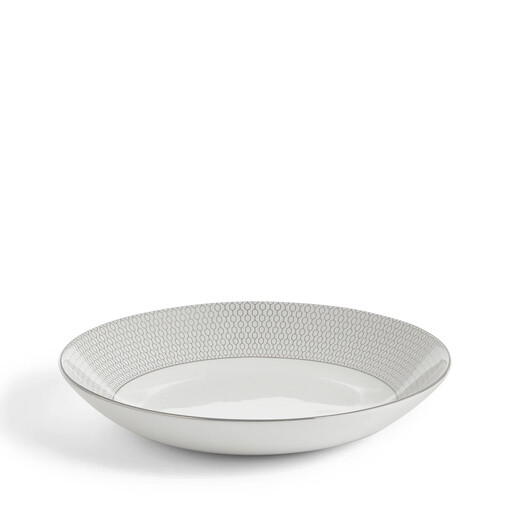
1. WEDGWOOD Gio Platinum 24.5cm Fine Bone China Pasta Bowl
-
Why we recommend this product: This plate combines the material advantages of Fine Bone China with a modern geometric design. The specifications indicate a durable and aesthetically pleasing product for discerning users.
-
Advantages:
- Made from Fine Bone China, known for its strength and refined appearance.
- Contemporary geometric pattern with metallic details.
- Dishwasher-safe for convenient cleaning.
- With a 24.5 cm diameter and approx. 940 ml capacity, it is ideal for pasta main courses.
-
Who it's for: For users who value elegant design, brand heritage, and the special material properties of Fine Bone China. Due to the metallic detailing, the plate is not microwave-safe.
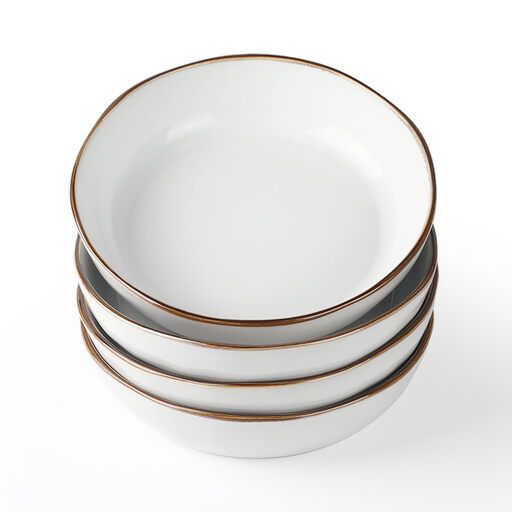
2. Richmount 4- Flat Bowl - Pearl White
-
Why we recommend this product: This stoneware pasta plate set is distinguished by its double reactive glaze, which gives each plate a unique look. The combination of durability and full everyday practicality makes it a practical choice.
-
Advantages:
- Set of four plates, ideal for families and households.
- Made from high-quality stoneware with a scratch-resistant surface.
- Both microwave and dishwasher-safe.
- Generous capacity of approx. 900 ml (32 oz) per bowl.
- The reactive glaze creates a unique, pearlescent finish.
-
Who it's for: For households looking for a versatile and durable set for daily use. Due to their size and shape, the plates are also suitable as soup plates or for salads.
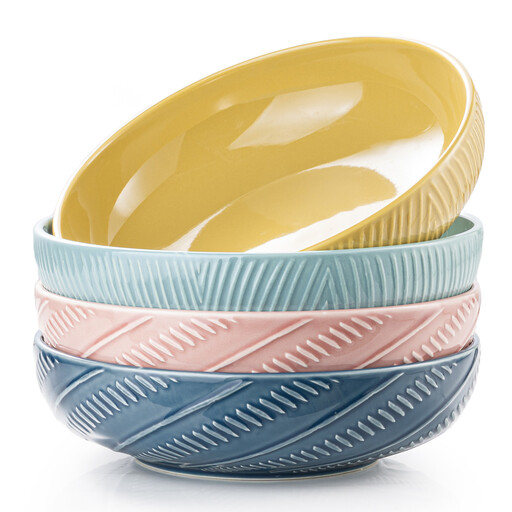
3. Dafuceramic 8.5Inch Pasta Bowls, Set of 4
-
Why we recommend this product: This ceramic set offers maximum versatility. Its suitability for the microwave, dishwasher, refrigerator, and even the oven makes it a multi-functional piece of tableware. The embossed design also gives it a unique tactile feel.
-
Advantages:
- Made from lead-free ceramic with high hardness.
- Comprehensive suitability: microwave-, dishwasher-, refrigerator-, and oven-safe.
- Good stackability for space-saving storage.
- Unique design with colourful glazes and embossed patterns.
- Very spacious with an approx. 1065 ml (36 oz) capacity.
-
Who it's for: For users seeking a practical, stackable, and exceptionally versatile set that can be used not only for pasta but also for casseroles or large salads.
Other Options and Serving Bowls
In addition to classic pasta plates, there is a wide variety of other shapes suitable for serving pasta dishes. If you are looking for alternative designs or larger serving bowls, you can find a broader selection in our Pasta Bowl category.
Frequently Asked Questions (FAQ)
1. What is the difference between a pasta plate and a soup plate? A classic pasta plate typically has a shallower but wider well and a distinct, wide rim. A soup plate is generally deeper and has a more uniform, bowl-like shape without a pronounced flat rim, designed to minimise spills.
2. Which material is best for pasta plates? The choice of material depends on personal preference and intended use. Porcelain is elegant, thin, and very durable, ideal for formal occasions and everyday use. Stoneware offers a more rustic aesthetic, good heat retention, and a robust feel. Both materials are excellent options, provided they are of high quality.
3. How large should a pasta plate be? A common diameter for a pasta plate is between 24 and 30 cm. This size provides enough space for a standard portion of pasta and allows for an appealing presentation, with the wide rim acting as a frame for the dish. For main courses, the capacity should be at least 800 ml.