
Paint Sprayer Buyer’s Guide: How to Choose the Right Device
Painting with a brush and roller is often time-consuming, and the result isn't always as smooth as you'd like. The work can become especially tedious on textured surfaces, furniture, or large walls. A paint sprayer offers an efficient alternative for a fast, professional-looking finish.
But the selection is vast: from a compact cordless paint sprayer for small paint jobs to a powerful paint sprayer for walls, there's a suitable tool for every project. This article serves as a practical guide. We'll explain the most important criteria and present a selection of devices to make your decision easier.
What to Look for When Buying a Paint Sprayer
To find the right device for your needs, a few technical aspects are crucial. The following three points will help you better understand the features of different models.
1. Power Source: Cordless or Corded?
The choice between a corded and a battery-powered model largely depends on the location and duration of your projects.
- Cordless Paint Sprayers: These devices offer maximum flexibility and freedom of movement. They are ideal for jobs in the garden, on fences, or in places without direct access to a power outlet. Pay attention to the battery life and whether a second battery is included to ensure uninterrupted work.
- Corded Paint Sprayers: They deliver consistent power with no time limit and are often more powerful. This makes them a great choice for large, continuous surfaces like interior walls and ceilings. Check the length of the power cord and, if applicable, the hose to ensure you have a sufficient operating range.
2. Technology: The HVLP Principle
Many devices for the DIY sector operate on the HVLP (High Volume, Low Pressure) principle. This means that a high volume of air at low pressure atomises the paint. The advantage of this technology is reduced overspray and a high transfer efficiency of the paint onto the surface. An HVLP paint sprayer thus enables a precise and material-saving application, making it particularly suitable for detailed work on furniture, doors, or radiators.
3. Viscosity and Nozzle Size
Viscosity describes the thickness of a paint. Each paint sprayer can only handle materials up to a certain maximum viscosity, which is specified in DIN-seconds (DIN-s).
- Low-viscosity materials: Stains, varnishes, or primers have a low viscosity and typically require a small nozzle (e.g., 1.0 mm to 1.8 mm). Such a paint gun produces a very fine spray pattern.
- High-viscosity materials: Emulsion and latex paints for walls are highly viscous. For these, you need a powerful device that can handle viscosities of 100 DIN-s or more, as well as a larger nozzle (e.g., 2.0 mm to 3.0 mm). Often, these paints must be thinned according to the sprayer manufacturer's instructions.
Recommended Paint Sprayers to Consider
Based on the criteria mentioned, we have compiled a selection of devices for different applications.
Tilswall Hornet: The Lightweight Cordless Paint Sprayer for Flexibility
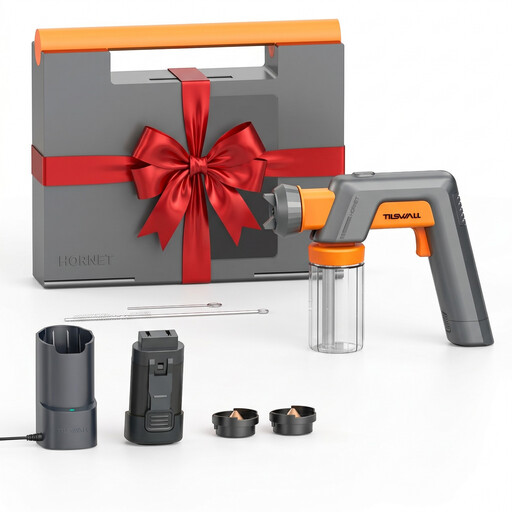
Why It Stands Out: The Hornet model is distinguished by its extremely low weight of just 450 grams and its cordless operation. This combination makes it an exceptionally handy tool for quick and flexible jobs.
Advantages:
- Ultra-Lightweight: At only 450 g, it's designed for easy handling.
- Cordless Freedom: The battery operation allows you to use it anywhere, without being tied to a power cord. Two batteries are included.
- Customisable Application: Offers 3 spray patterns (horizontal, vertical, round) and 2 nozzle sizes for different surfaces and materials.
- Efficiency: According to the manufacturer, paint application is up to four times faster than with a brush.
Who Is It For? This model is ideal for DIYers who need maximum mobility for small to medium-sized projects. Perfect for painting garden furniture, fences, doors, or for quick touch-up jobs.
Tilswall Shark 800: The HVLP System for Walls and Large Surfaces
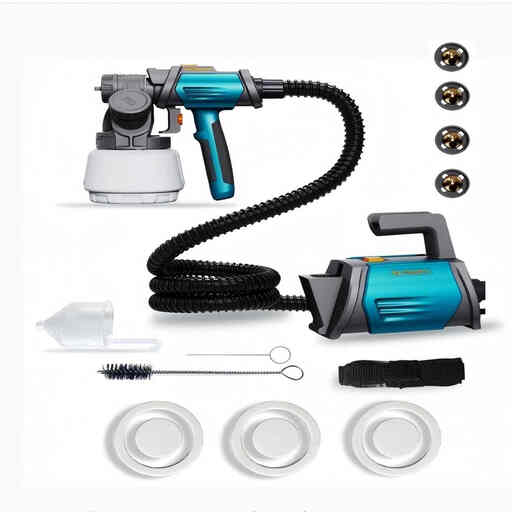
Why It Stands Out: The Tilswall Shark 800 is designed as a powerful, corded HVLP paint sprayer. With 800 watts of power and a large 1300 ml container, it's built to handle wall paints and cover large areas.
Advantages:
- High Power: The 800-watt motor can handle even thicker materials up to a viscosity of 120 DIN-s.
- Large Paint Container: The 1300 ml container reduces the need for constant refilling during projects like painting walls or ceilings.
- Versatile Nozzles: Equipped with 4 brass nozzles (1 mm, 1.5 mm, 2 mm, 3 mm) for a wide range of paints and varnishes.
- Wide Operating Range: A 2.5 m hose and a 3 m power cord provide ample freedom of movement.
Who Is It For? This paint sprayer for walls is aimed at ambitious DIYers who want to efficiently coat interior and exterior walls, ceilings, decks, or large fences.
Tilswall Electric Paint Spray Gun: The Starter Choice for Furniture and DIY Projects
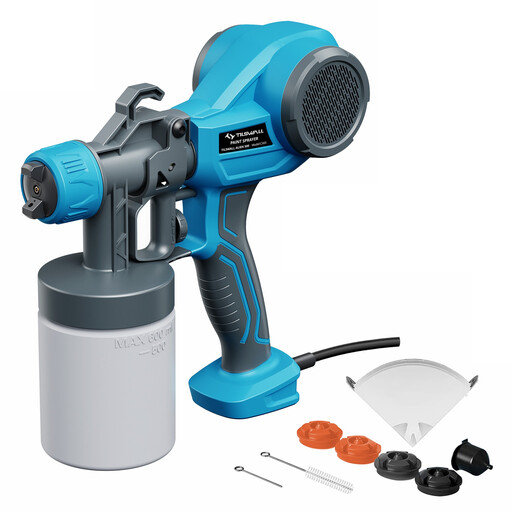
Why It Stands Out: This electric paint spray gun is designed for simple operation and handling. Its lightweight, ergonomic design allows for comfortable one-handed use, making it an accessible tool for beginners.
Advantages:
- User-Friendly: The device assembles without tools and is easy to clean thanks to the detachable tank.
- Lightweight and Ergonomic: Designed for extended use without fatigue, ideal for painting furniture, cabinets, or for creative DIY projects.
- Flexible Application: With 3 spray patterns and 4 nozzles (1.0 mm, 1.5 mm, 1.5 mm, 2.0 mm), the paint application can be precisely controlled.
- Good Compatibility: Handles paints up to a viscosity of 100 DIN-s (may require thinning).
Who Is It For? Ideal for DIY beginners and hobbyists looking for a straightforward and lightweight device for painting and refreshing furniture, cabinets, and other smaller indoor items.
Looking for More Options?
Haven't found the right model for your project yet? No problem. There is a wide variety of devices for different needs, from compact paint spray guns to systems for professional use.
Discover our entire range of paint spray systems and find the ideal tool for your next project.
Frequently Asked Questions (FAQ)
Can I use regular wall paint with a paint sprayer?
Yes, most modern paint sprayers are suitable for use with wall paints (emulsions). However, it's crucial to check the maximum viscosity (in DIN-s) that the device can handle. As a rule, wall paint needs to be thinned with about 10% water to achieve optimal spray consistency. Always follow the instructions provided by the device and paint manufacturers.
How do I properly clean an electric paint spray gun?
Cleaning is crucial for the longevity of the device and should be done immediately after each use. For water-based paints, thoroughly rinse the paint container, nozzle, and suction tubes with clean water until no paint residue comes out. Many devices come with special cleaning brushes and needles to clear paint residue from hard-to-reach areas.
What is the difference between an HVLP and an Airless system?
The main difference is the pressure. HVLP (High Volume, Low Pressure) systems use a lot of air at low pressure. The result is a soft, easily controllable spray pattern with minimal overspray, ideal for finishing work and smaller areas. Airless systems, on the other hand, force the paint through a nozzle at very high pressure. They have an extremely high coverage rate and are suitable for very large projects like facades or entire rooms, but they also produce more overspray.