
Oven-Safe Glass Food Containers: Buyer's Guide for a Smart Purchase
By Joybuy Product Recommendation Officer, August 28, 2026
A high-quality, oven-safe glass food container is more than just a box. It's a versatile kitchen assistant for storing, freezing, reheating, and even baking. However, the market is flooded with products that often fail to live up to their promises. Before you make a decision, it's crucial to know the common pitfalls that lead to disappointment and unnecessary expense.
This guide will show you what to look for to find a durable and functional glass food container that will genuinely make your daily routine easier.
The 3 Most Common Traps When Buying Glass Containers
Many products advertise features that they only partially deliver on. Pay close attention to these three points to avoid making a bad purchase:
- The 'Oven-Safe' Trap: Not all glass is suitable for high temperatures in the oven. Many cheaper containers are made of standard soda-lime glass, which can crack under rapid temperature changes (thermal shock)—for instance, when moving the container from the refrigerator to a preheated oven. A product advertised as "oven-safe" without the correct type of glass is a safety risk.
- The 'Leak-Proof' Lie: A container described as "leak-proof" that spills soup or sauce in your bag is a frequent annoyance. The cause is often a poorly designed locking mechanism or a low-quality gasket that quickly becomes porous or loses its shape.
- Hidden Flaws in the Lid: While the glass often gets all the attention, the lid is neglected. Many lids are not suitable for the microwave or dishwasher. Furthermore, they can contain plasticizers like BPA, which can potentially leach into food, especially when in contact with hot or fatty meals.
What Really Matters: The 3 Decisive Features
To avoid the traps mentioned above, you should base your choice on objective criteria. These three features are essential for a functional and safe oven-safe glass food container.
Feature 1: The Glass Material – Borosilicate as the Gold Standard
The decisive factor for oven-suitability is the material. Specifically look for borosilicate glass containers. Unlike normal glass, this material has a low coefficient of thermal expansion.
- Practical Advantage: It is resistant to thermal shock. You can safely move a borosilicate glass container (without its lid) from the refrigerator into a preheated oven. According to manufacturer specifications, temperatures of up to 400°C are often no problem. It is also more scratch-resistant and does not absorb odours or stains.
Feature 2: The Seal – The Secret to 'Airtight and Leak-Proof'
Making a food container truly airtight and leak-proof requires more than just a simple lid. The combination of two elements is crucial here:
- Locking System: Systems with four-sided snap-lock clips have proven to be very reliable. They distribute pressure evenly on the gasket and ensure a tight fit.
- Silicone Gasket: A high-quality, wrap-around silicone gasket in the lid is essential. It should be flexible, durable, and removable for hygienic cleaning.
This combination not only prevents leaks but also demonstrably keeps food fresh longer by minimizing air and moisture exchange.
Feature 3: Versatility – From Freezer to Oven
A good glass container can replace several kitchen utensils. Check if the product is approved for all your intended uses:
- Freezer-Safe: For freezing leftovers or for glass meal prep containers. Typical temperature limits are around -20°C.
- Microwave-Safe: For quickly reheating meals. Important: The lid should always be removed or at least left open.
- Oven-Safe: As a casserole dish with a lid (the lid is only for storage, not for baking).
Top Picks for Different Needs
Based on the criteria above, we have identified some products that are well-suited for specific user profiles.
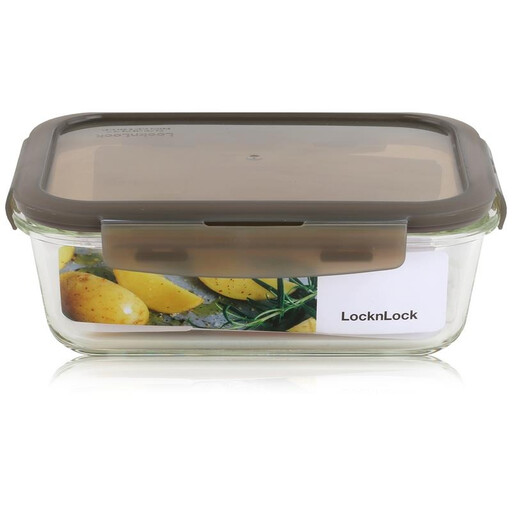
LocknLock Boroseal Glass Container, Rectangular, 630 ml
Why This Fits Their Persona: Ideal for daily lunches at the office. The 630 ml size is perfect for a single portion, and the reliable seal ensures secure transport in a bag.
The container is made of heat-resistant borosilicate glass (oven-safe up to 400°C according to the manufacturer) and features the 4-sided locking system that prevents leaks.
Compact size for meal prep; BPA-free lid; dishwasher, freezer, and microwave safe (without lid).
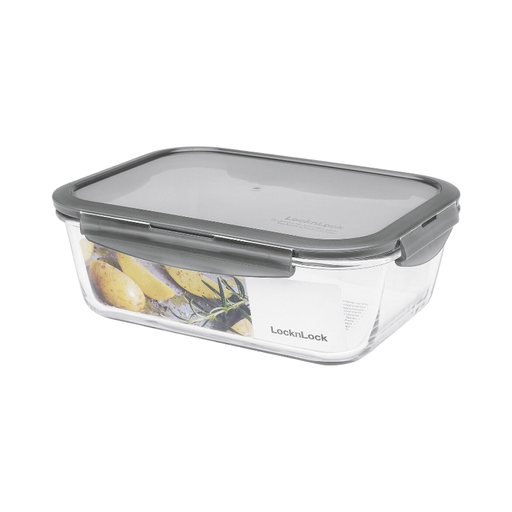
LocknLock Heat-Resistant Glass Container, 2.0 L
Why This Fits Their Persona: With a 2-litre capacity, this container is ideal for storing leftovers for the whole family, marinating meat, or as a casserole dish for meals like lasagna.
The large borosilicate glass body is robust and designed for the oven. The lid with its silicone gasket securely and airtightly seals large quantities of food.
Large capacity (2.0 L); versatile as both a storage container and a casserole dish; stackable design to save space.
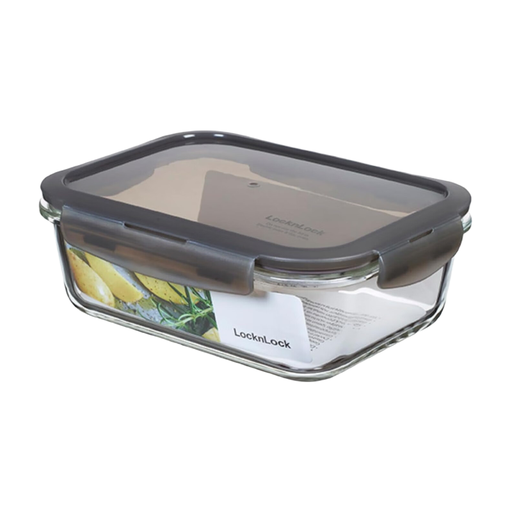
LocknLock Boroseal Glass Container, Rectangular, 1 L
Why This Fits Their Persona: The 1-litre size is a universal compromise. It's suitable for a large lunch portion, storing side dishes, or baking smaller meals. A true all-round talent for quality-conscious households.
This model combines all the key features: borosilicate glass, a proven 4-clip locking system, and a high-quality silicone gasket. It avoids both the heat and the leakage traps.
Universal 1-litre size; does not absorb odours or stains; durable and robust for daily use.
Looking for more options?
We have compiled a complete, up-to-date list of products that fully meet these strict selection criteria and German safety regulations.
H3: Can the lid of an oven-safe glass container go in the oven?
No, as a rule, the lids are made of plastic (polypropylene) and are not designed for the high temperatures in an oven. They would warp or melt. Always remove the lid before placing the glass container in the oven. For the microwave, the lid should also be removed or at least placed loosely on top to allow steam to escape.
H3: What's the difference between borosilicate glass and conventional glass?
The main difference lies in thermal resistance. Borosilicate glass contains boron trioxide, which gives it a very low coefficient of thermal expansion. This allows it to withstand sudden and extreme temperature changes without shattering. Normal soda-lime glass would break under the same conditions.
H3: How do you properly clean the silicone gasket of the food container?
For a thorough and hygienic cleaning, the silicone gasket should be regularly removed from the lid. You can wash it by hand with warm water and dish soap or in the top rack of the dishwasher. Let the gasket and the lid dry completely before reassembling them to prevent the formation of odours or mould.