
Open-Ear Sports Headphones: Avoid Mistakes and Choose the Right Pair
By Joybuy Product Recommendation OfficerUpdated on July 28, 2026
Anyone who listens to music or podcasts while exercising knows the dilemma: conventional headphones isolate you from the outside world, which poses a safety risk, especially in traffic. Open-ear headphones promise a solution, but the market is overwhelming and full of marketing traps. Before you make a purchase decision, you should be aware of the most common pitfalls that lead to disappointment and unnecessary expenses.
This guide will help you understand the technical differences and find a model that truly suits your athletic activities.
The 3 Most Common Pitfalls When Buying Sports Headphones
Many models promise more than they can deliver. Pay special attention to these three points to avoid a bad buy:
- The "Bone Conduction Concept" Trap: Many budget-friendly models advertise with terms like "Bone Conduction Concept" but are technically simple air conduction headphones. True bone conduction headphones transmit sound via vibrations on the cheekbone, while air conduction models simply play the sound in front of the ear canal. The latter are prone to significant "sound bleeding" at higher volumes, allowing bystanders to overhear.
- Unstable Fit During Movement: A design that seems comfortable in the store can prove useless during your first sprint. A secure fit is crucial, especially for intense sports like jogging or activities with quick changes of direction. Models without a stable neckband or a firm clamping mechanism can easily slip and disrupt your workout.
- Misjudged Water Resistance: Sweat is more corrosive than water. Headphones without a sufficient IP rating (Ingress Protection) can fail after just a few sweaty workouts. The term "water-repellent" is often insufficient and no substitute for an official IP classification like IPX4 or higher.
What Really Matters: The Key Parameters
To make the right choice, focus on the following technical features that are crucial for performance and durability.
1. Wearing Style: Ear Clip vs. Neckband
The fit is essential for comfortable headphones for extended wear and a secure hold during sports. Two form factors dominate the market:
- Ear Clip Headphones: These models are attached to the outer ear like a clip. They are often very lightweight and discreet. When fitted correctly, their hold is excellent, making them a great choice for runners and gym-goers.
- Sports Headphones with a Neckband: Here, the two earpieces are connected by a flexible band that rests on the back of the neck. This design often provides the most stable fit, as the weight is distributed and the headphones do not shift, even with vibrations like those experienced during mountain biking. They are therefore often the first choice for headphones for cyclists.
2. Technology: True Bone Conduction vs. Air Conduction
The operating principle has a direct impact on the listening experience and discretion.
- Bone Conduction: The transducers rest on the cheekbones in front of the ear, transmitting sound directly to the inner ear through vibrations. The ear canal remains completely open. This allows for excellent awareness of ambient sounds and is ideal for safe headphones for traffic. The bass is often less pronounced with this technology.
- Air Conduction: These open Bluetooth headphones use small speakers that direct sound towards the ear canal without sealing it. The sound quality, especially the bass, can be fuller than with bone conduction. The downside is greater sound leakage, which can be disruptive in quiet environments like an office.
3. Protection Rating (IP Rating) for Sweat and Weather Resistance
The IP rating indicates how well a device is protected against the ingress of solid particles (first digit) and water (second digit). For sports headphones, the second digit is crucial:
- IPX4: Protection against splashing water from all directions. Sufficient for light sweating or light rain.
- IPX5: Protection against water jets. Can withstand heavy sweating and a run in the rain.
- IPX7: Protection against temporary immersion. These models are very robust but should not be used for swimming.
Picks for Different User Profiles
Instead of making a blanket recommendation, we have identified models tailored to specific user profiles.
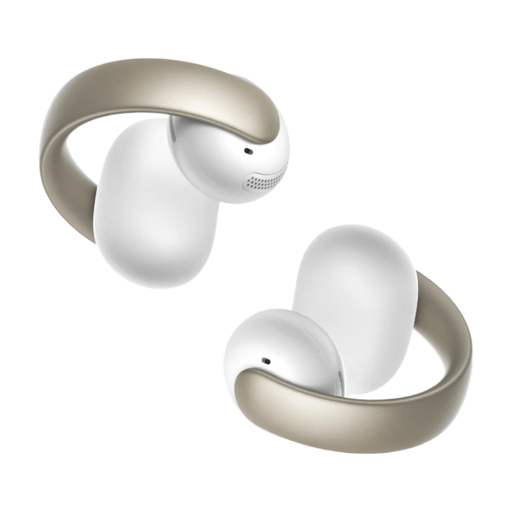
Soundcore AeroClip by Anker, Open-Ear Headphones, White
Why This Fits Their Persona: Ideal for users looking for a reliable pair of headphones for daily jogs, gym sessions, and commuting. The focus is on comfort and a secure fit without sacrificing good sound quality.
The flexible yet stable open-ring design counteracts the problem of an unstable fit. The water resistance also effectively protects against sweat damage.
Support for Hi-Res Audio ensures balanced sound reproduction. According to the manufacturer, four microphones with AI algorithms provide clear calls even in noisy environments.
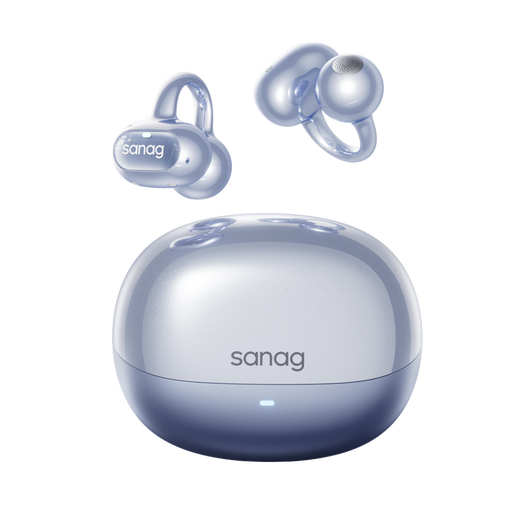
Sanag S8S Ultra Ear Clip Bluetooth Headphones
Why This Fits Their Persona: Perfect for cyclists and pedestrians in urban traffic for whom maximum environmental awareness and an absolutely secure fit are top priorities. The ear-clip design ensures the headphones don't slip, even on bumpy routes.
The "ear clip" form factor very effectively solves the problem of an unstable fit. The open design ensures that traffic noises and warning signals remain clearly audible.
The clamping mechanism on the ear offers an extremely secure fit. The open design is explicitly engineered for situational awareness, making them safe headphones for traffic.
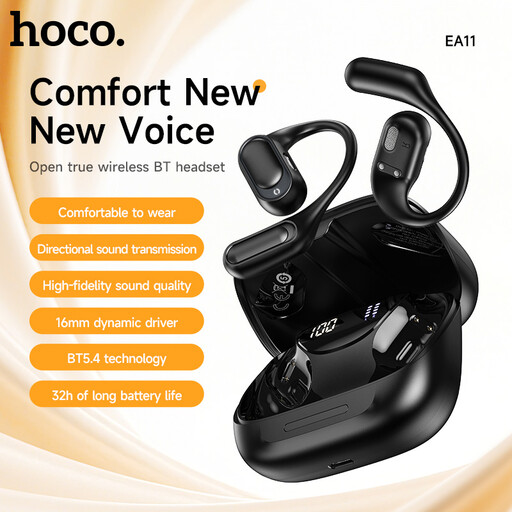
HOCO EA11 Xuanyun Open-style True Wireless Bluetooth Earphones
Why This Fits Their Persona: For anyone who wants to try the open-ear principle without making a large initial investment. This model offers the core functionality—listening to music with your ears open—for occasional sports or walks.
The product is clearly declared as "Open-style" (air conduction) and does not create the false impression of being a bone conduction headphone. This ensures transparency regarding the expected sound performance.
With up to 8 hours, it offers a solid battery life for this product class. The charging case features a digital charge level indicator, which is a practical feature in this price segment.
Looking for More Options?
We have compiled a complete, real-time list of products that fully satisfy these strict selection criteria and UK safety regulations.
Frequently Asked Questions (FAQ)
1. What is the exact difference between bone conduction and air conduction headphones? Bone conduction headphones create vibrations that are transmitted directly to the inner ear via the bones, leaving the ear canal open. Air conduction headphones are essentially small speakers that direct sound towards the ear without sealing it. Bone conduction typically offers less sound leakage, while air conduction often delivers a more powerful sound, especially in the bass.
2. How safe are open-ear headphones really in traffic? They significantly increase safety compared to in-ear or over-ear headphones because important ambient sounds like approaching vehicles, bicycle bells, or sirens remain audible. However, they are not a free pass for inattentiveness. The volume should always be set so that traffic can be clearly perceived. The responsibility for safe participation in traffic still lies with the user.
3. Can other people overhear my music with open-ear headphones? Yes, a certain amount of sound leakage ("sound bleeding") is unavoidable with all open-ear headphones. At a moderate volume, this is barely noticeable in a normal environment (e.g., outdoors). However, in very quiet settings like a library or a silent office, people in close proximity may be able to overhear your audio at higher volumes. True bone conduction models tend to have an advantage over air conduction models in this regard.