
Non-Stick Induction Pans: Buyer’s Guide and Recommendations
By a Joybuy Product Recommendation Officer, July 19, 2026
Purchasing a new non-stick induction pan can be a challenge. Unlike conventional hobs, an induction cooktop requires special cookware with ferromagnetic properties. At the same time, you want a pan that prevents food from sticking, is easy to clean, and is built to last. This guide is designed to help you understand the key features and make an informed decision that suits your cooking style. We provide objective information on materials, coatings, and functions, and present a selection of models with distinct advantages.
What to Look for When Buying a Non-Stick Induction Pan
To find the right coated frying pan for your induction cooktop, a few technical aspects are crucial. The following points will serve as a guide.
1. Material and Base Construction
A ferromagnetic base is essential for induction compatibility. This is the only way the cooktop's magnetic field can generate heat in the pan's base. Pans made of aluminium or copper therefore require a special base plate made of magnetisable stainless steel. High-quality models often feature a multi-layered sandwich base (e.g., stainless steel-aluminium-stainless steel) that absorbs heat quickly and distributes it evenly across the entire cooking surface. A simple test: if a magnet sticks to the bottom of the pan, it is suitable for induction.
2. Type of Non-Stick Coating
The coating is the heart of any non-stick pan. There are two main types:
- PTFE Coatings: Also known by a famous brand name, these coatings offer excellent non-stick properties. Modern, high-quality pans are designated as PFOA-free, meaning perfluorooctanoic acid was not used in their manufacturing. When used correctly—that is, without overheating—they are considered safe.
- Ceramic Coatings: A ceramic pan features a mineral-based coating. It is often harder and more scratch-resistant than PTFE and can withstand higher temperatures. However, the non-stick effect on some models can diminish over time, especially with improper care.
3. Additional Features: Oven and Dishwasher Safety
Additional features enhance versatility and convenience. An oven-safe pan allows you to sear dishes on the hob and then finish them in the oven. Pay attention to the maximum temperature resistance, which largely depends on the handle material (plastic vs. stainless steel). A pan labelled as dishwasher-safe simplifies cleaning. However, to maximise the lifespan of the non-stick coating, gentler hand washing is often recommended.
Recommended Non-Stick Induction Pans
Based on the criteria above, we have curated a selection of pans that stand out for their specific features and suitability for induction cooktops.
BALLARINI Vipiteno Frying Pan, 24 cm
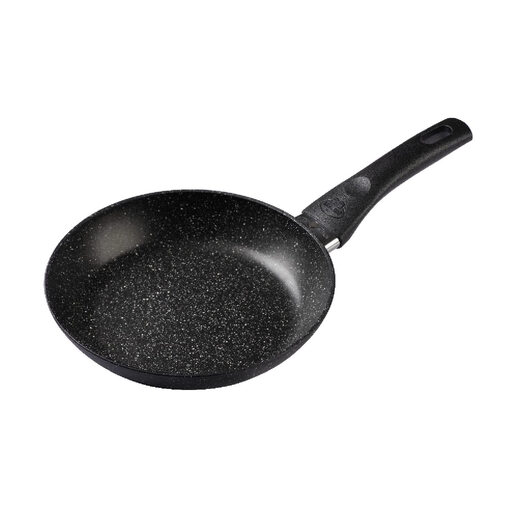
Why It Stands Out The BALLARINI Vipiteno is distinguished by its patented THERMOTION Hot-Cold Indicator. This bimetallic strip, integrated into the handle, shows when the pan has reached the optimal frying temperature, enabling precise and energy-efficient cooking. The patented bimetallic base is specially designed for fast and even heat distribution on induction hobs.
Pros
- Four-layer Nerolite non-stick coating: Provides a robust and scratch-resistant surface.
- THERMOTION temperature indicator: Helps you find the ideal cooking point and prevent overheating.
- Ergonomic handle: Stays cool on the hob during cooking.
- Easy to clean: The pan is declared dishwasher-safe.
Who It's For This model is an excellent choice for home cooks who value controlled frying and practical tools for everyday kitchen tasks. With a 24 cm diameter, it is ideal for smaller households or for preparing side dishes and egg-based meals.
ZWILLING Pro Frying Pan, 26 cm
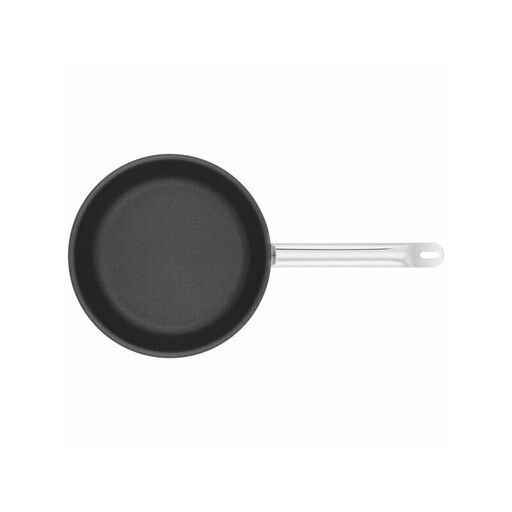
Why It Stands Out The ZWILLING Pro pan is crafted with SIGMA Clad 3-ply material. A strong aluminium core is encased in two layers of stainless steel, ensuring exceptionally fast and even heat distribution right up to the rim. Its high oven-safe temperature of up to 230°C makes it especially versatile.
Pros
- Excellent heat conduction: The multi-layer base ensures even cooking results.
- Highly oven-safe: Suitable for temperatures up to 230°C.
- Duraslide Ultra non-stick coating: A PTFE coating designed for durability.
- Robust construction: Made from 18/10 stainless steel with a satin, scratch-resistant finish.
Who It's For This induction pan is aimed at discerning cooks looking for a high-performance, durable, all-rounder pan. Its ability to go from the hob straight into the oven is ideal for searing meat and then finishing it to perfection.
naturepan Hybrid Ceramic Frying Pan, 28 cm
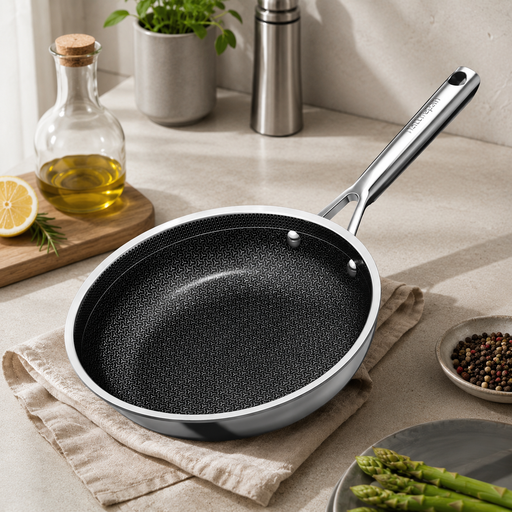
Why It Stands Out The naturepan pan's hybrid technology combines the benefits of stainless steel and a non-stick coating. A laser-etched hexagonal honeycomb pattern of stainless steel ridges allows for excellent searing, while the recessed areas with a diamond-titanium ceramic coating prevent food from sticking. According to the manufacturer, the coating is free of PFAS, PFOA, and PTFE.
Pros
- Hybrid surface: Allows you to sear like in a stainless steel pan with the benefits of a non-stick coating.
- Extremely oven-safe: Withstands temperatures up to 260°C (500°F).
- PFAS, PFOA, and PTFE-free: An option for health-conscious users.
- High scratch resistance: The combination of stainless steel and ceramic coating is designed for durability.
Who It's For Ideal for cooks who need a robust, large-capacity (28 cm) pan for family meals and want to both sear and cook delicate foods. Its high heat resistance and chemical-free coating appeal to quality- and health-conscious users.
Looking for a Different Aesthetic?
If you value distinctive design as much as pure functionality, models with specific visual features might be of interest. Discover more options in our frying pans with gold handles category.
Frequently Asked Questions (FAQ)
1. How can I identify an induction-compatible pan? You can identify an induction-compatible pan by two features: the coil symbol (a stylised spiral) on the packaging or the pan's base, and the fact that a magnet will stick to the bottom. If either of these is missing, the pan is not suitable for induction cooktops.
2. Is a ceramic pan better than a PTFE-coated pan? There is no single "better" choice; it depends on your priorities. PTFE coatings often provide a very smooth surface with excellent non-stick properties. Ceramic coatings are typically harder, more scratch-resistant, and free of fluoropolymers, but their non-stick performance can degrade more quickly if handled improperly. Both types have their merits when used correctly.
3. How do I properly care for a non-stick pan to extend its lifespan? To protect the coating, you should follow a few basic rules: Only use utensils made of wood, silicone, or plastic. Avoid heating the pan on the highest setting when it's empty. After it has cooled down, clean the pan with a soft sponge and mild washing-up liquid. Even though many pans are labelled as dishwasher-safe, gentle hand washing is more beneficial for the coating in the long run.