
Buying a Non-Stick Frying Pan: What to Look for in Material, Size and Hob Compatibility
A non-stick frying pan should release food reliably, be easy to clean and suit your existing hob. In practice, however, unclear information about the coating, diameter or temperature resistance often leads to the wrong purchase. With a non-stick frying pan in particular, it is therefore worth taking a close look at the technical specifications rather than flashy marketing claims.
Typical Buying Problems with Non-Stick Frying Pans
1. “Suitable for all hob types” without the right base specification
A pan can be suitable for gas and ceramic hobs, but not automatically for induction. What matters is a magnetic induction base. If you are looking for an induction pan, the product details should explicitly state “induction suitable” or “for induction”. If you are unsure, a magnet test on the pan base can help, provided you already have the pan.
2. Coating is equated with durability
Names like stone, granite, titanium or ceramic coating do not automatically describe the lifespan. More important are:
- Type of coating, e.g. PTFE or ceramic
- Material of the pan body
- Recommended temperature
- Suitable kitchen utensils
- Care and cleaning instructions
Even a robust coating can be damaged by metal turners, scouring pads or prolonged dry heating.
3. Wrong size for daily needs
A 26 cm frying pan offers a practical middle ground for two to three portions in many households. However, the stated diameter usually refers to the top rim, not the actual usable base area. For small meals, a 20 cm or 24 cm pan can be more manageable. For family dishes, sauces or braised meals, 28 cm with high sides is often more practical.
The Most Important Selection Criteria
Material: Aluminium, Stainless Steel or Multi-Layer Construction
An aluminium frying pan is usually light and conducts heat quickly. This can be practical for beginner cooks, older people and those who often handle the pan with one hand. However, aluminium alone is not magnetic. For induction, the pan therefore needs a suitable magnetic base.
Multi-layer pans made of stainless steel with an aluminium core distribute heat across the base and often up the sides. They are often heavier by design. An example is the ZWILLING PRO PTFE with SIGMA-Clad three-layer construction and aluminium core. According to the product information, it is suitable for gas, induction, ceramic, halogen and the oven up to 230 °C.
Coating and How to Treat It
A PTFE coating helps release eggs, pancakes or fish easily and can enable low-fat frying. “PFOA-free” describes a specific product feature, but is not a general quality judgement on the entire pan.
Ceramic coatings are often offered as PTFE-free. They generally react sensitively to overheating and strong temperature changes. Regardless of the type of coating, the rule is: use low to medium heat, do not heat the pan empty for long periods, and prefer kitchen utensils made of wood, silicone or plastic.
Handle, Weight and Cleaning
A wooden or plastic handle may heat up less during cooking than a metal handle. However, for oven use, the manufacturer’s instructions apply. A wooden handle is not automatically oven-safe.
A lightweight frying pan is easier to lift and pour from. However, a heavy multi-layer body can sit more stably on the hob. When cleaning, check whether the pan is dishwasher-safe. With several non-stick models, hand washing is recommended even if dishwasher-safe, to preserve the surface for longer.
Our Selection by User Profile

PURECOOK Aluminium Frying Pan with Maifan Stone Coating, 26 cm
Why this product fits the profile: The lightweight aluminium construction, wooden handle and stated suitability for induction, gas and ceramic hobs suit a versatile household with regular everyday cooking.
The product details explicitly state the diameter, material, hob types and hand washing. This allows you to check the key specifications before buying.
26 cm diameter, wooden handle, rolled rim and, according to the product description, suitable for induction, gas and ceramic hobs.
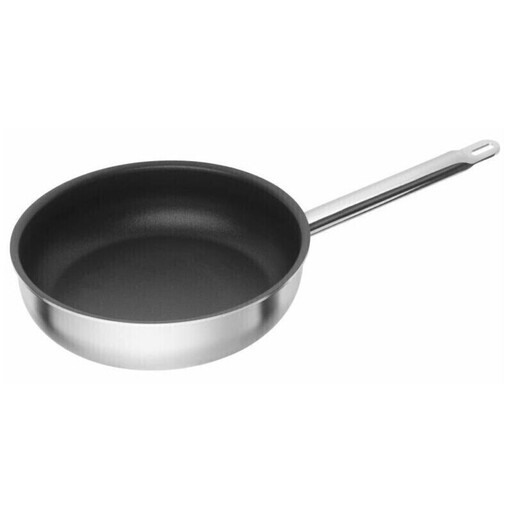
ZWILLING Frying Pan 28 cm PRO PTFE
Why this product fits the profile: The three-layer construction with aluminium core and the riveted stainless steel handle are aimed at households that value a defined build and versatile usage options.
The specifications include the coating type, PFOA-free version, weight, hob types and maximum oven temperature. This makes it easier to compare with your own requirements.
28 cm cooking surface, suitability for several hob types and oven use up to 230 °C according to the product information.
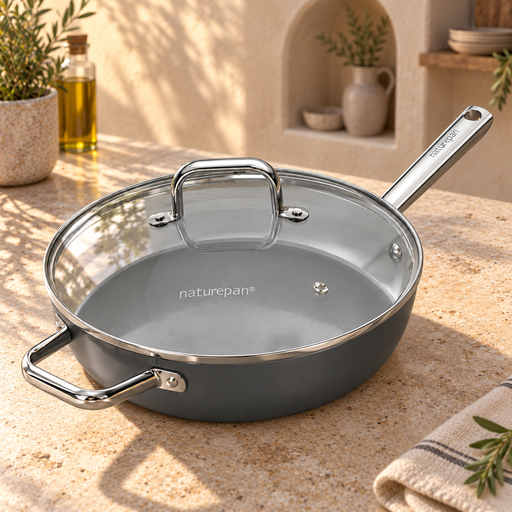
Naturepan Deep Sauté Pan 28 cm with Lid
Why this product fits the profile: The high sides and the included glass lid are suitable for braised dishes, sauces, vegetables and meals that go beyond simple frying.
The product description notes the suitable hob types, oven use without the lid and recommended hand washing. This means usage limits are not overlooked.
28 cm diameter, 7.5 cm high sides, matching lid and ceramic coating according to the product data.
Looking for more options?
We have compiled a complete, regularly updated list of products that fully meet these strict selection criteria and the safety regulations in force in the EU.
Care Tips for a Longer Lifespan
- Clean the pan with warm water and mild washing-up liquid before first use.
- Do not treat coated surfaces with steel wool or abrasive cleaners.
- Do not use knives or metal utensils.
- Allow a hot pan to cool completely before washing.
- Avoid dry heating, especially on a high setting.
- Place a protective layer between pans when stacking.
- Follow the manufacturer’s instructions for the dishwasher and oven.
The actual lifespan depends on usage, temperature and care. A coating is a wear part; after visible scratches, peeling or a noticeable decline in non-stick properties, the pan should not simply continue to be used.
FAQ About Non-Stick Frying Pans
What size is suitable for a normal two-person household?
A 24 cm to 26 cm frying pan is suitable for many everyday portions. 20 cm is better for single portions and small breakfast dishes. 28 cm offers more surface area but also requires more storage space and can be heavier.
Are non-stick pans suitable for induction?
Only if the base is explicitly marked as induction suitable. A pure aluminium pan will not work on induction without a magnetic base. Additionally, the pan base should sit as flat as possible on the hob.
How can you achieve low-fat frying with a non-stick pan?
At low to medium heat, a small amount of oil is often enough depending on the food. The pan should not be overheated when empty. For delicate foods, wooden, silicone or plastic utensils are more suitable than metal, as they are less likely to scratch the coating.