
Non-Stick Frying Pan Buyer's Guide: Avoid Costly Mistakes
A good non-stick frying pan is the heart of many kitchens. But the market is overwhelming and full of promises that often prove baseless after just a few months. A non-stick coating that wears off quickly, uneven cooking results, or concerns about materials often lead to frustration and unnecessary expense.
As your Joybuy Product Recommendation Officer, I'll help you distinguish important features from empty marketing promises. This guide focuses on the objective criteria that define a durable and functional pan, showing you how to avoid the three most common purchasing pitfalls.
The 3 Most Common Pitfalls When Buying a Non-Stick Frying Pan
Before choosing a model, you should be aware of the typical problems that often only become apparent during everyday use.
- The "Short-Term" Non-Stick Coating: Many pans advertise effortless non-stick performance. In practice, this effect quickly diminishes with low-quality materials, even with careful maintenance. The result: food sticks, and cleaning becomes a test of patience.
- Misleading "Toxin-Free" Claims: Terms like PFOA-free are now standard, but they don't tell the whole story. It's important to understand which materials (e.g., PTFE, ceramic) are used and whether they meet your personal health-conscious standards.
- The "Hotspot" Effect from Thin Bases: A pan that warps easily or has a base that is too thin will distribute heat unevenly. This leads to "hotspots" where food burns while it's still raw in other areas—a common problem, especially with a pan for induction cooktops.
What Really Matters: The Decisive Parameters
To make an informed decision, you should focus on three core technical features that determine a pan's performance and longevity.
1. The Core Component: Type and Quality of the Non-Stick Coating
The coating is the most important factor. There are two primary material groups here:
- Ceramic Coatings: A ceramic pan is often based on sol-gel technology and is typically free of PTFE and PFOA. It's known for its good non-stick properties at low to medium temperatures and is considered a great choice for health-conscious cooks who want to gently prepare foods like eggs or vegetables. Its durability heavily depends on the quality of its mineral reinforcement.
- PTFE Coatings (often known as Teflon): These classic non-stick coated pans offer highly effective and durable non-stick performance. Modern, high-quality PTFE coatings are, without exception, PFOA-free, as required by EU regulations. They are particularly robust and well-suited for everyday use.
2. The Pan Body: Material and Base Construction
The material of the pan's body determines how quickly and evenly heat is distributed.
- Cast/Forged Aluminum: These materials offer excellent heat conductivity and distribution. A thick base is crucial here to prevent warping (especially on induction cooktops) and ensure stable heat retention.
- Multi-Ply Material (e.g., stainless steel pan with an aluminum core): This construction combines the durability and magnetic properties of stainless steel (important for induction) with the superior heat conduction of aluminum. Such a pan for induction cooktops heats evenly from the base to the rim.
3. Functionality and Size: From Oven-Safe to Sauté Pans
The right size and additional features are what make a pan truly versatile.
- Size: A 28 cm frying pan is a versatile standard for households of 2-4 people. Smaller pans (20-24 cm) are ideal for single portions or breakfast, while a large sauté pan with a high rim is needed for saucy dishes, stews, or larger cuts of meat.
- Oven-Safe: A pan designated as oven-safe significantly expands its range of uses. It allows you to sear on the stovetop and then finish cooking in the oven. Pay attention to the maximum temperature resistance of both the pan and the handle. Stainless steel or cast iron handles often have an advantage over plastic ones here.
Product Picks for Every User
Here are some recommendations tailored to different needs and cooking habits, which take the aforementioned quality criteria into account.
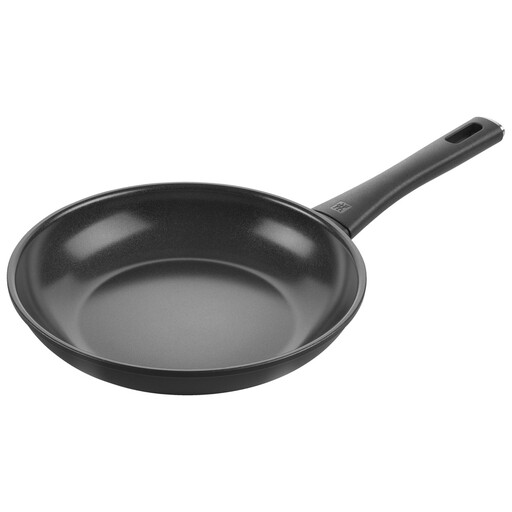
ZWILLING Frying Pan 24 cm – Round Aluminium Skillet with Ceramic Coating
Why This Fits Their Persona: Ideal for those looking for a reliable, toxin-free pan for daily use. The CeraForce ceramic coating is explicitly PTFE- and PFOA-free, making it excellent for gently cooking eggs, fish, or vegetables.
The mineral-based CeraForce ceramic coating is designed for durability, avoiding the pitfall of short-lived non-stick performance. It is explicitly free of PTFE/PFOA, offering transparency regarding harmful substances.
Forged aluminum body for fast, even heat distribution. High heat resistance and oven-safe up to 250°C.
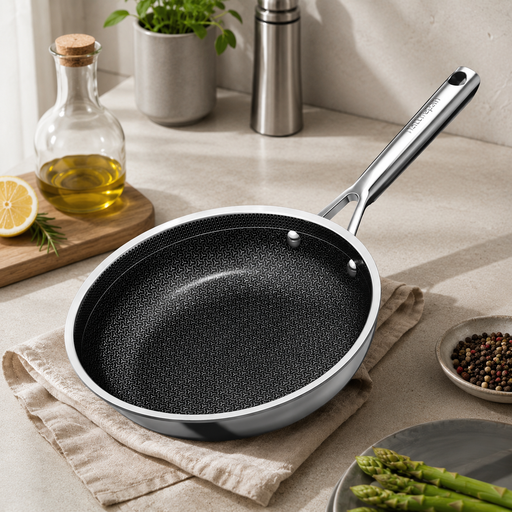
naturepan Hybrid Ceramic Frying Pan 28 cm
Why This Fits Their Persona: Perfect for cooks who value performance and versatility. The hybrid construction allows for searing like in a stainless steel pan while offering the benefits of a non-stick coating. Its high oven-safe temperature is ideal for finishing steaks.
The 5-ply construction with a stainless steel core prevents the "hotspot" effect and ensures professional heat control. The diamond-titanium reinforced ceramic coating is designed for scratch resistance and durability.
Combines the benefits of stainless steel and non-stick. Free of PFAS, PFOA, and PTFE. Very high oven-safe temperature up to 260°C.
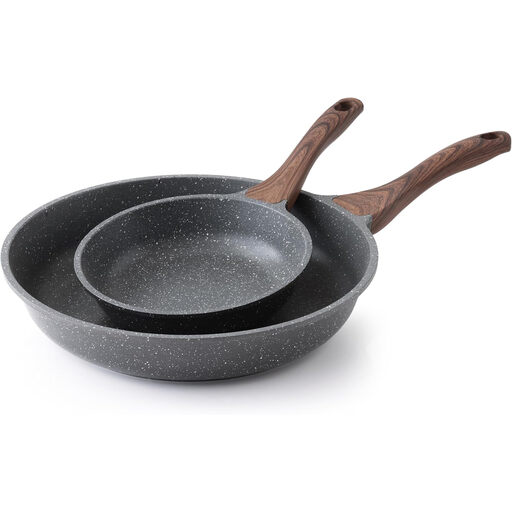
SENSARTE Frying Pan Set with Swiss Granite Coating
Why This Fits Their Persona: This set offers solid value for money for a starter kitchen or for those seeking a straightforward, functional solution for everyday dishes like pancakes or omelets. Its induction compatibility makes it future-proof.
It relies on a proven Swiss ILAG granite coating that provides reliable non-stick performance. The cast aluminum body is robust against warping, which minimizes the "hotspot" effect.
Good value for money as a set. Suitable for all stovetops, including induction. Made without intentionally added PFOA.
Looking for more options?
We have compiled a complete, up-to-date list of products that fully meet these strict selection criteria and safety regulations.
Frequently Asked Questions (FAQ)
How do I properly care for a non-stick frying pan to extend its lifespan?
- Avoid Overheating: Never heat the pan empty on high. Use low to medium heat.
- Use the Right Utensils: Only use utensils made of wood, silicone, or heat-resistant plastic. Metal utensils will scratch the coating.
- Hand Wash: Even if many pans are listed as dishwasher-safe, hand washing is strongly recommended. Let the pan cool completely, then clean it with a soft sponge and mild dish soap.
- No Thermal Shock: Never pour cold water into a hot pan. This can cause warping or cracks in the coating.
Is a ceramic pan always the better choice?
Not necessarily. A ceramic pan is an excellent choice for health-conscious cooks who want to avoid PTFE. It offers good non-stick performance but can be more sensitive to overheating and improper handling. A high-quality, PFOA-free PTFE pan can offer more robust and durable non-stick performance with proper care, especially with frequent use. The choice depends on your personal priorities.
How can I tell if my pan is truly suitable for induction?
The induction symbol (a coil) on the packaging or the pan's base is the first clue. For a simple test at home, hold a magnet to the outer bottom of the pan. If the magnet sticks firmly, the base is ferromagnetic and therefore suitable for an induction cooktop. A weak or non-sticking magnet indicates that the pan will not work, or will work very inefficiently, on an induction hob.