
No-Drill Pleated Blinds: 2026 Buyer's Guide and Recommendations
A no-drill pleated blind offers a functional solution for privacy and sun protection without requiring any structural alterations to the window frame. This makes them an ideal choice for renters or homeowners who want to avoid damaging windows and doors. Installation typically relies on clamp or adhesive systems, ensuring a clean, residue-free removal. This guide will analyse the key technical criteria for selecting the right model and introduce specific product recommendations.
Buyer's Guide: Technical Selection Criteria
Your choice of a clamp-fit pleated blind should be based on a careful analysis of the mounting method, material properties, and precise dimensions.
1. Mounting Types: Clamp-Fit vs. Adhesive Mount
Drill-free installation of pleated blinds relies on two primary mechanisms:
- Clamp-Fit System (Clamp Brackets): This method involves clamping adjustable brackets directly onto the window sash. The clamp's span is generally designed for standard window frame thicknesses. This system is primarily suitable for uPVC windows that can be tilted or opened. Its advantages lie in its high stability and ease of repositioning.
- Adhesive Mounting: With this technique, brackets are fixed directly onto the cleaned window frame or glass pane using special adhesive strips. This method is an option for fixed windows or frames where clamping is not feasible. The load-bearing capacity depends significantly on the quality of the adhesive and the condition of the surface. A clean, grease-free mounting surface is crucial for a lasting hold.
2. Material and Light Transmission
The functionality of a pleated blind is determined by the properties of its fabric. Polyester is typically used, available in various densities and with different coatings.
- Translucent: These fabrics filter sunlight, reduce glare, and provide basic privacy. The room remains bright and welcoming.
- Opaque: An opaque fabric allows light to pass through diffusely but completely blocks the view from the outside. This ensures privacy without completely darkening the room.
- Blackout Pleated Blind: These models feature a special coating on the back (often thermally reflective) that almost completely blocks incoming light. They are designed for bedrooms and children's rooms where maximum darkness is required.
3. Determining the Correct Dimensions
Precise measurement is fundamental to the functionality and appearance of the pleated blind.
- Width: Measure the width of the glass pane. Add approximately 2 cm to this measurement on each side to minimise light gaps. The recommended order width is therefore: Glass Width + 4 cm. Ensure the blind does not obstruct the window handle.
- Height: Measure the entire height of the window sash, including the frame. The order height should correspond to this measurement to ensure complete coverage.
Our Top Picks for 2026
The following products have been selected based on their technical specifications and installation flexibility.
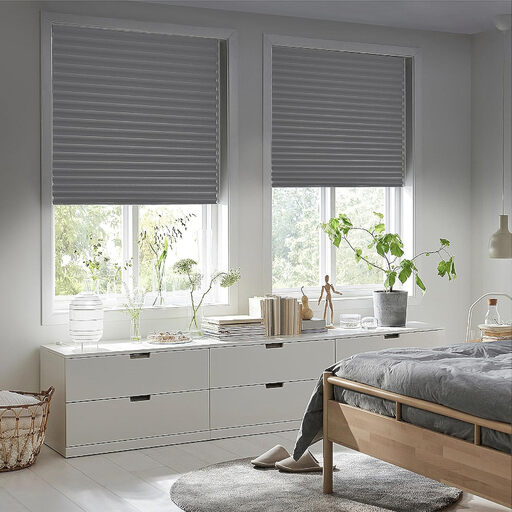
1. Dream-seeker Pleated Blind 90x100cm, Light Grey, Translucent
-
Why we recommend this product: This model combines flexible installation, using either a clamp-fit system or adhesive brackets, with a translucent fabric. The woven polyester material provides effective privacy and sun protection without significantly darkening the room, making it a balanced solution for living and work spaces.
-
Advantages:
- Installation: Drill-free installation via clamp or adhesive system.
- Material: Moisture-resistant, easy-care polyester fabric.
- Operation: Infinitely adjustable via an operating handle.
- Light Control: Translucent for a bright room atmosphere while ensuring privacy.
-
Best suited for: Users who need effective glare reduction and privacy in living rooms, offices, or kitchens, but do not want to sacrifice natural daylight.
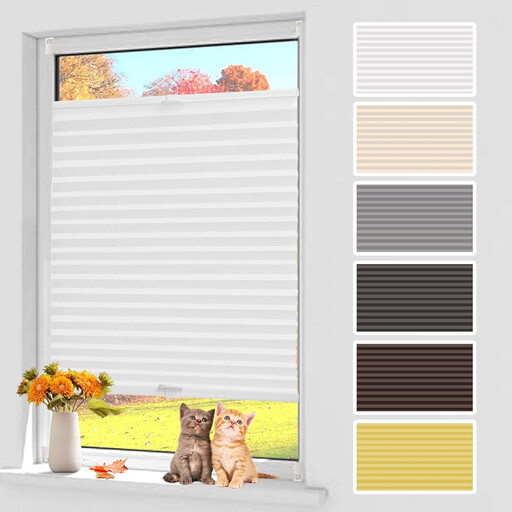
2. Dream-seeker Pleated Blind 80x100cm, White, Blackout
-
Why we recommend this product: The primary function of this blackout pleated blind is to almost completely block incoming light. The light-proof fabric creates a dark environment optimised for bedrooms. The white colour provides a neutral look from the inside.
-
Advantages:
- Function: High degree of blackout for maximum light control.
- Installation: Damage-free fitting with clamp and adhesive brackets.
- Material: Dense polyester fabric with light-blocking properties.
- Application: Suitable for windows and doors in interior spaces.
-
Best suited for: Individuals looking for an effective blackout solution for bedrooms, children's rooms, or home cinemas who prefer a simple, drill-free installation.
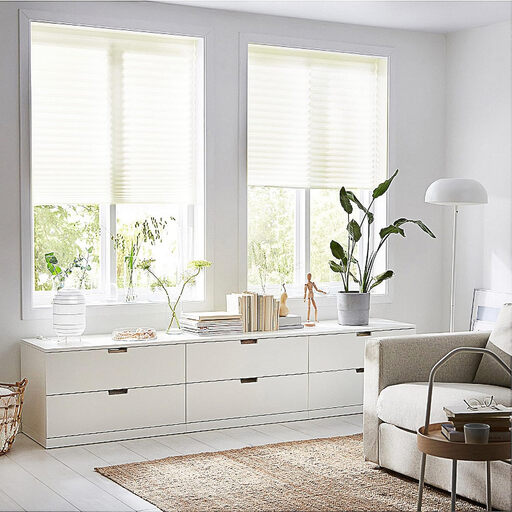
3. Dream-seeker Pleated Blind 75x120cm, Beige, Translucent
-
Why we recommend this product: This no-drill pleated blind in beige offers a warm and neutral aesthetic. Its light-filtering fabric reduces glare and protects privacy while creating a pleasant lighting atmosphere. Weighing just 460g, it is a lightweight and easy-to-install system.
-
Advantages:
- Design: Warm beige tone that complements many interior design styles.
- Mounting System: Uncomplicated, tool-free clamp-fit installation.
- Features: Provides glare reduction, privacy, and sun protection.
- Material: Woven polyester, easy to care for and durable.
-
Best suited for: Users seeking a functional yet decorative window covering for living rooms, studies, or kitchens who appreciate a warm, inviting atmosphere.
Discover More Alternatives
If the models presented do not exactly match your dimensions or requirements, the market offers a wide range of similar solutions. For a larger selection of products based on adhesive mounting, you can explore our Adhesive Window Blinds category.
Frequently Asked Questions (FAQ)
1. How reliable is the mounting for a no-drill pleated blind? The stability of a no-drill pleated blind depends on correct installation. When properly attached to the window sash, clamp-fit systems offer a very secure hold due to their mechanical clamping action. With adhesive mounting, the bond's strength depends on the cleanliness and smoothness of the surface. Cleaning the window frame to be free of grease and dust before applying the adhesive pads is essential for a permanent hold.
2. Can a no-drill pleated blind be installed on a balcony door? Yes, installation on a balcony or patio door is possible, provided it is a standard door with a suitable frame for the clamp brackets. The maximum height of the blind must correspond to the height of the door sash. However, these systems are generally not suitable for sloped or skylight windows.
3. What is the technical difference between "opaque" and "blackout"? The difference lies in the fabric's degree of light transmission. An opaque material prevents anyone from seeing through it but still allows some daylight to filter diffusely into the room. A material classified as blackout is equipped with a special, light-proof layer that reduces light ingress to a minimum, ensuring near-total darkness.