
Motion Sensor Night Light Buyer’s Guide: Avoid Common Pitfalls
A late-night walk through your home shouldn't be a safety risk or a disturbance to the rest of the family. A motion sensor night light is a simple and energy-efficient solution to safely illuminate hallways, stairs, and rooms without fumbling for a light switch. However, the market is flooded with models whose practical utility varies greatly. Many buyers discover only after a short time that their new light is more of a nuisance than a help.
This guide reveals the three common pitfalls you should avoid and highlights the technical features that truly matter, enabling you to make an informed purchasing decision.
The 3 Most Common Pitfalls When Buying Sensor Lights
Before you decide on a model, you should be aware of the typical weaknesses that often only become apparent in everyday use:
- Inaccurate Sensor and Lack of Ambient Light Detection: A common issue is an overly sensitive sensor that reacts to the slightest movement—like a pet scurrying by—and activates the light unnecessarily. The opposite, a sluggish sensor that only responds when you nearly trip over it, is just as impractical. Even more problematic are models without a dusk-to-dawn light sensor, which also turn on in daylight, wasting energy.
- Wrong Light Colour and Unsuitable Brightness: Light that is too bright or cool white (over 4000 Kelvin) can disrupt your sleep-wake cycle and is unpleasantly glaring in the dark. A light that is too dim fails to serve its purpose as an orientation light. Many budget models offer no adjustment options here.
- Short Lifespan and Hidden Running Costs: A battery-operated night light can quickly become expensive if the batteries are depleted after just a few weeks. For models with built-in rechargeable batteries, low capacity or an outdated charging port is a major annoyance. The lifespan of the integrated LEDs is also a crucial factor that often disappoints in low-quality products.
What Really Matters: The Key Parameters
To avoid the issues mentioned above, you should check three core aspects before buying. These define the reliability and utility of a night light in everyday use.
1. Sensor Technology: PIR and Dusk-to-Dawn Sensors
A good LED light with a motion sensor combines two types of sensors:
- PIR Sensor (Passive Infrared): This sensor reacts to the heat radiation from moving bodies. Pay attention to the specified detection range (typically 3–5 metres) and the detection angle (often around 120 degrees). These values determine the distance and radius within which the light detects movement.
- Dusk-to-Dawn Sensor: This sensor measures ambient light and ensures the night light only switches on in darkness. This is a critical feature for energy efficiency.
2. Power Source: Plug-in, Rechargeable, or Battery
The choice of power source depends on the intended location:
- Plug-in night light: These models are maintenance-free and ideal for hallways, kitchens, or children's rooms where a socket is available. They offer constant and reliable performance.
- Rechargeable or battery-operated models: These offer maximum flexibility. They are perfect as a sensor cabinet light or an automatic stair light where no sockets are available. Models with a USB charging port are the more sustainable and practical choice compared to disposable batteries. Look for the battery capacity, specified in milliampere-hours (mAh), for longer runtime.
3. Light Quality: Colour Temperature and Brightness
The quality of the light is crucial for comfort and safety:
- Colour Temperature (in Kelvin): For night-time use, a warm white light colour of 2700 K to 3300 K is recommended. This light has a calming effect and is less disruptive to sleep than cool white light.
- Brightness (in Lumens): For an orientation light, low lumen values (approx. 15–40 lm) are often sufficient. They provide enough light for guidance without being glaring. Models with adjustable brightness offer the greatest flexibility here.
Recommended Products by Use Case
Based on the criteria above, we have identified a few products that are well-suited for specific user profiles and requirements.

Grifema Children's Night Light with 5 Brightness Levels
Why it's a match: A hassle-free, plug-and-play solution for hallways, children's rooms, or bathrooms. The direct socket connection eliminates the need for battery changes and ensures reliable operation whenever it's needed.
Thanks to its five adjustable brightness levels and warm white light colour (2700K), it avoids the pitfall of being too bright or glaring. The combination of a PIR and dusk-to-dawn sensor ensures energy-efficient operation.
Direct mains power (no battery costs), customisable brightness, very low power consumption of 0.5 W.
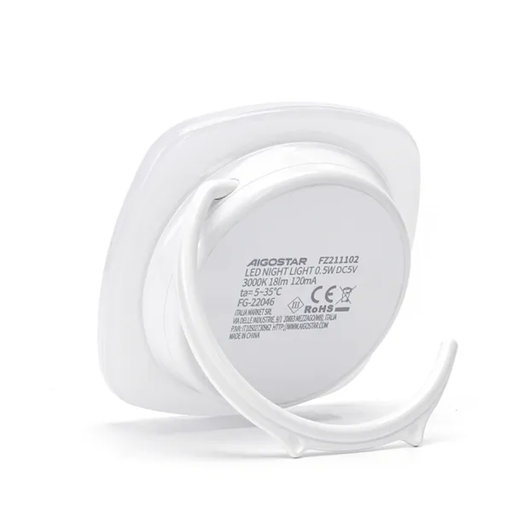
Aigostar LED Night Light with PIR & Light Sensor
Why it's a match: Ideal for places without a power socket, such as cabinets, stair landings, or the basement. The compact, USB-rechargeable design with a hook allows for quick, tool-free installation exactly where light is needed.
This model solves the problem of hidden running costs with an integrated 500mAh battery that is rechargeable via USB. This saves you from constantly buying disposable batteries. The warm white light colour (3000K) is easy on the eyes.
USB-rechargeable, flexible mounting options, compact design, 3.5-metre detection range.
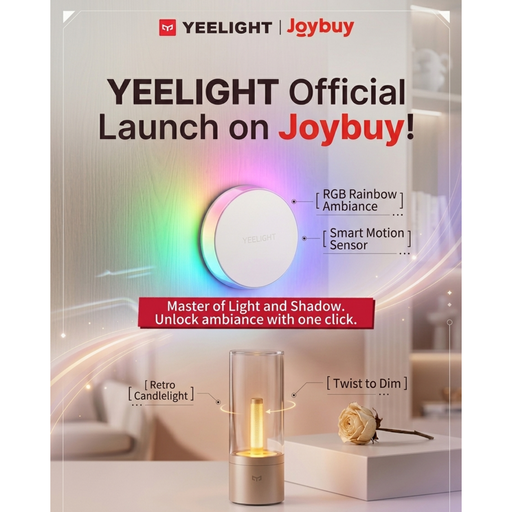
Yeelight Vega RGB Night Light with Motion Sensor
Why it's a match: For anyone looking for more than just a functional light. This model combines an orientation light with an ambient mood light, and its modern design and RGB colour options allow it to blend seamlessly into living rooms, bedrooms, or gaming rooms.
With adjustable RGB colours and 11 preset effects, it offers complete control over light colour and mood, thus avoiding the pitfall of unsuitable light quality. The modern USB-C port and magnetic mount represent a contemporary and durable design.
RGB colour-changing for ambient light, USB-C rechargeable, magnetic mounting, modern design.
Looking for More Options?
We've compiled a complete, up-to-date list of products that meet these strict selection criteria and comply with current safety regulations.
Frequently Asked Questions (FAQ)
1. How long does the battery last on a wireless motion sensor night light?
Battery life varies greatly depending on the battery capacity (mAh), frequency of activation, and set brightness. In automatic mode, many models last for several weeks to months on a single charge. Pay attention to the manufacturer's specifications and choose a model with at least a 500 mAh battery for solid runtime.
2. Can I adjust the brightness and illumination time?
Many modern sensor lights offer these features. Some have fixed brightness levels, while others are continuously dimmable. The illumination time after the last detected motion is often set to a fixed value (e.g., 20, 30, or 60 seconds), which strikes a good balance between convenience and energy efficiency. Check the product specifications to ensure the model meets your needs.
3. Where is the best place to install a sensor light?
For an automatic stair light, installation at the top and bottom of the stairs at knee or ankle height is recommended to illuminate the steps without causing glare. In hallways, a low position is also ideal. For a sensor cabinet light, mount the light inside near the door so it reacts immediately upon opening. Avoid installing it opposite heat sources like radiators or in high-traffic areas to minimise false triggers.