
Motion Sensor Lights: A Buyer's Guide to Choosing the Right One
A light that turns on automatically when you enter a room is not only convenient, but also increases safety and helps save energy. However, the market for lights with motion sensors is overwhelming. Many products promise more than they can deliver, leading to frustration instead of relief. Before you make a decision, it's crucial to understand the most common pitfalls that can lead to a poor purchase.
As your Joybuy Product Recommendation Officer, I'm here to help you separate the wheat from the chaff. We'll shine a light on the critical features that define a good motion sensor light and show you how to make the right choice for your needs.
The 3 Most Common Pitfalls When Buying Motion Sensor Lights
Many buyers are swayed by marketing promises, but overlook crucial technical details. This often results in products that are impractical for everyday use.
- Inadequate Sensor Technology: A common annoyance is sensors that trigger too late, not at all, or at the slightest provocation. Budget-friendly models often react sensitively to warm air from heaters or small pets, while failing to detect a person sitting still in a room and turning the light off.
- Short Lifespan Due to Poor Power Supply: The disappointment is particularly great with battery-powered models when the light constantly needs to be recharged. Insufficient battery capacity or inefficient solar panels that struggle to charge in overcast climates can quickly render a
solar light with motion sensoruseless. - Unsuitable Light Quality for the Application: A cold-white, glaring light in the bedroom disrupts sleep patterns, while a light that's too dim in the basement or garage fails to ensure safety. The lack of dimming functions or an inappropriate colour temperature severely limits usability.
What Really Matters: The Key Parameters
To avoid these mistakes, you should focus on three objective criteria. These will help you realistically assess a product's performance and suitability.
1. Sensor Type and Detection Area
The type of sensor determines the light's reliability. The most common technologies are:
- PIR (Passive Infrared) Sensor: This sensor reacts to the heat radiation from moving bodies. It's the standard for most applications like hallways, stairs, or as a
night light with motion sensor. Pay attention to the detection angle (often 120°) and the range (typically 3–5 metres). - HF (High-Frequency/Radar) Sensor: These sensors emit microwaves and detect movement by changes in the echo. They can even detect motion through thin walls or furniture and react to the slightest movements. They are ideal for oddly shaped rooms or when you need the light to stay on during sedentary activities.
2. Power Supply and Efficiency
The choice of power source depends on the installation location and the desired flexibility.
- Mains-Powered (Plug-in): A
dimmable plug-in night lightoffers a maintenance-free, permanent solution for hallways and children's rooms. There's no need to worry about dead batteries. - Rechargeable Battery: A
battery-powered LED stripis extremely flexible and perfect as acabinet light with motion sensoror anunder-cabinet kitchen light. A crucial metric here is the battery capacity in milliampere-hours (mAh). A higher value means a longer runtime between charges. - Solar-Powered: An
outdoor light with motion sensorthat is solar-powered requires no wiring. Key factors here are the power of the solar panel and the capacity of the integrated battery to ensure reliable operation even on cloudy days.
3. Lighting Characteristics
The quality of the light is crucial for comfort and functionality.
- Brightness (Lumen): For an orientation light at night, 15–30 lumens are sufficient. For a kitchen work surface or a
wardrobe light, it should be 200 lumens or more. - Colour Temperature (Kelvin): Warm white light (approx. 2700–3300 K) creates a cosy atmosphere and is ideal for living rooms and bedrooms. Neutral or daylight white light (4000–6500 K) promotes concentration and is suitable for workspaces, garages, or outdoor areas.
- Dimmability: The ability to adjust the brightness significantly increases comfort, especially for an
automatic stair lightor a night light in the bedroom.
Top Picks for Every Need
Based on these objective criteria, we have identified some products that offer a well-thought-out solution for specific use cases.
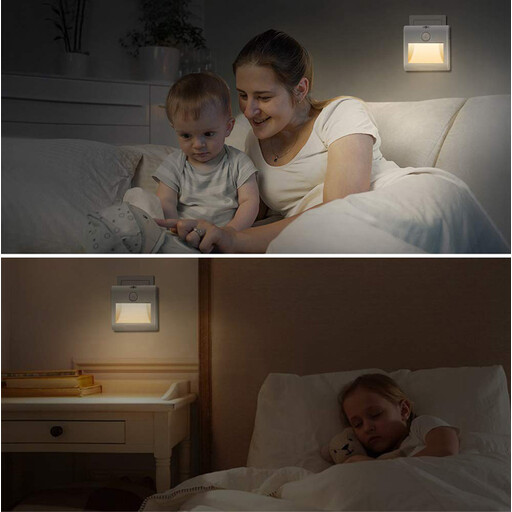
Set of 2 Motion-Sensing Night Lights with Touch Dimming
Why it's a great fit: Ideal for families and seniors who need simple and reliable lighting for hallways, stairs, or the bathroom. Just plug it into the socket to instantly enjoy greater safety during nighttime walks.
Thanks to being mains-powered, the problem of dead batteries is eliminated (Pitfall 2). The stepless touch dimming and warm white light (4000-4500K) prevent unsuitable brightness (Pitfall 3).
Two operating modes (always-on and sensor), a memory function for the last brightness setting, and a practical set of 2 for multiple rooms.
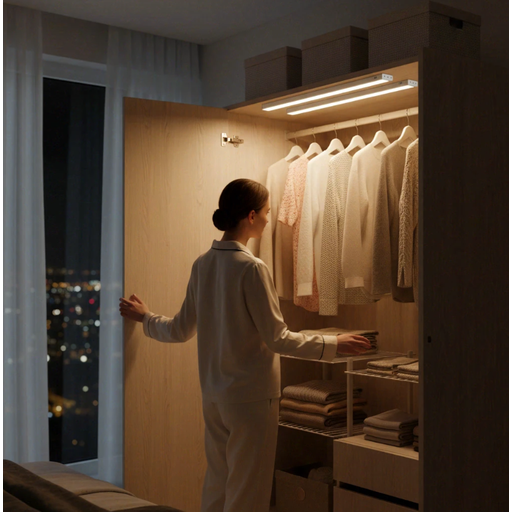
Ultra-Thin Cabinet Light 30cm, 2-Pack PIR Sensor LED Lamp
Why it's a great fit: Perfect for DIY enthusiasts and organisation lovers who want to illuminate dark wardrobes, kitchen cabinets, or storage rooms without any wiring. The ultra-thin design fits discreetly under shelves.
The integrated 1100mAh battery offers a solid runtime and is USB-rechargeable (Pitfall 2). With three selectable colour temperatures, the light can be adapted to any environment (Pitfall 3).
Tool-free installation with adhesive strips, a PIR sensor with a 3-5 metre range, and a set of two lights for versatile applications.
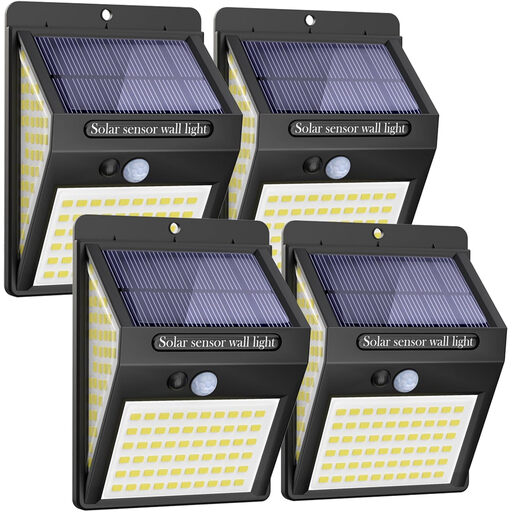
VIVREAL Solar Wall Lights, 4-pack 140Led
Why it's a great fit: For homeowners who want to safely illuminate paths, driveways, or the garden without needing a power connection. The solar lights deter unwanted guests and light the way in the dark.
The self-sufficient solar power supply bypasses the need for an external power source (Pitfall 2). The IP65 certification ensures the light is suitable for outdoor use in all weather conditions.
Three adjustable lighting modes, a wide 270° illumination angle for broad coverage, and a 4-pack for comprehensive outdoor lighting.
Looking for more options?
We have compiled a complete, up-to-date list of products that fully meet these strict selection criteria and UK/EU safety standards.
Frequently Asked Questions (FAQ)
1. How long does the battery last in an LED strip with a motion sensor? The battery life depends heavily on the battery capacity (mAh) and the frequency of use. A model with 1000 mAh or more can last for several weeks to months with average use (approx. 5–10 activations per day) before needing to be recharged via USB. Refer to the manufacturer's specifications for runtime as a guide.
2. Can a motion sensor light be triggered by pets? Yes, conventional PIR sensors can react to the body heat of pets. Some more advanced models offer adjustable sensitivity or "pet immunity," which reduces false alarms from smaller animals. For areas with pets, adjusting the mounting height of the sensor (above the pet's typical movement level) can also help.
3. What is the correct mounting location for an outdoor motion sensor? Mount an outdoor light with motion sensor at a height of about 2 to 2.5 metres. Aim the sensor so that it best detects movement across its detection area, rather than directly towards it. Avoid pointing it at busy streets, trees moving in the wind, or other heat sources (e.g., ventilation outlets) to minimise false alarms.