
Motion Sensor Lights: A Guide to Avoiding Common Buying Mistakes
A light that turns on automatically when you enter a room or approach your home offers comfort, security, and energy savings. However, the market is flooded with products whose real-world performance often fails to live up to their promises. False triggers, a short lifespan due to weather exposure, or an impractical power source can quickly lead to disappointment.
As your Joybuy Product Recommendation Officer, I'm here to help you navigate these pitfalls. This guide focuses on the critical technical specifications to help you find a lighting solution that works reliably and meets your needs.
Common Problems and What to Look For
Many buyers focus on brightness and design, but overlook functional flaws that can render a product useless. Here are three critical points that are often neglected:
- Unreliable Sensor Performance: A common annoyance is sensors that switch on for every passing cat, or conversely, only react when you're standing directly in front of them. This is often due to an unsuitable detection area or a lack of sensitivity adjustment.
- Lack of Weather Resistance: A light advertised as "suitable for outdoor use" is not automatically protected against heavy rain or dust. An inadequate IP rating on an
outdoor motion sensor lightwill quickly lead to corrosion and failure. - Impractical Power Source: A
battery-powered motion sensor lamppromises easy installation, but models with weak, built-in batteries require constant recharging or expensive battery replacements. For hardwired models, a complicated installation without clear instructions can become a major issue.
Crucial Selection Criteria for Your Motion Sensor Light
To make an informed decision, you should focus on objective technical parameters. These three factors are crucial for the long-term function and reliability of your lighting.
1. Detection Area and Sensor Technology
Most motion detectors use PIR (Passive Infrared) technology, which reacts to the body heat of people and larger animals. Two values are critical here:
- Detection Angle: Indicates how wide the monitoring area is. 120° is often sufficient for indoor spaces like hallways or a
cabinet light with sensor. For outdoor areas, angles of 180° or more are advantageous to cover larger spaces. - Range: Defines the maximum distance at which the sensor detects movement. For a
night light with motion sensor, 3–5 metres is enough. Anoutdoor motion sensor lightshould offer a range of 8–12 metres to effectively illuminate driveways or garden paths.
Look for models that allow you to adjust the range, light duration, and ambient light threshold (the level of darkness at which the sensor becomes active).
2. IP Rating for the Installation Location
The IP (Ingress Protection) rating is an international standard that indicates how well an electrical device is protected against the entry of foreign objects (first digit) and water (second digit).
- IP20: Protection against solid objects >12.5 mm, no protection against water. Suitable only for dry indoor areas.
- IP44: Protection against solid objects >1 mm and splashing water from all directions. This is the minimum standard for an
outdoor motion sensor lightin sheltered locations like covered entrances or balconies. - IP65: Complete protection against dust and protection against water jets from any angle. Necessary for lights that are exposed to unprotected rain and weather.
Choosing the wrong IP rating is one of the main reasons for the premature failure of outdoor lights.
3. Type of Power Supply
The choice of power supply depends on the installation location and your preferences.
- Hardwired (230V): Provides a constant and reliable power supply and is ideal for permanently installed outdoor lights or an
LED wall light with motion sensorin a hallway. Installation should be carried out by a professional. - Battery/Rechargeable: Perfect for places without a power outlet, such as closets, storage rooms, or for retrofitting. Look for models with rechargeable USB batteries to avoid ongoing costs. The battery capacity (in mAh) gives an indication of the runtime.
- Solar-Powered: A
solar light with motion sensoris an energy-efficient and environmentally friendly option for the outdoors. It requires no wiring. However, its performance is highly dependent on the amount of sunlight at the installation site.
Product Recommendations for Different Use Cases
Here are some models tailored to specific applications that address the pitfalls mentioned.

Yeelight Closet Sensor Light A40 (40cm) Black
Why This Fits Their Persona: Ideal for automatically lighting closets, kitchenettes, or dark corners. Installation is tool-free, and the light only activates in darkness and when motion is detected to conserve battery life.
It bypasses the impractical power supply issue with an integrated, USB-rechargeable battery. The magnetic mount avoids a complicated, permanent installation.
Ultra-slim design that integrates discreetly. Tool-free installation thanks to magnetic adhesive strips.
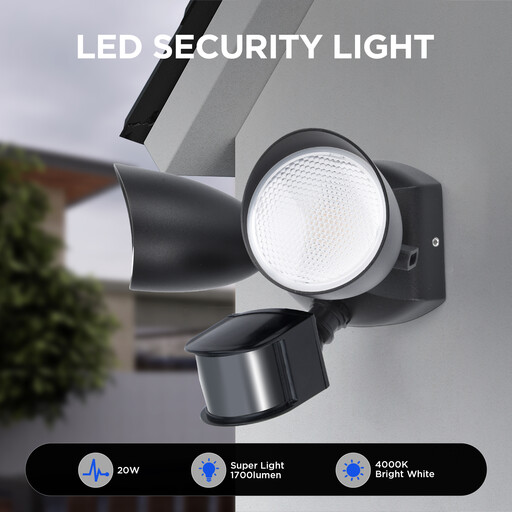
LUTEC 20W LED Security Light 1700LM 4000K
Why This Fits Their Persona: Designed for large-area illumination of driveways, gardens, and exterior walls. The high light output of 1700 lumens acts as a deterrent and ensures clear visibility in the dark.
Addresses the unreliable sensor trap with two adjustable light heads that allow for precise alignment of the detection area. Its robust construction is designed for permanent outdoor use.
High brightness (1700 lm) for maximum security. Hardwired connection for a reliable, maintenance-free power supply.
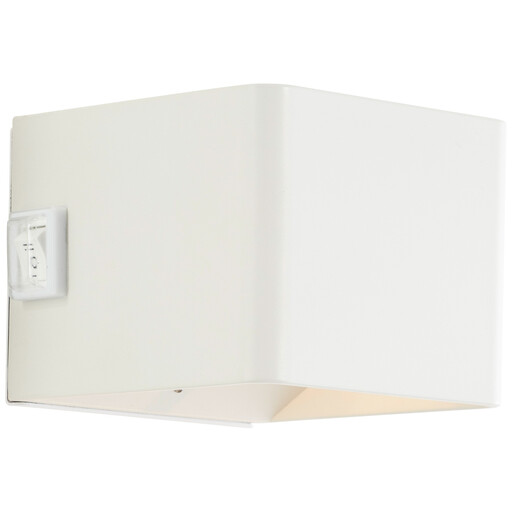
Brilliant Portable Outdoor LED Wall Light
Why This Fits Their Persona: Perfect for renters or for temporary lighting needs on a balcony, patio, or in a garden shed. Thanks to its battery operation and magnetic mount, no permanent installation is required.
Solves the problem of inadequate weather resistance with an IP44 rating, qualifying it for sheltered outdoor use. Its portability eliminates any installation hurdles.
Battery-powered and USB-rechargeable. The magnetic attachment allows for flexible positioning on metallic surfaces.

eufy Security Solar Wall Light Cam S120
Why This Fits Their Persona: Combines a solar-powered outdoor light with a security camera. Ideal for users seeking an all-in-one solution for security and lighting without wiring or ongoing costs.
Addresses the issue of false alarms with AI-powered person detection. The power supply is self-sufficient and sustainable thanks to the integrated solar panel. The IP66 rating ensures high weather resistance.
Combination of light and camera with local storage, meaning no monthly fees. Sustainable operation powered by solar energy.
Looking for more options?
We have compiled a complete, up-to-date list of products that fully meet these strict selection criteria and safety standards.
1. How long does a motion sensor light stay on?
The duration is adjustable on most models, typically ranging from 10 seconds to several minutes. You can configure the duration to ensure the light stays on long enough to, for example, safely get to your front door, without wasting energy.
2. Can a motion sensor be connected to any lamp?
There are two types of products: integrated lights, where the sensor is built-in, and separate motion detectors. A separate sensor, like the Aigostar Infrared Sensor, can be integrated into an existing electrical circuit to control one or more pre-existing lamps. When doing so, the sensor's maximum switching load (in watts) must be respected, and the installation should be performed by a qualified electrician.
3. How high should a motion sensor be mounted?
The optimal mounting height depends on the model and the desired detection area. A common recommendation for outdoor lights is around 2 to 2.5 metres. At this height, the sensor is difficult to tamper with and can cover a wide area without being constantly triggered by small animals on the ground. Always refer to the manufacturer's specific instructions in the product data sheet.