
Mite Vacuum Buyer’s Guide and Shopping Advice
For many people, especially allergy sufferers, families with children, and pet owners, a clean and hygienic home is a top priority. However, mattresses, sofas, and other upholstered furniture can become breeding grounds for dust mites, whose droppings can trigger allergies. A mite vacuum is a specialised device designed to tackle this problem. Yet, the market is flooded with a variety of models whose marketing promises often create more confusion than clarity. Before making a purchase, it's crucial to understand the common pitfalls that can lead to an unsatisfactory outcome.
Common Pitfalls When Buying a Mite Vacuum:
- Overestimating the UV-C Function: Many manufacturers promote the germicidal effect of UV-C light. While this is scientifically proven, it requires a sufficiently long and close exposure time. During a quick vacuuming motion across a mattress, the contact time is often too short to achieve a deep-seated effect. A device that relies solely on this feature may not be effective enough.
- Insufficient Suction and Beating Power: Mites and their allergens cling deep within textile fibres. Weak suction combined with a missing or ineffective beating function means that only surface dust is removed, while the actual culprits remain embedded in the fabric.
- Inadequate Filtration: A mite vacuum without a high-quality filtration system, such as a HEPA filter, can actually make the situation worse. Fine allergen particles are stirred up and released back into the room's air instead of being trapped in the device. This is particularly counterproductive for a vacuum for allergy sufferers.
What Really Matters in a Mattress Cleaner
To make an informed decision, you should focus on the core technical specifications that are crucial for effective cleaning. These factors determine whether a device merely cleans the surface or achieves a genuine deep-cleaning effect.
1. Combination of Beating Function and Suction Power
The most important feature of an effective mite remover is its ability to dislodge particles from the fibres. This is achieved through a beating function, where a rotating brush or a pulsating pad strikes the surface at a high frequency. Look for specifications like revolutions per minute (RPM) or beats per minute. A high frequency loosens mites, skin flakes, and mite droppings. Only then can powerful suction power, often specified in Pascals (Pa), reliably capture these particles. A device should offer a good balance of both functions.
2. The Filtration System: HEPA is the Standard
To ensure that captured allergens are not released back into the air, a multi-stage filtration system is essential. A HEPA (High-Efficiency Particulate Air) filter is the crucial standard here. These filters are capable of capturing over 99.9% of particles as small as 0.3 micrometres—including the tiny, allergy-triggering droppings from mites. A washable or easily replaceable filter also simplifies maintenance and ensures consistently high performance.
3. Useful Extra Features: Hot Air and Safety Mechanisms
Beyond the core functions, certain extras can enhance the device's utility.
- Hot Air Function: Some devices blow heated air (e.g., to 50–60°C) onto the surface. This helps reduce moisture in the mattress, making it harder for mites to survive. At the same time, the heat can help to denature allergens.
- UV-C Safety Shut-off: If you opt for a UV vacuum cleaner, ensure it has sensors that automatically turn off the UV light as soon as the device is lifted from the surface. This protects your eyes and skin from radiation.
Recommendations for Specific Needs
Instead of making a one-size-fits-all recommendation, we have identified models tailored to specific user profiles and their needs.
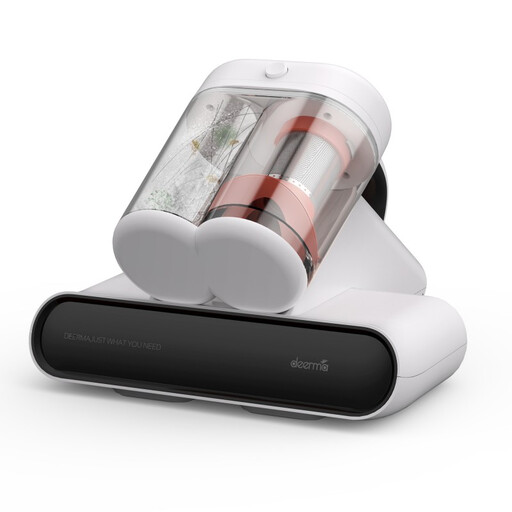
DEERMA Dual Cup Mite Remover CM980W
Why it's a good fit: Ideal for users looking for an effective solution for basic mattress cleaning without a large investment. It combines the most important functions in a compact device and is excellent for improving hygiene in the sleeping area.
The device doesn't rely on a single feature but combines a high-frequency beating function (12,600 beats/min), 60°C hot air, and UV-C light with 13 kPa of suction power. The dual-cup system is designed to maintain consistent suction.
Offers a 4-in-1 cleaning approach (beating, hot air, UV, suction) at a very accessible price point. The large 0.6-litre dustbin reduces the frequency of emptying.
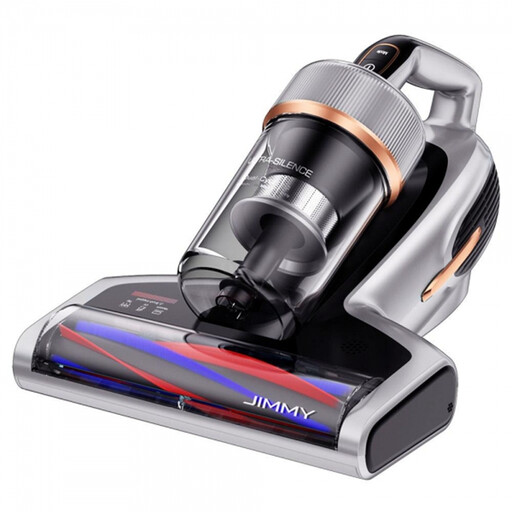
Jimmy BX7 Pro Mite Vacuum Cleaner
Why it's a good fit: For individuals with severe allergies or those who demand maximum cleaning performance. This model offers high power and smart features for a thorough and efficient deep clean of mattresses and upholstery.
It relies on a very powerful 700-watt motor and a patented composite brush roll for an intense beating action. The intelligent dust sensor, which indicates the level of dirt, makes cleaning measurable and more efficient than relying on UV light alone.
The intelligent dust mite sensor provides visual feedback on cleaning progress. The combination of a 60°C heating function, ultrasound technology, and powerful suction (16 kPa) offers a comprehensive approach.
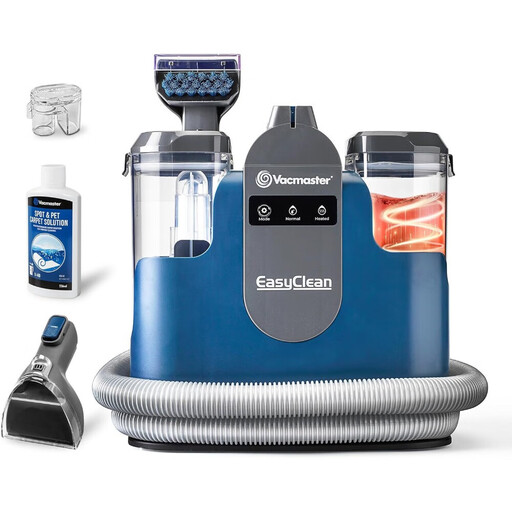
Vacmaster SCC1201H Heated Washing Vacuum
Why it's a good fit: For households that want to combat not only mites but also stains and deep-set dirt on upholstery, carpets, and in the car. This upholstery cleaner for mites and stains is a versatile tool for comprehensive fabric care.
This device is a washing vacuum whose main purpose is wet cleaning. It avoids the "gimmick" pitfall by combining a proven effective method—spraying and extracting cleaning fluid—with a practical heating function for stubborn stains.
The heated wet cleaning function effectively dissolves stains and dirt. The dual-tank system separates clean and dirty water, enabling hygienic cleaning of upholstery, car seats, and carpets.
Looking for more options?
We have compiled a complete, up-to-date list of products that fully meet these strict selection criteria and safety regulations.
Frequently Asked Questions (FAQ)
1. How often should you clean a mattress with a mite vacuum? For people with a dust mite allergy, using it every one to two weeks is recommended to keep the allergen load low. For general hygienic maintenance, cleaning the mattress once a month is sufficient. Pillows and duvets should also be treated regularly.
2. Is a mite vacuum with UV light really more effective? A UV vacuum cleaner can be a useful addition, but it shouldn't be the sole purchasing criterion. The effectiveness of the UV light heavily depends on the duration of use and the distance from the surface. A strong beating function, high suction power, and a good HEPA filtration system are more crucial for the physical removal of mites and allergens. Consider UV light as a supportive, not primary, cleaning feature.
3. Can't I just use my regular vacuum cleaner? A conventional vacuum cleaner is designed for cleaning floors. It typically lacks the specialised, high-frequency beating function needed to dislodge mites from the deep layers of a mattress. Furthermore, many standard vacuums are not equipped with fine enough HEPA filters to capture the tiny allergens and may instead circulate them back into the room's air. A specialised mattress cleaner is therefore significantly better suited for this task.