
Matte PLA Filament: A Buyer's Guide and Recommendations for 2026
Matte PLA filament is a material variant for FDM 3D printing, distinguished by its non-glossy, diffuse surface. This characteristic minimizes light reflection and can reduce the visibility of individual print layers (layer lines), resulting in a more visually uniform and high-quality appearance for the finished object. The material is based on polylactide (PLA), a bioplastic derived from renewable resources like corn starch, and is valued for its ease of use. The matte texture is typically achieved by adding specific additives during the manufacturing process.
Technical Selection Criteria for Matte PLA Filament
When selecting a matte PLA filament, several technical parameters that directly influence print quality and the final result must be considered.
1. Surface Finish and Aesthetics
The primary function of matte PLA is to create a low-reflection surface. This texture is particularly suitable for producing prototypes, architectural models, figurines, and other objects where an aesthetic, non-plastic appearance is desired. A high-quality matte PLA conceals fine imperfections that can arise during the printing process and lends the object a professional look.
2. Filament Diameter and Tolerance
The standard diameter for most desktop 3D printers is 1.75mm PLA. The dimensional accuracy of the filament is crucial for trouble-free printing. A low diameter tolerance, for example, ±0.03 mm or less, ensures a consistent material feed (extrusion) and minimizes the risk of nozzle clogs. An inconsistent diameter can lead to over- or under-extrusion, which visibly compromises print quality.
3. Printing Properties and Compatibility
Although PLA is considered an easy-to-print material, the additives in matte filament can slightly alter the optimal printing parameters.
- Printing Temperature: The recommended nozzle temperature for matte PLA typically ranges from 190 °C to 220 °C. It is advisable to follow the manufacturer's specifications and, if necessary, print a temperature tower to determine the ideal setting for your printer.
- Bed Temperature: A heated print bed is not strictly necessary for PLA but improves first-layer adhesion (bed adhesion). A temperature of 50 °C to 60 °C is a common guideline here.
- Print Speed: A moderate print speed of 40–60 mm/s often yields the best results in terms of surface quality.
4. Material Composition and Sustainability
PLA is known as a biodegradable filament because it can be broken down under industrial composting conditions. Its base of plant-based raw materials makes it a more resource-friendly alternative to petroleum-based plastics like ABS. Look for filaments made from virgin raw material without recycled waste to ensure consistent quality and colouration.
Our Selection: Matte PLA Filament for 2026
The following products have been selected based on their technical specifications and suitability for aesthetic printing projects.
CAILAB 3D Printer Filament PLA Matte - Matcha Green
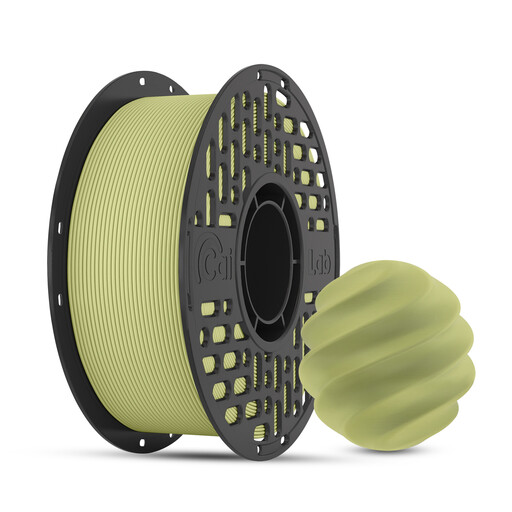
Why we recommend this product: This filament from CAILAB uses a new formula specifically developed for an artistic, matte finish. The technical data suggests a smooth material flow and high dimensional accuracy, which increases the likelihood of clog-free printing (clog-free PLA). The "Matcha Green" colour is part of a series that focuses on subtle, aesthetic hues.
Advantages:
- High-quality matte finish: Reduces the typical plastic look and conceals print layers.
- Reliable printing process: The formulation is designed for a smooth flow and good bed adhesion to minimize print failures.
- Dimensional accuracy: The manufacturer states that it adheres to strict diameter tolerances, ensuring consistent extrusion.
- Broad compatibility: Suitable for most FDM 3D printers that use 1.75 mm filament.
Who it's for: Users who want to create aesthetically demanding models with a professional feel and look, such as designers, artists, or hobbyists.
CAILAB 3D Printer Filament PLA Matte - Sakura Pink
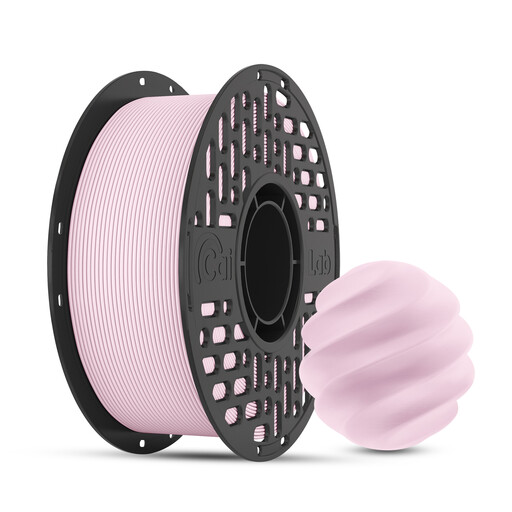
Why we recommend this product: This filament shares the core technical properties of the CAILAB matte series, including its reliability-focused formula. The "Sakura Pink" colour offers an option for projects requiring a soft yet distinctive hue. Its focus on a smooth, non-glossy surface makes it a suitable artistic filament.
Advantages:
- Elegant, non-glossy surface: Ideal for decorative objects and figurines where light reflections are undesirable.
- Stable filament diameter: Ensures a smooth printing process, even on longer print jobs.
- Good adhesion: The material properties promote solid adhesion to the print bed, reducing the risk of warping.
- Sustainable material base: Made from corn extract, the filament is non-toxic and biodegradable.
Who it's for: 3D printing beginners and advanced users looking for a reliable filament for 3D printers with a unique colour and matte texture.
CAILAB 3D Printer Filament PLA Matte - Hazy Blue
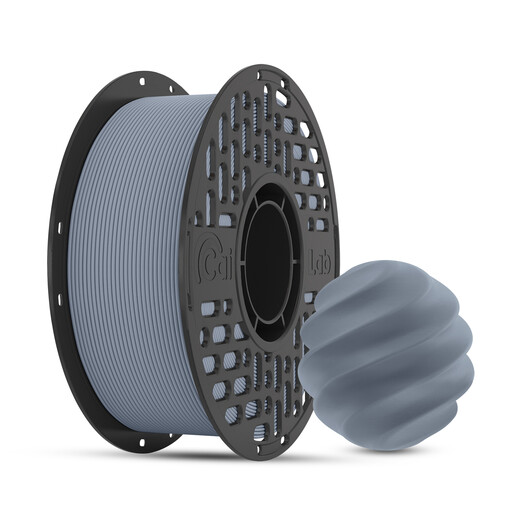
Why we recommend this product: The "Hazy Blue" variant completes the range with a cool, subtle shade of blue. Like the other filaments in the series, it is designed for a high printing success rate. The combination of a matte surface and precise colouration is well-suited for technical prototypes or design objects where form and structure are meant to be the main focus.
Advantages:
- Minimized layer lines: The matte texture helps to visually blend the individual print layers.
- Consistent material flow: Engineered to prevent nozzle clogs and enable a clean print.
- Fracture resistance: The material's toughness is designed to prevent breakage, even with complex geometries.
- Eco-friendly base: The filament is PLA-based and free of harmful additives.
Who it's for: Makers and designers who need a 3D printer filament for visual prototypes, architectural models, or other objects where a subtle, high-quality finish is crucial.
Other Options and Alternatives
If matte PLA doesn't meet the exact requirements for your next project, you can find a broader selection of materials in our main category. There, you'll find various filament types with different mechanical and optical properties listed.
Discover more filaments and accessories in the 3D Printer Toys category.
Frequently Asked Questions (FAQ)
1. What is the difference between matte PLA and standard PLA? The main difference lies in the surface finish. Standard PLA has a glossy, slightly reflective surface that emphasizes its plastic-like nature. Matte PLA contains additives that scatter light, creating a non-glossy, velvety texture. This can better conceal print layers and gives objects a more premium look. The mechanical properties are generally very similar.
2. Does matte PLA clog the 3D printer more often? Not necessarily. The additives that create the matte effect can potentially be more abrasive than pure PLA. However, with filaments that have high dimensional accuracy and a formula optimized for clog-free printing, the risk is minimal. It is advisable to use the manufacturer's recommended printing temperature and ensure the nozzle is clean.
3. Does matte PLA require special print settings? The print settings for matte PLA are very similar to those for standard PLA. A slightly higher printing temperature in the 200–220 °C range is often recommended to ensure good layer adhesion and a smooth flow. The settings for the print bed (approx. 50–60 °C) and print speed (40–60 mm/s) typically remain unchanged. A test print (e.g., a temperature tower) is always a good way to find the optimal parameters.