
Comprehensive MacBook Buyer's Technical Guide
Choosing a new Apple laptop in 2026 requires an analysis of the specific technical features across the current model lines. With the introduction of the M5 chip in the MacBook Air and the A18 Pro chip in the new MacBook Neo, users face a fundamental choice that depends on processor architecture, display size, and available interfaces. This guide provides an objective comparison of the specifications to enable an informed purchasing decision.
Buyer's Guide: Technical Criteria for Model Selection
The decision for a specific MacBook model should be based on balancing personal use cases with the technical parameters of the devices.
Processor Architecture: M5 vs. A18 Pro
The central differentiator of the 2026 models lies in their chip architecture.
- Apple M5 Chip: This processor is designed for users who require high computational and graphics performance. Featuring a 10-core CPU (4 performance cores, 6 efficiency cores), a GPU with up to 10 cores, and a memory bandwidth of 153 GB/s, the M5 is engineered for demanding tasks like video editing, software development, and intensive multitasking. The integrated Neural Engine Accelerators and hardware-accelerated ray tracing also provide a solid foundation for AI applications and graphically intensive programs.
- Apple A18 Pro Chip: Positioned as an efficient chip for everyday tasks, the A18 Pro has a 6-core CPU (2 performance cores, 4 efficiency cores) and a 5-core GPU. Its memory bandwidth is 60 GB/s. This System-on-a-Chip (SoC) is optimised for use cases such as web browsing, office applications, media consumption, and light photo editing, representing an energy-efficient solution that is reflected in the device's size and battery life.
Display Size and Technology: 13-inch vs. 15-inch
The choice of screen size affects both portability and working comfort.
- 13-inch Models (MacBook Air & MacBook Neo): These devices offer maximum portability with a weight of around 1.23 kg. The 13-inch MacBook Air features a 13.6-inch Liquid Retina display with a resolution of 2560 by 1664 pixels. The MacBook Neo has a 13-inch display with 2408 by 1506 pixels. Both are ideal for mobile use, such as a laptop for university or for commuters.
- 15-inch Model (MacBook Air): The 15-inch MacBook Air, with its 15.3-inch Liquid Retina display (2880 by 1864 pixels), offers a larger workspace. This is advantageous for users who frequently work with multiple windows simultaneously or need more space for creative applications. The weight increases moderately to 1.51 kg.
Apple Intelligence
A key feature of the new 2026 MacBook generation is the integration of Apple Intelligence. According to Apple, this is a personal intelligence system that provides system-wide assistance with tasks like writing, organising data, and automating workflows. Processing occurs primarily on-device, which benefits data privacy. The performance of these functions is directly coupled with the capabilities of the Neural Engine in the respective chip (M5 or A18 Pro).
Connectivity and Ports
The variety of ports is a practical distinguishing feature.
- MacBook Air (M5): Equipped with two Thunderbolt 4 (USB-C) ports, which support data transfer rates of up to 40Gb/s, device charging, and the connection of up to two external displays (up to 6K at 60Hz). It also includes a MagSafe 3 charging port and a 3.5mm headphone jack. Wireless communication is handled by the Apple N1 chip with Wi-Fi 7 and Bluetooth 6.
- MacBook Neo (A18 Pro): Offers one USB 3 (USB-C) port (up to 10Gb/s) and one USB 2 (USB-C) port (up to 480Mb/s). It supports one external display (up to 4K at 60Hz). Wireless communication is provided via Wi-Fi 6E and Bluetooth 6.
Our Recommended Choices
Based on the technical specifications, we present three configurations that cover different user profiles.
Apple 13-inch MacBook Air (M5, 2026) - Sky Blue
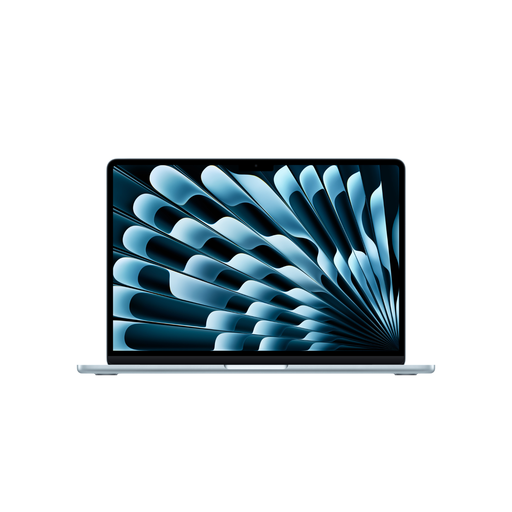
- Why we recommend it: This model represents a balanced combination of high mobility and significant computing power. The M5 chip enables demanding applications that go beyond everyday tasks, while the compact 13-inch format and low weight maximise portability.
- Pros:
- Powerful Apple M5 chip with a 10-core CPU and 8-core GPU.
- Long battery life of up to 18 hours of video playback (according to Apple).
- Modern connectivity with two Thunderbolt 4 ports and Wi-Fi 7.
- Support for two external displays with the laptop lid open.
- Who it's for: Students in technical fields, mobile professionals, and creative professionals who need a powerful yet lightweight device for on-the-go use.
Apple 15-inch MacBook Air (M5, 2026) - Starlight
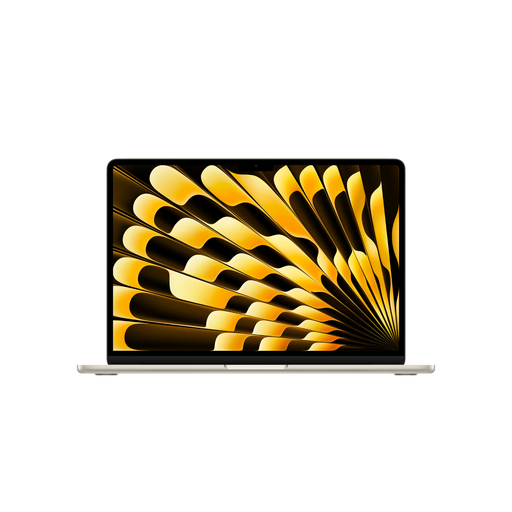
- Why we recommend it: The 15-inch MacBook Air addresses the need for more screen real estate without sacrificing the slim design of the Air series. The combination of the M5 chip with a 10-core GPU and the larger display makes it a versatile tool for productivity and media consumption.
- Pros:
- Large 15.3-inch Liquid Retina display for comfortable multitasking.
- Apple M5 chip with a more powerful 10-core GPU configuration.
- Six-speaker sound system with Spatial Audio.
- Maintains excellent battery life of up to 18 hours despite its size (according to Apple).
- Who it's for: Users who work primarily at a fixed desk but also need mobility, and who value a large display area for spreadsheets, photo editing, or running multiple programs side-by-side.
Apple 13-inch MacBook Neo (A18 Pro, 2026) - Citrus

- Why we recommend it: The MacBook Neo is positioned as an entry-level model for the Apple ecosystem. With the A18 Pro chip, it offers performance optimised for everyday tasks in a very compact and lightweight chassis. The focus is on efficiency and an accessible price-performance ratio.
- Pros:
- Energy-efficient A18 Pro chip, optimised for standard applications and AI functions.
- Very light and compact aluminium chassis (1.23 kg).
- Good battery life of up to 16 hours of video playback (according to Apple).
- Provides a solid baseline configuration for the macOS experience.
- Who it's for: School pupils, university students in non-technical fields, and home users whose main requirements include web browsing, word processing, email, and streaming, and who are looking for a reliable and portable device.
Other Options and Alternatives
Should the configurations presented here not exactly match your requirements, a broader portfolio of devices with different storage and processor configurations is available. You can find an overview of other models and brands in our main category for Laptops and Computers.
Frequently Asked Questions (FAQ)
1. What is the key technical difference between the MacBook Air M5 and the MacBook Neo? The main difference lies in the processor architecture and connectivity. The MacBook Air uses the more powerful M5 chip with higher CPU/GPU performance and memory bandwidth, ideal for demanding tasks. It also offers Thunderbolt 4 and Wi-Fi 7. The MacBook Neo uses the more efficient A18 Pro chip for everyday tasks and is equipped with USB 3/2 ports and Wi-Fi 6E.
2. Do the new 2026 MacBooks support multiple external monitors? Yes, the MacBook Air models with the M5 chip support the connection of up to two external displays with a resolution of up to 6K at 60Hz, even with the internal display open. The MacBook Neo with the A18 Pro chip supports one external display with up to 4K resolution at 60Hz.
3. What is Apple Intelligence and on which MacBooks is it available? Apple Intelligence is a system for intelligent assistance features integrated into macOS that, according to Apple, is designed for data privacy. It is available on all new 2026 models equipped with an M5 or A18 Pro chip, as they have the required Neural Engine to perform the AI tasks.
Written by: Joybuy Product Recommendation Officer