
LocknLock Food Storage Containers: A Buying Guide to Airtight, Stackable Storage
Whether you’re prepping meals, catering for the family or storing leftovers from dinner, LocknLock food storage containers are often sought after for their seals, stackability and versatility. In practice, though, the brand alone doesn’t determine whether a container is right for your household. Capacity, lid design and care instructions all affect how useful it will be in the fridge, freezer or on the go.
Common pitfalls when buying food storage containers
1. “Microwave-safe” is easy to misunderstand
Microwave-safe doesn’t automatically mean you can heat a container with the lid fully closed. With many plastic containers, you’ll need to remove or loosen the lid to let steam escape. Otherwise, pressure can build up and force the lid open.
Oven and hob use are separate considerations. According to the product details, the models featured here are not suitable for use in an oven, under a grill, on a hob or over direct heat.
2. Leakproof performance depends on the seal
A container may be advertised as leakproof without being suitable for every situation. Before you buy, check:
- Does it have several locking clips?
- Is there a removable silicone seal?
- Is the container designed for liquid foods?
- Does it need to be kept upright during transport?
- Is the lid difficult to open when the contents are frozen?
According to the product description, LocknLock models with four-sided locking clips are designed to seal in air and liquids. Even so, make sure the lid is fully clipped into place before carrying the container.
3. A large set doesn’t always save space
More containers don’t automatically mean better organisation. Round or differently shaped containers can leave a lot of unused space in your cupboard. Stackable storage containers with similar footprints are often more practical for the fridge and pantry. Nestable models fit inside one another when not in use, taking up less storage space.
What to compare before you buy
Capacity and shape
For individual snacks or side dishes, 180 to 500 ml is usually enough. Around 800 ml to 1.1 litres works well for lunch portions, leftovers and smaller meal-prep dishes. Larger 2.2 to 4.8-litre containers are designed for family portions, bigger quantities or prepped ingredients.
Remember to check the external dimensions too. A 1-litre container won’t necessarily fit in every fridge compartment. Rectangular shapes often make better use of shelf space than round ones.
Material and labelling
The LocknLock models listed here are made mainly from polypropylene (PP). Their product details describe them as BPA-free food containers. This is a material specification, and doesn’t replace checking the instructions for your intended use.
When choosing plastic containers, look out for:
- Suitability for contact with food
- Stated temperature limits
- Visible damage or warping
- Cleaning instructions
- Separate suitability of the container and lid
If the manufacturer’s instructions allow it, the silicone seal should be removable for cleaning. Otherwise, residue in the seal groove can lead to lingering smells or hygiene issues.
Using containers in the microwave, freezer and dishwasher
For microwave-safe food storage containers, open or remove the lid, use them only for reheating and take care when removing hot contents. The product details advise extra caution with fatty, sugary or tomato-rich foods, as these may cause staining or damage to the material.
Don’t fill freezer-safe food storage containers right to the brim, as liquids expand when frozen. Partially thaw frozen contents before opening. For several dishwasher-safe storage containers, the product details specify cleaning on the top rack.
Our picks for different households
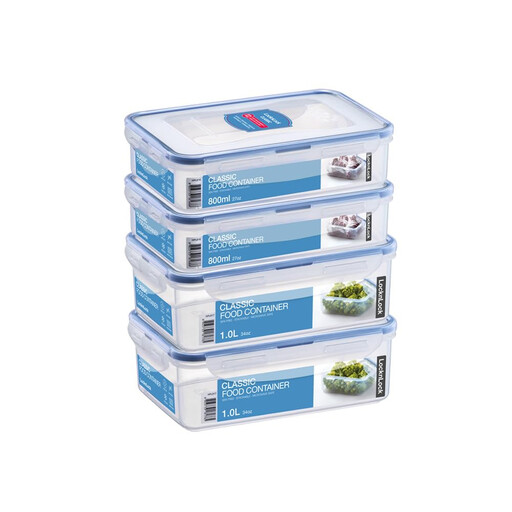
LocknLock Food Storage Container Set of 4
Why this product suits you: Two 0.8-litre containers and two 1-litre containers cover everyday portions of leftovers, snacks and simple meal-prep dishes.
The matching rectangular shapes make the containers easy to stack. According to the product details, they’re airtight and leakproof, and suitable for the fridge, freezer, microwave and dishwasher.
BPA-free PP, transparent containers and a total capacity of 3.6 litres.
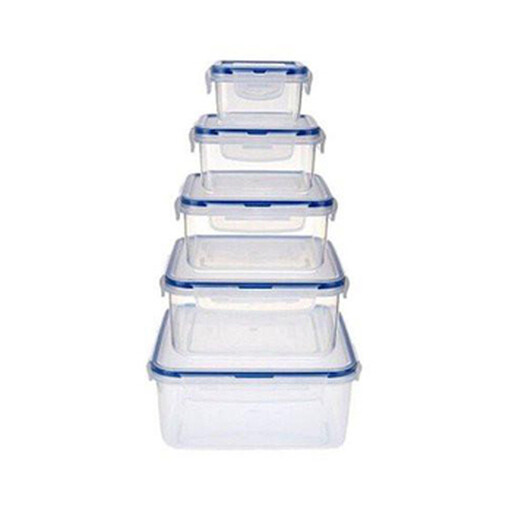
Lock & Lock 5-Piece Nestable Square Food Storage Container Set
Why this product suits you: With five containers ranging from 180 ml to 2.1 litres, this set is a good choice for households that need a variety of portion sizes.
The containers fit inside one another when not in use. According to the product details, the silicone seal can be removed, making it easier to clean around the locking areas.
Five graduated sizes, a nestable design and stated suitability for the freezer, fridge, microwave and top rack of the dishwasher.
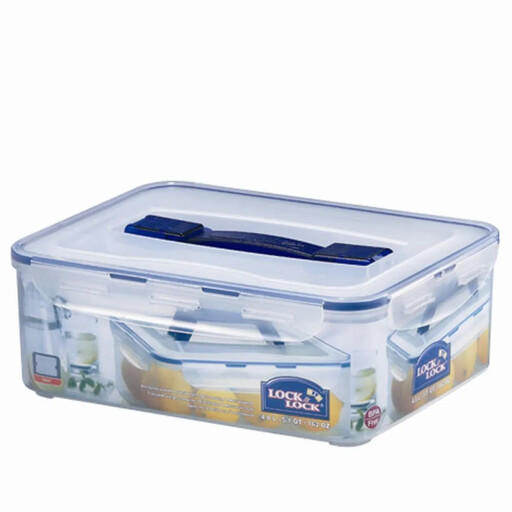
LocknLock Airtight Food Storage Container 4.8 L
Why this product suits you: With a 4.8-litre capacity, this container is ideal for larger quantities, family portions, pantry supplies or prepped ingredients.
The product details specify a four-sided locking mechanism, a silicone seal and a stackable rectangular shape. The lid must be removed before heating.
Large capacity, a transparent PP body, stated freezer suitability down to −20 °C and cleaning on the top rack of the dishwasher.
Looking for more options?
We’ve put together a complete, regularly updated list of products that meet these strict selection criteria and the safety regulations in force across the EU.
Care tips for long-lasting use
- Clean seals and lids with mild washing-up liquid before first use.
- Only remove silicone rings if they’re designed to come out, and don’t use sharp objects.
- Don’t use abrasive cleaners, steel wool or harsh sponges.
- Replace containers if they develop cracks, deep scratches or warping.
- Let hot food cool briefly before putting it into plastic containers.
- Don’t store carbonated drinks, dry ice or fermenting foods in tightly sealed containers.
- Check the seals all the way around before carrying liquids.
FAQs about LocknLock food storage containers
Are LocknLock food storage containers microwave-safe?
According to the product details, several of the models listed are suitable for reheating in the microwave. The lid must be fully removed or loosened first. The containers are not suitable for use in an oven, on a hob or over direct heat.
What size is best for meal prep?
For a single meal, 800 ml to 1.1 litres is often a practical size. Larger portions or several ingredients can be stored in 2.2 to 4.8-litre containers. The best option depends on portion size, fridge space and how you plan to transport it.
What’s the right way to clean leakproof food storage containers?
Clean the lid, seal and container separately if the design allows. For dishwasher-safe models, the top rack is usually recommended. Let all the parts dry completely before sealing the container again.