
Modern Living Room Wall Clock Buying Guide: Avoid Common Pitfalls
A modern wall clock in the living room is more than just a timepiece. It's a design statement, an expression of personal style, and a central focal point on your wall. However, the search for the perfect model can quickly become overwhelming. Between grandiose marketing promises and hidden flaws, it's often difficult to find a clock that is both aesthetically pleasing and functionally durable. Many buyers only realise after some time that their new prized possession has defects.
This guide will help you navigate the typical pitfalls. We focus on the objective criteria that truly matter and show you what to look for to make an informed decision.
The 3 Most Common Traps When Buying a Wall Clock
Before we delve into the important features, let's look at the problems that frequently lead to disappointment:
- The Material Deception: Online images can be deceiving. A clock that looks like high-quality metal may arrive only to be revealed as thin, painted plastic. Such models quickly lose their premium feel and are more susceptible to damage.
- The Noise Trap: Many standard quartz movements produce a distinct ticking sound. While this may not be bothersome in a busy environment, it can quickly become a nuisance in the quiet atmosphere of a living room or office.
- The Design Trap: Designing a minimalist wall clock is an art. Often, this comes at the expense of functionality. Hands that barely stand out from the dial or a lack of markers make reading the time from a distance unnecessarily complicated. A good living room wall clock must balance both: style and readability.
Crucial Criteria to Consider Before Buying a Living Room Wall Clock
To avoid buyer's remorse, you should carefully examine three core aspects. These parameters determine the longevity, functionality, and aesthetics of your new wall clock.
The Movement: The Invisible Component with a Major Impact
The heart of every clock is its movement. In modern wall clocks, quartz movements are dominant. They are battery-operated, precise, and low-maintenance. However, the crucial difference lies in the motion of the second hand:
- Standard Quartz Movement: The second hand moves in discrete one-second steps. This creates the classic, audible ticking sound.
- Movement with a Sweeping Second Hand: Here, the second hand moves in a smooth, continuous motion. These models are virtually silent and are therefore an excellent choice for quiet spaces like the living room or bedroom.
Look for terms like "silent movement," "sweep movement," or "sweeping second hand" in the product description if a quiet environment is important to you.
Material and Style: From Minimalist to Extravagant
The material shapes not only the look but also the tactile feel and durability of the clock.
- Metal (Aluminium, Steel): Ideal for a modern, industrial, or elegant look. A black designer wall clock made of powder-coated metal looks particularly sophisticated. The black and gold wall clock combination is a popular trend that exudes luxury and modernity. Metal is robust and easy to care for.
- Wood: Brings warmth and a natural feel to the room. It pairs well with Scandinavian, rustic, or nature-inspired interior styles. Pay attention to the type of wood and the surface finish to assess its quality.
- Plastic/Acrylic: An affordable and lightweight alternative. However, the quality differences here are enormous. High-quality acrylic glass can look very elegant, while cheap plastic is often a letdown.
Size and Proportion: More Than Just Diameter
The size of the clock must be appropriate for the wall and the room. A 30cm round wall clock is a versatile standard that works well in most living rooms and offices. For a large, empty wall, however, a model with a diameter of 50 cm or more can create an impressive effect.
More important than the sheer diameter is readability. Check the following points:
- Contrast: Do the hands and numerals stand out clearly from the dial in terms of colour?
- Hand Length: Do the hands reach close enough to the markers to allow for clear time-telling?
- Dial Design: Are the hour markers (whether numbers or lines) easily visible from a typical viewing distance of 3-5 metres?
Top Picks for Different Styles
Based on the objective criteria mentioned above, we have identified a few models that are well-suited for specific requirement profiles.
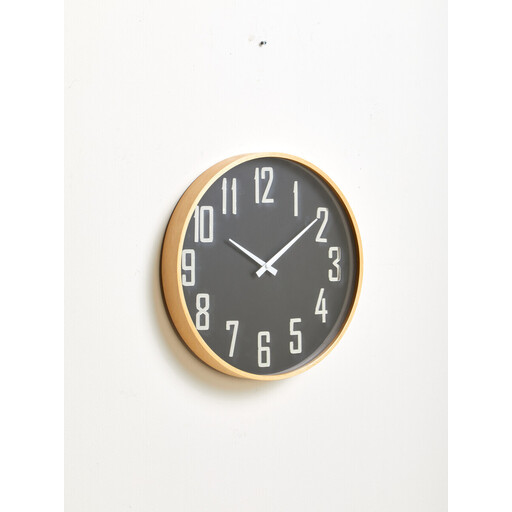
Premier Housewares Functional Black Wall Clock
Why this model is a great fit: The simple, two-tone design with a wooden frame and a black dial is an ideal match for modern or Scandinavian-inspired interiors. The focus is clearly on function without sacrificing a high-quality aesthetic.
The use of robust wood and glass avoids the material deception of cheap plastic. The classic dial with clear hands is easily readable from a distance, thus sidestepping the design trap.
Its 30 cm diameter and timeless design make it versatile enough for use as a modern kitchen clock or in a home office.
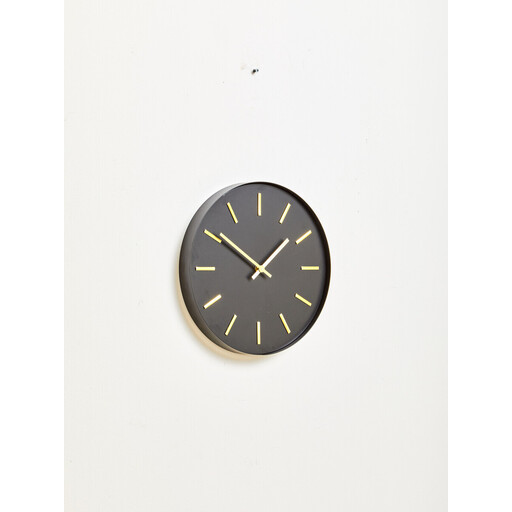
Premier Housewares Black And Gold Wall Clock
Why this model is a great fit: This black and gold wall clock is a clear statement piece. It is designed for those who see their clock not just as a timepiece, but as a central decorative element that radiates elegance and a touch of luxury.
Crafted from metal, it provides a high-quality feel and appearance, thereby avoiding the material trap. Despite its minimalist design, the golden hands and markers on a black background ensure strong contrast and thus good readability.
The strong visual impact makes this black designer wall clock a focal point that adds a special touch to modern and elegant living concepts.
Looking for More Options?
We have compiled a complete, up-to-date list of products that fully meet these strict selection criteria.
Frequently Asked Questions
How high should a wall clock be hung in a living room?
As a general guideline, hang the clock so that its centre is at about eye level. This typically corresponds to a height of 1.50 m to 1.60 m from the floor. More importantly, however, the clock should be clearly visible from the main seating areas in the room without you having to raise or lower your head significantly.
What does a "sweeping second hand" mean on a wall clock?
A "sweeping second hand" describes a movement where the second hand rotates in a continuous, fluid motion rather than jumping in individual steps. The main advantage is that these movements are virtually silent. This makes them the ideal choice for noise-sensitive areas such as the living room, bedroom, or an office.