
The Right LED Strip for 2026: A Technical Guide
An LED strip, also known as a light ribbon or tape light, is a flexible circuit board populated with light-emitting diodes (LEDs). This lighting solution is primarily used to create indirect lighting and accent effects in residential and professional environments. Selecting the right product depends on specific technical parameters that define its intended application, desired light quality, and control options. This guide breaks down the crucial criteria for making an informed purchasing decision.
Buyer's Guide: Technical Selection Criteria for LED Strips
An LED strip's functionality is determined by its design and technical specifications. The following points are essential for making the right choice.
1. Light Technology: COB vs. SMD
The type of LEDs used significantly impacts the uniformity of the light.
- SMD (Surface Mounted Device): With this design, individual LED chips are placed at visible intervals along the strip. This can result in a 'dotted' effect or visible hotspots when viewed directly. SMD strips are widely available and come in various configurations.
- COB (Chip on Board): This technology mounts LED chips extremely close together under a continuous phosphor layer. The result is a completely uniform, dot-free beam of light. This technology is ideal for applications where the strip itself is visible or where perfectly even illumination is required, such as under-cabinet lighting in kitchens.
2. Colour Options and Colour Rendering
Colour options define the application, ranging from decorative to functional.
- Single Colour: These strips emit a single colour temperature, such as Warm White (approx. 3000 Kelvin) or Cool White (approx. 6500 Kelvin).
- RGB: By mixing the primary colours Red, Green, and Blue, these strips can produce a wide spectrum of colours. The entire strip always displays a single, uniform colour at any given time. A colour change applies to the whole strip simultaneously.
- RGBIC (Independent Control): This more advanced variant features integrated circuits (ICs) that allow individual segments of the strip to be controlled independently. This enables multi-colour gradients and dynamic effects on a single strip.
- CRI (Colour Rendering Index): The CRI indicates how true-to-life colours appear under the artificial light. A value of CRI > 90 is considered excellent and is crucial for areas where colour accuracy matters (e.g., wardrobes, work surfaces).
3. Control Methods
Interaction with the LED strip can be managed in several ways.
- Remote Control: A basic control with a remote is standard. There's a distinction between Infrared (IR), which requires a direct line of sight to the receiver, and Radio Frequency (RF), which offers a longer range and does not require line of sight.
- App Control: Smart LED strips can be operated with app control via Bluetooth or Wi-Fi. This unlocks advanced features like precise colour selection, scheduling, and synchronisation with other devices.
- Smart Home Integration: Models with Wi-Fi connectivity can often be integrated into ecosystems like Google Home, Amazon Alexa, or Apple HomeKit. The emerging Matter standard promises cross-brand compatibility and significantly simplifies setup.
- Music Sync: Many smart models offer a Music Sync feature. Using a built-in microphone or the audio output from a connected smartphone, the lighting reacts in real-time to music and ambient sounds.
4. Length, Installation, and Dimmability
Practical aspects are crucial for implementation.
- Length: Standard lengths like 5m are common. Most strips can be cut at marked points to fit specific lengths.
- Installation: Almost all models are self-adhesive. For a lasting bond, the surface must be clean, dry, and smooth.
- Dimmability: The ability to adjust brightness (dimmable) is a fundamental feature available on most modern LED strips, significantly enhancing user comfort.
Our Top Picks for 2026
Based on the technical criteria above, we present three products with different specialisations.
Vivreal COB LED Strip Light 16.4 FT 3000K
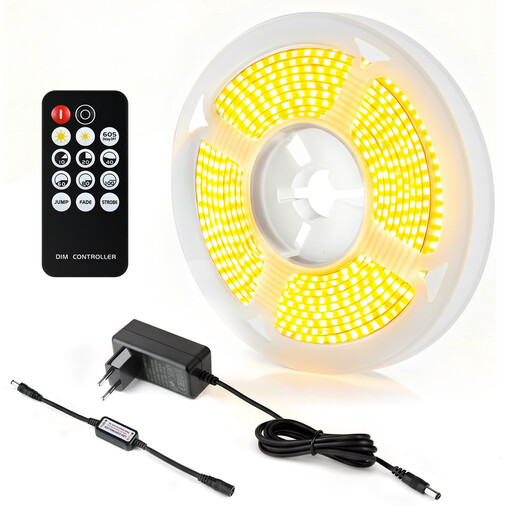
- Why we recommend it: This model focuses on superior light quality. Its COB technology produces a completely uniform, warm white light (3000K) with no visible hotspots. The high Colour Rendering Index (CRI 92+) ensures true-to-life colour representation.
- Advantages:
- Completely uniform and shadow-free illumination thanks to COB technology.
- High colour fidelity (CRI 92+), ideal for functional lighting.
- Simple brightness control (10%–100%) via an RF remote with a memory function.
- Best for: Users seeking high-quality, glare-free, and colour-accurate indirect lighting for living rooms, shelves, display cases, or workspaces, who don't need colourful effects.
Govee RGBIC Wi-Fi + Bluetooth LED Strip Lights (5M) with Matter Support
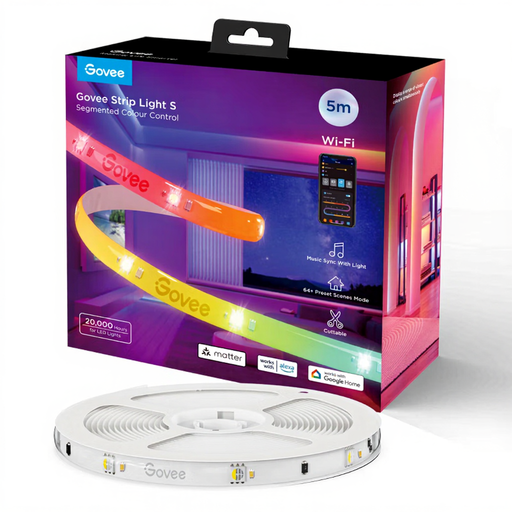
- Why we recommend it: The Govee strip is designed for maximum connectivity and dynamic effects. Its support for the Matter standard makes it future-proof and universally compatible with all major smart home systems. The RGBIC technology allows for stunning, multi-colour light gradients.
- Advantages:
- Smart home integration via Matter, Wi-Fi, and Bluetooth.
- Segmented colour control (RGBIC) for dynamic and fluid lighting effects.
- Built-in Music Sync function and access to a wide variety of scene modes via the Govee Home App.
- Best for: Tech enthusiasts, gamers, and users who want versatile, app- and voice-controlled ambient lighting with maximum customisation for their gaming setup or home cinema.
Vivreal HM-5-16 Smart RGB LED Strip Light – 5M
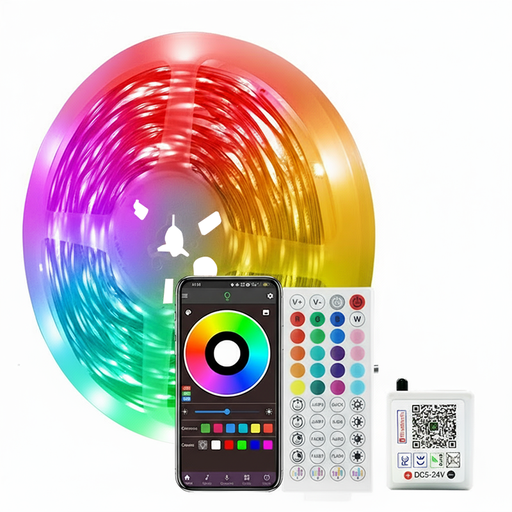
- Why we recommend it: This model offers a well-rounded package of smart features for decorative purposes. It combines the flexibility of app control via Bluetooth with the straightforward operation of an included 40-key remote.
- Advantages:
- Dual control options via app and remote.
- Features like Music Sync and a programmable timer function.
- Wide colour spectrum (RGB) for decorative lighting scenarios.
- Best for: Newcomers to smart lighting who are looking for a flexible and easy-to-install solution for parties, holidays, or accenting furniture and rooms.
Discover More Options
If the models featured here don't perfectly match your needs, the market offers a vast array of other configurations. You can find a wider selection of solutions for indirect lighting, including different lengths, light technologies, and control options, in our main Strip Lighting category.
Frequently Asked Questions (FAQ)
1. What is the difference between RGB and RGBIC LED strips? An RGB strip can only display a single colour across its entire length at one time. A colour change affects the whole strip. An RGBIC strip has additional control chips that allow different segments of the strip to light up in different colours simultaneously. This enables dynamic effects like rainbow gradients or chasing lights.
2. Can you cut an LED strip? Yes, most LED strips, including the 5m models featured here, can be cut with standard scissors at the designated markings (often indicated by a scissor icon). It is important to cut only at these copper contacts to avoid damaging the functionality of the remaining segments.
3. How do you properly install a self-adhesive LED strip? For the adhesive tape to bond optimally, the surface must be completely clean, dry, and free of grease. Clean the area beforehand, for example, with isopropyl alcohol. Peel off the protective film gradually and press the self-adhesive strip down firmly. Avoid peeling it off to reposition it, as this will reduce the adhesive's strength.