
LED Strip Buyer's Guide: Avoid Costly Room Lighting Mistakes
LED strips promise a simple and effective way to give any room a personal touch. Whether used as atmospheric smart lighting in the living room, dynamic gaming room decor, or functional TV backlighting, the applications are endless. However, the market is crowded, and many products fail to deliver on their advertising promises. This guide will walk you through the most common pitfalls and highlight the technical features you should look for to make an informed decision.
The 3 Most Common Problems with Budget LED Strips
Many buyers experience disappointment shortly after their purchase. Certain flaws are particularly common in budget-friendly models and can significantly diminish the enjoyment of your new lighting.
- Poor Adhesive Strength: A widespread annoyance is adhesive tape that loses its grip after just a few weeks or months. The strips often detach and hang unattractively, especially on rough surfaces, in corners, or due to the heat generated by the LEDs themselves. Reattaching them is often a hassle and rarely a permanent fix.
- Insufficient Brightness and Colour Inaccuracy: Product images often showcase vibrant, rich colours. The reality is frequently different: the brightness is too weak to effectively illuminate a room, and the colours appear washed out. Displaying a pure white is a particular challenge for many basic RGB LED strip models, usually resulting in a bluish or pinkish tint.
- Unreliable Controls: A poorly programmed app-controlled LED strip or a remote with minimal range and delayed responses can make operation frustrating. Features like music sync often react imprecisely or with a significant delay to ambient sounds, ruining the desired effect.
What Really Matters: A Deep Dive into Technical Specs
To avoid the problems mentioned above, a close look at the technical specifications is essential. Three core parameters determine the quality and longevity of your lighting.
LED Type and Density: The Heart of the Strip
The quality of the light depends directly on the light-emitting diodes used. Pay attention to two key metrics:
- LED Type: The designation, such as "5050" or "2835," describes the dimensions of the LED chip in millimetres (5.0 mm x 5.0 mm). For colourful RGB LED strip applications, 5050 chips are a popular choice because they combine three individual diodes (Red, Green, Blue) in one housing, enabling good colour mixing and high brightness.
- LED Density: This specification (LEDs per metre) is crucial for uniform illumination. Strips with only 30 LEDs/m can create a spotty effect ("hotspots") if directly visible. A density of 60 LEDs/m or more ensures a smoother line of light and more intense colours.
RGB vs. RGBIC: The Difference is in the Details
This technical distinction is critical for creating dynamic lighting effects.
- RGB: A conventional RGB LED strip can only display a single colour across its entire length at any given time. While you can change the colour, you cannot create gradients or multi-colour patterns.
- RGBIC (Independent Chip): This more advanced technology has integrated circuits (ICs) that allow individual segments of the strip to be controlled independently. This makes it possible to create flowing colour gradients, rainbow effects, and complex animations—a decisive advantage for modern gaming room decor or vibrant party lighting.
Control Options: From Remote to Voice Control
The method of control determines the convenience and versatility of your smart lighting.
- Infrared Remote: The simplest method. It's often included but requires a direct line of sight to the receiver and usually offers only basic functions.
- Bluetooth App: The connection is made directly between your smartphone and the LED strip. Setup is straightforward and offers more settings than a remote. However, the range is limited to about 10 metres.
- Wi-Fi App and Voice Assistants: Integrating the strip into your home Wi-Fi allows for control from anywhere, the creation of schedules, and linking with voice assistants like Alexa or Google Assistant. This is the most flexible option for a fully integrated smart home.
Top Picks by Use Case
Based on the quality criteria mentioned, we have curated a selection of products for various needs.
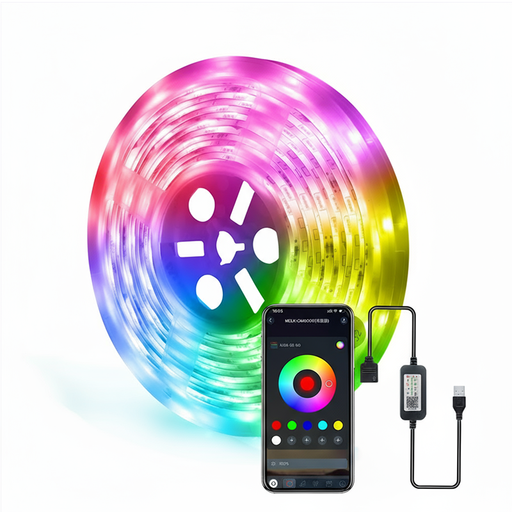
VIVREAL 5m USB LED Strips Multi-Color
Why This Fits Their Persona: Ideal for beginners looking to add accent lighting to a desk, TV, or bedroom. The USB power supply offers flexible installation, independent of a wall outlet. 5 metres is a great length for first-time projects.
App control bypasses the limitations of a basic remote, offering more command over colours and modes. To prevent adhesive failure, the surface should be thoroughly cleaned and dried before installation.
Flexible Power Supply: Can be powered by any 5V USB port (TV, PC, power bank).
App Control: Provides access to 16 million colours and a music sync function.
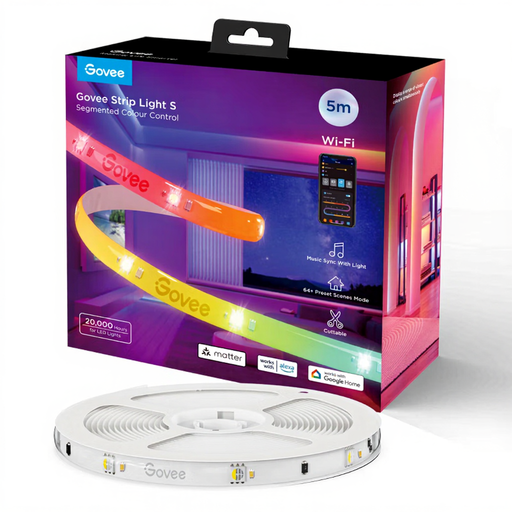
Govee RGBIC Wi-Fi + Bluetooth LED Strip Lights (5M)
Why This Fits Their Persona: This model is aimed at users who demand maximum control and stunning visual effects for their gaming setup or smart home. The RGBIC technology is the key differentiator here, enabling dynamic, multi-colour scenes.
RGBIC technology solves the problem of washed-out, single-colour displays. The Govee Home app is considered mature and reliable, providing stable control. The protective coating on the strip also enhances its durability.
RGBIC Technology: Enables multi-colour effects and gradients on a single strip.
Matter Support: Future-proof integration into all major smart home ecosystems (Apple, Google, Alexa).
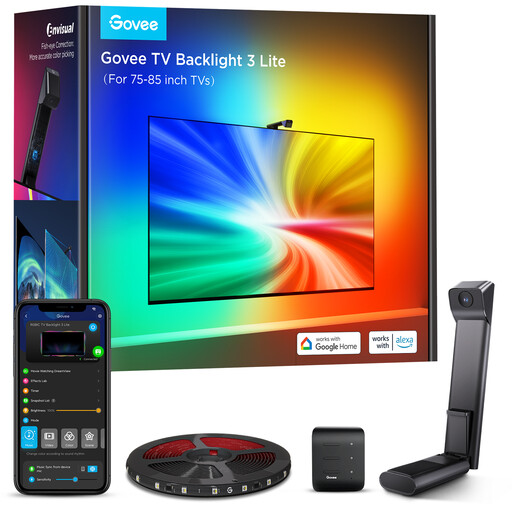
Govee H6099 TV Backlight 3 Lite
Why This Fits Their Persona: This system is specifically designed as TV backlighting for large screens (75-85 inches). It's not just for decoration; it enhances the viewing experience by reducing eye strain and boosting perceived contrast.
Instead of relying on inaccurate music sync, this system uses a camera to analyse the on-screen colours in real-time and project them onto the LED strip. This ensures precise and immersive colour reproduction that is in sync with the action on screen.
Camera-Based Colour Sync: The fisheye camera captures screen colours and dynamically adjusts the backlighting.
Purpose-Built Design: Optimised for large TVs to reduce eye strain.
Looking for more options?
We have compiled a complete, up-to-date list of products that fully meet these strict selection criteria and safety standards.
Frequently Asked Questions (FAQ)
1. How long do LED strips last? The lifespan of LED strips is typically rated for 30,000 to 50,000 operating hours. With eight hours of daily use, this equates to a lifespan of over ten years. The actual lifespan depends on the quality of the LEDs, heat dissipation, and environmental conditions. Excessive heat can shorten the lifespan.
2. Can you cut LED strips? Yes, most LED strips can be cut at the designated markings (often indicated by a scissor icon) with a standard pair of scissors. These cutting points are usually located every 5 to 10 cm. It is important to cut only at these points, as cutting elsewhere will damage the circuitry and cause parts of the strip to stop working.
3. Do LED strips use a lot of electricity? No, LED technology is very energy-efficient. The exact power consumption depends on the length, LED density, brightness, and the colour being displayed. A 5-metre RGB strip at full brightness consumes about 15 to 30 watts, depending on the model. Compared to traditional light bulbs, the consumption is significantly lower.