
The Complete Guide to LED Lighting: How to Avoid Costly Mistakes
Switching to LED lighting is a smart decision to lower energy costs and improve the quality of light in your home. However, the market can be overwhelming and full of technical jargon that can easily lead to a poor purchase. As your Joybuy Product Recommendation Officer, I'm here to help you navigate the common pitfalls and find the right bulbs for your needs.
The 3 Most Common Pitfalls When Buying LED Bulbs
Before we dive into the technical details, let's shed some light on the most common issues that arise when choosing LEDs. Understanding these will save you not only money but also frustration.
- The Longevity Trap: Many manufacturers advertise a lifespan of 15,000 or even 25,000 hours. While this sounds impressive, it's only half the story. An often-overlooked but crucial factor is the number of switching cycles. An LED in a hallway or bathroom that is turned on and off dozens of times a day can fail prematurely, despite a high hour rating, if its switching resistance is low.
- The Dimming Dilemma: The "dimmable LED" label on the packaging is no guarantee of smooth operation. Many dimmable LEDs are not compatible with older dimmers designed for incandescent bulbs. The result is often annoying flickering, buzzing, or a very limited dimming range. Without checking the compatibility between the dimmer and the bulb, frustration is almost guaranteed.
- The Washed-Out Colour Trap: Have you ever wondered why your living room looks lifeless and uninviting despite new lighting? The reason is often a low Colour Rendering Index (CRI). A value below 80 (Ra < 80) makes colours appear unnatural and faded. High colour fidelity is essential for a pleasant atmosphere, especially in kitchens, living rooms, or dressing rooms.
What Really Matters: The Key Metrics for LED Bulbs
To avoid these pitfalls, you should focus on three objective criteria. These will help you objectively evaluate a bulb's performance.
Lumens, Not Watts: The New Currency of Brightness
Forget the watt rating as a measure of brightness. With energy-saving bulbs like LEDs, the lumen value (lm) indicates how bright a lamp actually is. The wattage now only describes energy consumption. As a rough guide:
- An old 40-watt incandescent bulb is equivalent to approx. 470 lumens.
- An old 60-watt incandescent bulb is equivalent to approx. 800 lumens.
- An old 100-watt incandescent bulb is equivalent to approx. 1520 lumens.
Choose the lumen value based on the desired room brightness, not the power consumption.
Understanding Kelvin: The Right Colour Temperature for Every Room
The colour temperature, measured in Kelvin (K), determines the light's colour and thus the atmosphere of a room.
- Warm White (< 3,300 K): Creates a cosy, yellowish light, similar to an incandescent bulb. Ideal for living rooms and bedrooms.
- Neutral White (3,300 – 5,300 K): A clean, white light that promotes concentration. Well-suited for kitchens, bathrooms, and workspaces.
- Daylight White (> 5,300 K): A bluish-white, very stimulating light. Often used in basements, workshops, or for specialised workstations.
Socket and Form Factor: Ensuring the Perfect Fit
The most common reason for a return is the wrong socket. Before buying, check which socket your fixture requires. The most common types in households are:
- E27: The classic, wide screw base for most ceiling, floor, and table lamps.
- E14: The narrower screw base, often found in chandeliers or smaller table lamps.
- GU10: A push-and-twist base with two thick pins, typical for recessed spotlights.
Top Picks for Every Need
To make your decision easier, we have put together some products for typical user profiles.
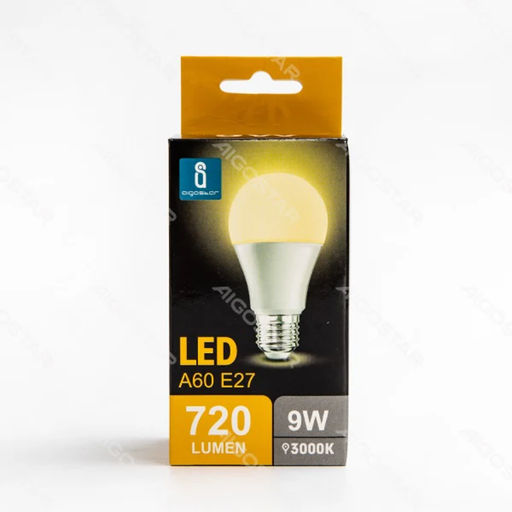
Aigostar A5 A60 Big Angle LED Light Bulb, E27 9W 3000K
Why This Fits Their Persona: Ideal for anyone looking for reliable and efficient standard lighting for living rooms, hallways, or basements. It provides pleasant warm white light without complex extra features.
With clear specifications of a 15,000-hour lifespan and 7,500 switching cycles, it sidesteps the longevity trap. As a non-dimmable bulb, it avoids dimmer compatibility issues from the outset.
A solid baseline brightness of 840 lumens with only 9 watts of consumption. The wide 190° beam angle ensures even room illumination.
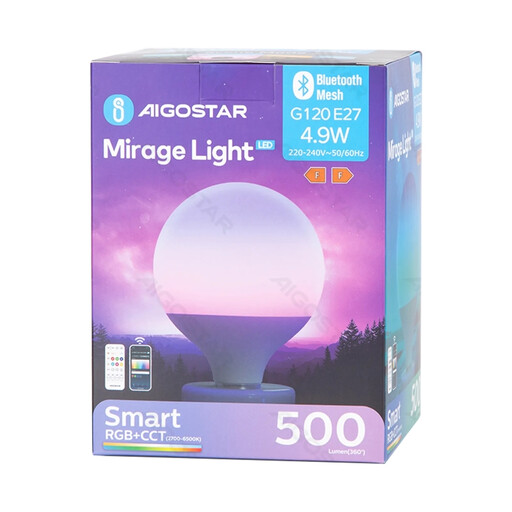
Aigostar Bluetooth Mesh Smart Cloud Light G120 E27 4.9W RGB+CCT
Why This Fits Their Persona: Perfect for users who want to control their lighting via app or voice and create dynamic light scenes for movies, parties, or relaxing evenings. A versatile RGB LED bulb.
Solves the 'colour trap' by offering full control: In addition to 16 million RGB colours, the white light temperature can be adjusted from 2700K to 6500K. The high CRI value ensures natural colours at all times.
Offers innovative dual-colour gradient effects and connects directly to Alexa or Google Home without a separate gateway, making control exceptionally straightforward.
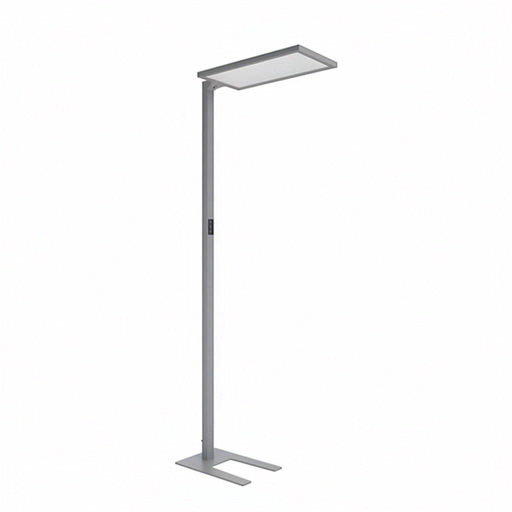
LEDVANCE COMACT Floor Lamp, grey, 12600 lm
Why This Fits Their Persona: This LED floor lamp is designed for professional users in an office or home office who need powerful, glare-free, and ergonomic lighting for focused work.
As an all-in-one system, the dimmer, sensors, and light source are perfectly matched, which eliminates the 'dimming dilemma'. The UGR value of <19 meets the standards for VDU workstations and prevents glare.
Combines direct and indirect lighting for uniform illumination. The integrated daylight and motion sensor automatically adjusts brightness and maximises energy efficiency.
Looking for More Options?
We have compiled a complete, up-to-date list of products that fully meet these strict selection criteria and safety regulations.
How much electricity does an LED bulb really save?
Compared to a traditional incandescent bulb of the same brightness (lumens), an LED bulb uses about 80-90% less electricity. For example, replacing a 60-watt incandescent bulb with a 9-watt LED bulb significantly reduces consumption. With a daily usage of three hours and an electricity price of $0.30/kWh, this results in an annual saving of over $15 per bulb.
Can all LED bulbs be dimmed?
No, only LED bulbs explicitly marked as "dimmable" can be dimmed. However, caution is still advised. For optimal results, the dimmer used should be suitable for LEDs (e.g., a trailing-edge or leading-edge dimmer). Combining incompatible devices can lead to flickering or buzzing.
What does the lifespan rating on LED bulbs mean?
The specified lifespan (e.g., 15,000 hours) is an average value determined under laboratory conditions. It indicates the number of operating hours after which the bulb's brightness has decreased to a certain percentage (usually 70%, or L70) of its initial value. In practice, the actual service life is heavily influenced by the frequency of switching on and off (switching cycles) and the ambient temperature. Good heat dissipation is crucial for a long lifespan.