
LED Lighting Buyer’s Guide: How to Avoid Costly Mistakes
Choosing the right LED lighting can transform a space, enhance functionality, and reduce energy costs. However, the market is saturated with technical specs and marketing promises that make the decision difficult. Many buyers invest in lights that disappoint after a short time because they create the wrong atmosphere, are unsuitable for the location, or simply don't deliver the expected brightness. This guide will help you understand the crucial criteria and make an informed choice.
Common Pitfalls When Buying LED Lamps
Before you make a decision, it's important to know three common mistakes that often lead to dissatisfaction:
- Focusing on Watts Instead of Lumens: A common misconception is that a higher wattage automatically means more brightness. With LED technology, however, power consumption (watts) is not a reliable indicator of brightness. The decisive factor is the luminous flux (lumens). An inefficient lamp can consume a lot of power but produce very little light.
- Choosing the Wrong Colour Temperature: The colour of the light, measured in Kelvin (K), has a significant impact on a room's atmosphere. A cool white light (over 5300 K) can feel sterile and unwelcoming in a living room, while warm white light (under 3300 K) can impair concentration in a workspace.
- Ignoring the IP Rating for Damp Rooms: Many overlook the IP rating, which indicates how well a light is protected against the ingress of foreign objects and water. Installing a light without sufficient protection, such as IP44, in a bathroom is not only a guarantee of a quick failure but also poses a safety hazard.
Key Parameters for Your Selection
To avoid these mistakes, focus on the following technical specifications. They form the basis for a functional and durable lighting solution.
Brightness and Efficiency: Lumens and Lumens per Watt
The luminous flux in lumens (lm) is the measure of a light source's actual brightness. Instead of looking at the wattage, you should use the lumen value as the primary criterion for brightness. For an even better assessment of energy efficiency, you can use the lumens per watt (lm/W) value. A high lm/W number means the lamp produces a lot of light with low power consumption.
- Guideline Values:
- Living Area: approx. 100–150 lm per m?
- Kitchen/Office: approx. 250–300 lm per m?
- Bathroom: approx. 200–250 lm per m?
Light Atmosphere: Colour Temperature in Kelvin (K)
The colour temperature determines whether the light is perceived as warm or cool. The choice depends on the application and the desired mood.
- Warm White (under 3300 K): Creates a cosy, relaxing atmosphere, ideal for living rooms and bedrooms. A dimmable floor lamp with warm white light is a great choice here.
- Neutral White (3300–5300 K): Has a neutral and stimulating effect. Well-suited for kitchens, bathrooms, or a desk lamp in the office.
- Cool White (over 5300 K): Resembles daylight and promotes concentration. Often used in workshops, garages, or for technical workstations.
Safety and Durability: The IP Rating
The IP (Ingress Protection) rating is particularly relevant for outdoor lights and recessed LED spotlights in the bathroom. It consists of two digits: the first indicates protection against foreign objects (e.g., dust), and the second indicates protection against water.
- IP20: Standard for dry indoor spaces. No protection against water.
- IP44: Protection against splashing water from all sides. The minimum requirement for most areas in the bathroom and for sheltered outdoor areas.
- IP65/IP68: Protection against water jets or submersion, respectively. Necessary for unprotected outdoor areas or areas with direct water exposure. A rechargeable LED torch for outdoor use should have at least an IP65 rating.
Recommended Products for Every Need
Here are some product suggestions tailored to specific user profiles and their requirements.
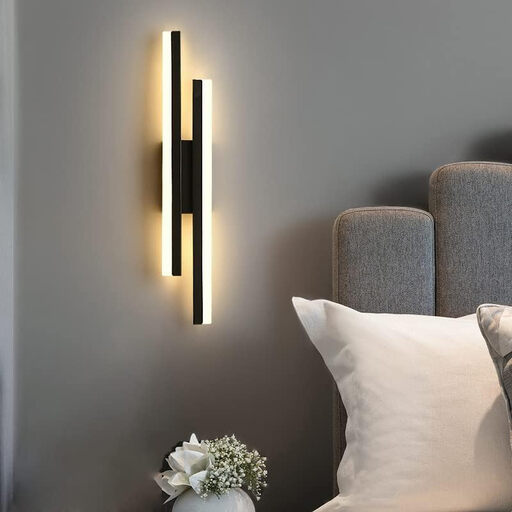
Pheashine Nordic-style minimalist LED acrylic wall light, black, 16W, warm white 3000K
Why This Fits Their Persona: Ideal for users who want a modern wall light with an unobtrusive design. The minimalist aesthetic blends seamlessly into contemporary living concepts and adds a stylish accent to hallways or living rooms.
The light has a fixed colour temperature of 3000K (Warm White). This prevents the purchase of a fixture with an unsuitable, cool light colour for living areas.
Integrated, long-lasting LED technology with a lifespan of up to 30,000 hours according to the manufacturer; rust-resistant iron frame with a baked-enamel finish.
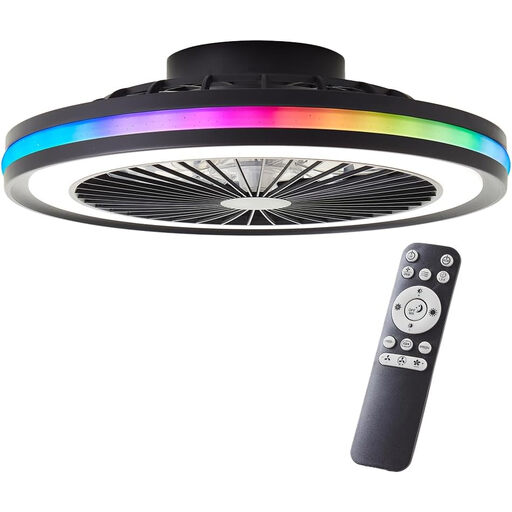
Brilliant Cooling Ceiling Fan LED Light with Built-in Fan, 46.5 cm, Black, Dimmable
Why This Fits Their Persona: Perfect for anyone looking for a ceiling light with a fan to combine lighting and climate control in one device. Ideal for living rooms or bedrooms to ensure year-round comfort.
With an adjustable colour temperature (CCT from Warm to Cool White) and a dimming function, this light offers full control over the light atmosphere, thus avoiding the purchase of a fixture with the wrong light mood.
Combines lighting and ventilation; controlled via remote; reversible airflow for summer and winter modes.
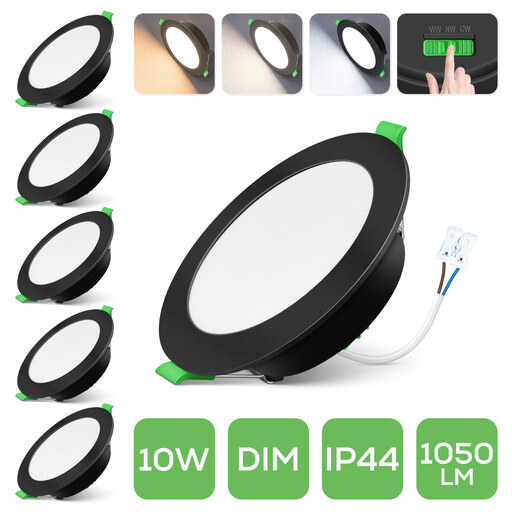
LED Recessed Spotlight, 230V, Dimmable, Flat, 10W, 1050LM, Black, 3CCT, IP44
Why This Fits Their Persona: A reliable solution for DIYers who need a recessed LED spotlight for the bathroom or kitchen. The slim design facilitates installation even in ceilings with low clearance.
The explicit IP44 rating ensures the product is suitable for use in damp rooms and protects against damage from splashing water.
Three selectable colour temperatures (3CCT) in one product; dimmable (10-100%) with a compatible dimmer; direct connection to 230V without a transformer.
Looking for More Options?
We have compiled a complete, up-to-date list of products that fully meet these strict selection criteria and German safety regulations.
Frequently Asked Questions (FAQ)
1. How long does an LED lamp last? The lifespan of LED lamps is specified in operating hours and typically ranges from 15,000 to 50,000 hours. With an average use of about three hours per day, this corresponds to a lifespan of 14 to over 45 years. This is a significant advantage over traditional incandescent or halogen lamps.
2. What does "dimmable" mean for LED lamps? Not all LED lights are dimmable. An LED lamp marked as "dimmable" can have its brightness adjusted, but it often requires a compatible LED dimmer. Using an old, incompatible dimmer can lead to flickering, buzzing, or a shortened lamp lifespan. Therefore, pay close attention to the product description and compatibility notes.
3. How many lumens per square metre (m?) are recommended for living spaces? As a general guideline, you can use the following values: For cosy ambient lighting in living rooms and bedrooms, about 100 to 150 lumens per square metre is sufficient. In work areas like the kitchen, home office, or bathroom, where more brightness is needed for functional tasks, 250 to 300 lumens per square metre is a good benchmark.