
Upgrading to LED Headlights: How to Avoid Costly Mistakes
Upgrading to modern LED headlights is a popular way to modernise a vehicle's appearance and improve night-time visibility. However, the aftermarket parts market is confusing and full of pitfalls that can quickly lead to unexpected costs or legal issues. As your Joybuy Product Recommendation Officer, I'll help you understand the essential criteria to make an informed decision.
The 3 Most Common Mistakes When Buying Aftermarket Headlights
Before you invest, you should be aware of the typical problems that arise from improper selection. These often lead to frustration and additional expenses.
- The CAN Bus Dilemma: Many modern vehicles, especially from German brands like BMW, VW, or Porsche, use a CAN bus system to monitor the vehicle's electronics. Inexpensive or incompatible LED headlights often lack the necessary resistors or decoders. The result: the onboard computer interprets the lower power consumption of the LEDs as a defect and displays a persistent error message.
- The Approval Trap: A headlight is a safety-critical component that requires type approval. Products without a valid ECE type-approval mark (identifiable by an "E" in a circle, followed by a number) are not permitted for public road use in many regions, including Germany. Using them can void the vehicle's operating permit and cause issues during the main vehicle inspection.
- Unrealistic Brightness Claims: Manufacturers often advertise with extremely high lumen ratings. However, a high lumen count alone does not guarantee good illumination. The crucial factor is the headlight's optics—the lens and reflector—which precisely direct the light onto the road. Poorly designed
tuning headlightscan dazzle oncoming traffic and even worsen visibility in bad weather.
What Really Matters: Core Parameters for Your Selection
To avoid the problems mentioned above, you should focus on three key technical features when making your choice. These define the quality, compatibility, and longevity of an aftermarket headlight.
1. ECE Homologation and Fitment
The ECE type-approval mark is the basic requirement for legal use on public roads. It confirms that the headlight meets European standards for light distribution, brightness, and glare control. Ensure that the approval mark is valid for your specific vehicle model. A precise, model-specific fit also ensures that installation is possible without modifications to the vehicle and that the panel gaps are as perfect as the original part.
2. Full CAN Bus Integration
A high-quality retrofit kit is labelled as "CAN Bus Ready" or "Error-Free." This means the electronics are designed to harmonise with your vehicle's diagnostic system. This is achieved through integrated load resistors or control modules that signal correct operation to the onboard computer. This is particularly important if you want to upgrade from halogen or Xenon to LED.
3. Unit Construction: Cooling and Additional Features
The lifespan of LEDs depends heavily on heat dissipation. Look for headlights with a robust die-cast aluminium housing and integrated heat sinks or even small fans. This prevents overheating and ensures consistently high light output. Modern units also often integrate other features such as a distinctive LED daytime running light, dynamic turn signals, or a design upgrade like retrofitting Angel Eyes on BMW models.
Picks for Every Driver Profile
Based on the criteria above, we have selected a few products for specific requirements and vehicle models.
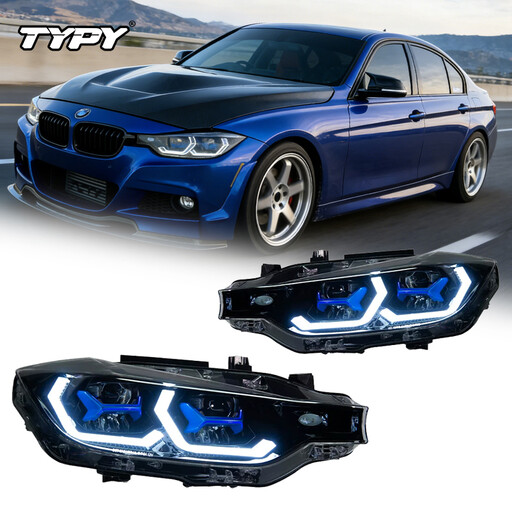
TYPY LED Headlights for BMW 3 Series F30/F35 (2012-2019)
Why This Fits Their Persona: Ideal for owners of a BMW F30 who want to give their vehicle the modern look of newer models with the iconic Angel Eye design, without compromising on fitment.
The specific design for the BMW F30 headlights ensures CAN bus compatibility and prevents error messages. The plug-and-play concept simplifies installation.
Integrated Angel Eye daytime running lights for a striking look; housing with effective heat dissipation for long LED lifespan.
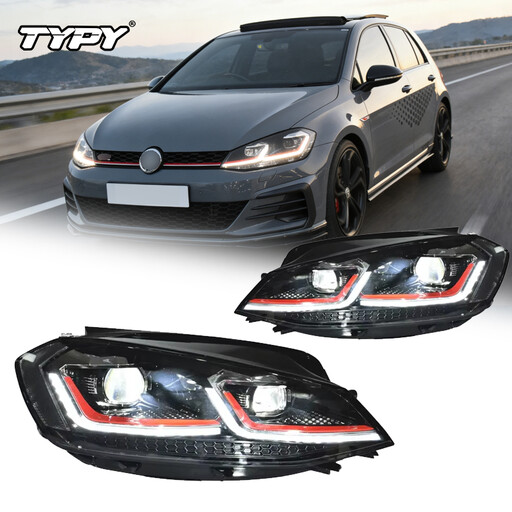
TYPY LED Headlights for VW Golf 7 (2012-2017)
Why This Fits Their Persona: A functional upgrade for one of the world's best-selling cars. It offers significantly improved light output and modern features for daily use.
These Golf 7 LED headlights are designed specifically for the model, ensuring correct function without CAN bus errors. The ECE approval avoids legal issues.
Features integrated dynamic turn signals; provides uniform and long-range illumination compared to the standard halogen lights.
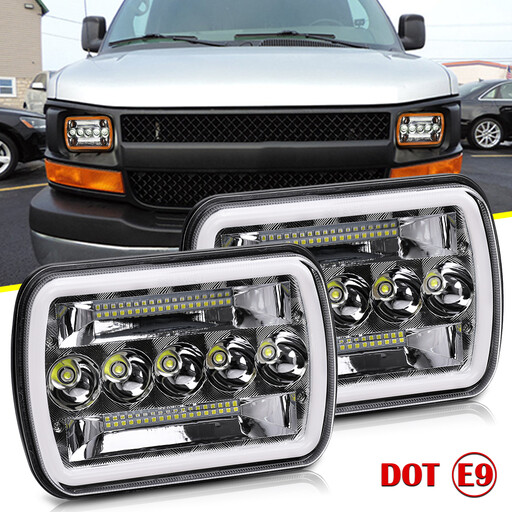
COLIGHT 7x6 Inch Square LED Headlights
Why This Fits Their Persona: Designed for demanding use on off-road vehicles, trucks, or classic cars with standard 7x6-inch mounting bays. The focus is on maximum durability and light output away from paved roads.
Instead of marketing lumen values, this product highlights verifiable specifications like IP68 certification (dust and waterproof) and an aluminium housing for cooling.
These off-road auxiliary headlights are extremely resistant to vibrations and weather conditions; universal fit for a wide variety of vehicles.
Looking for More Options?
We've compiled a complete, up-to-date list of products that fully meet these strict selection criteria and safety regulations.
Frequently Asked Questions (FAQ)
Is an official inspection required for retrofitted LED headlights?
If the headlight has a valid ECE type-approval mark issued specifically for your vehicle model, it is generally registration-free. The approval mark confirms compliance with European regulations. It is still advisable to check and keep the documents included with the product.
What does "Plug-and-Play" mean for installation?
"Plug-and-Play" means the new headlight uses the same mounting points and electrical connectors as the original part. Therefore, no mechanical adjustments to the bodywork or wiring harness are necessary. However, for some vehicle models, it may be necessary to code or activate new functions like the LED daytime running lights in the vehicle's control unit using a diagnostic tool.
What is the lifespan of LED headlights?
According to manufacturer specifications, high-quality LED units can have a lifespan of over 30,000 operating hours. This is significantly longer than halogen lamps (approx. 1,000 hours) or Xenon burners (approx. 3,000 hours). A crucial factor for this longevity is effective thermal management. Complete headlight units with integrated heat sinks often have an advantage here over simple plug-in LED bulbs.