
Buyer's Guide to Selecting an LED Flashlight
A reliable LED flashlight is an indispensable tool, whether you're facing a power outage, camping in the great outdoors, or tackling everyday household tasks. But the market is flooded with options whose technical specs often overpromise and underdeliver. From unrealistic brightness claims to disappointing battery life, it's easy to make a poor purchasing decision.
As your Joybuy Product Recommendation Officer, I'm here to help you identify the features that matter and separate marketing hype from genuine performance. We'll illuminate the most common pitfalls and show you what truly counts when making your selection.
The 3 Most Common Pitfalls When Buying an LED Flashlight
Before you decide on a model, you should be aware of these three typical issues that often lead to disappointment:
- The Lumen Trap: Manufacturers often advertise extremely high lumen counts. However, a high lumen number alone doesn't guarantee a quality beam. The quality of the reflector, the lens, and the light tint are just as crucial for a clear and usable beam pattern. A poorly designed bright flashlight with 2000 lumens can be less useful in practice than a well-focused model with 500 lumens.
- The Battery Fallacy: A rechargeable flashlight sounds convenient, but the quality of the built-in battery is critical. Budget models often suffer from rapid capacity degradation or fail to come close to their advertised runtime. In the worst-case scenario, the battery dies precisely when you need the light most.
- The Waterproofing Illusion: Claims like "water-resistant" or "splash-proof" are often vague. Without an official IP rating (e.g., IPX4 or IP67), you don't know what level of moisture the flashlight can withstand. An inadequately protected light can fail during a heavy downpour.
What Really Matters: Key Specifications Explained
To make the right choice, focus on these three objective criteria. They will help you correctly assess the performance and reliability of an LED flashlight.
1. Light Output: Lumens, Beam Distance, and Modes
Light output is more than just a number. Pay attention to the interplay of these three factors:
- Lumens (lm): This is the unit of measurement for the total light flux a flashlight emits. For household use or walking the dog, 50 to 150 lumens are often sufficient. For a camping light or demanding outdoor activities, 300 to 1000 lumens is a good range. Models with over 1000 lumens are often intended for special applications like search and rescue operations.
- Beam Distance (m): This value indicates how far the light beam reaches. It depends heavily on the focus provided by the lens and reflector. A long beam distance is useful for identifying distant objects.
- Light Modes: Multiple brightness levels (e.g., High, Medium, Low) are practical for extending battery life and adapting the brightness to the situation. Additional functions like a strobe or SOS mode can be useful in an emergency.
2. Power Source: Disposable, Rechargeable, or Dynamo?
The choice of energy source determines the flexibility and running costs of your flashlight.
- Disposable Batteries (AA/AAA): The classic choice. Batteries are available almost everywhere and are quick to replace. Ideal for an emergency flashlight kit, as they have a long shelf life. Brands like VARTA offer reliable options here.
- Rechargeable Batteries: More eco-friendly and cost-effective in the long run. Look for models with a standard USB-C port for maximum flexibility. Built-in batteries are maintenance-free, while replaceable batteries (e.g., 18650 type) can be swapped out if they fail.
- Dynamo (Hand-Crank): The ultimate solution for self-sufficiency. These models require no external power source and are ready to use anytime by cranking—an excellent choice for your emergency kit.
3. Durability and Protection (IP Rating)
A good flashlight needs to be tough. Two metrics are crucial here:
- Material: Aluminium housings are both lightweight and highly durable. They dissipate heat more effectively than plastic, which is important for high-power LEDs. A rubberised surface provides a better grip.
- IP Rating: This standard defines the protection against the ingress of foreign objects and water.
- IPX4: Protection against splashing water from all directions. Sufficient for everyday use in light rain.
- IPX7: Protection against temporary submersion (up to 1 metre for 30 minutes).
- IP67/IP68: Complete protection against dust and water, even during continuous submersion. A waterproof flashlight like this is essential for demanding outdoor and professional use.
Recommended For Your Needs
Based on these objective criteria, we have selected a few models for typical use cases.
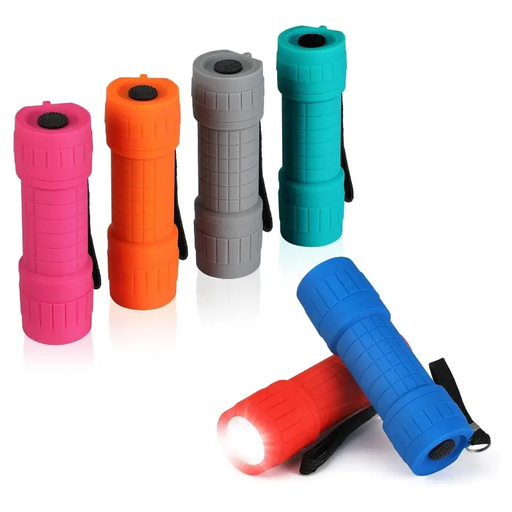
EverBrite 6-Pack Mini LED Torches, Colourful
Why This Fits Their Persona: Ideal for families or for stashing around the house, in the car, and in the workshop. These compact lights are easy to use and perfect for having quick access to light without a big investment.
This set avoids the lumen trap with an honest 20-lumen rating per torch—a realistic brightness for close-range use that is perfectly adequate for everyday tasks.
Excellent value for money in a 6-pack. The required AAA batteries are already included, so the lights are ready to use right out of the box.

Olight Seeker 4 Pro High Power Flashlight
Why This Fits Their Persona: Engineered for users who refuse to compromise on performance and reliability during camping, hiking, or professional use. A true tactical flashlight for demanding conditions.
This model bypasses the waterproofing illusion with a verified IPX8 rating. Its high output of 4,600 lumens is precisely specified and designed for real-world scenarios.
Extremely high light output and beam distance (up to 260 m). Flexible charging options via USB-C in the holster or a magnetic charging cable. The rugged aluminium housing is built for tough use.
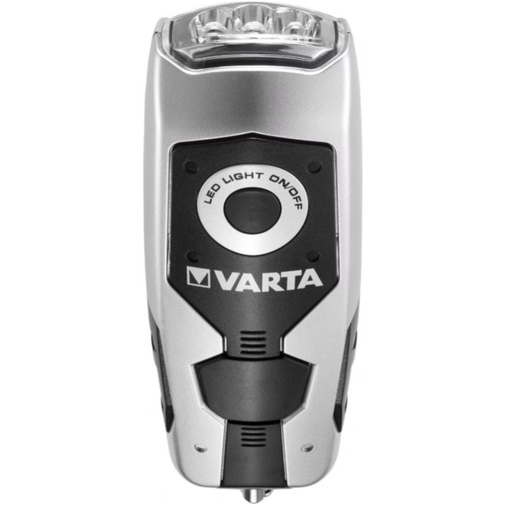
VARTA LED Dynamo Light with Hand-Crank
Why This Fits Their Persona: Perfect for the emergency kit in your car or at home. Anyone looking for a completely reliable light source that works independently of batteries or the power grid will find the right solution here.
This light solves the battery fallacy in the most elegant way: it requires no disposable batteries or external charging at all. The risk of dead or leaking batteries is eliminated.
100% battery-free thanks to the integrated hand-crank dynamo. According to the manufacturer, one minute of cranking generates up to 30 minutes of light. The shock-resistant housing ensures durability.
Looking for More Options?
We've compiled a complete, up-to-date list of products that fully meet these strict selection criteria and relevant safety regulations.
Frequently Asked Questions (FAQ)
How many lumens does a good LED flashlight need?
It depends on the application. For household use (e.g., checking the fuse box, finding something in the basement), 50-150 lumens are sufficient. For outdoor activities like camping or night hiking, 300-1000 lumens are recommended. Very high values over 1500 lumens are usually only necessary for special professional or tactical operations.
What does the IP rating on a flashlight mean?
The IP (Ingress Protection) rating indicates how well a device is protected against the entry of foreign objects (first digit) and water (second digit). For flashlights, the second digit is often the most relevant: IPX4 means protection against splashing water, IPX7 means protection against temporary submersion, and IPX8 means protection against continuous submersion under conditions specified by the manufacturer.
Is a rechargeable flashlight always the better choice?
Not necessarily. A rechargeable flashlight is convenient and eco-friendly for regular use. For an emergency flashlight that might sit unused for months, high-quality disposable batteries can be the more reliable choice, as they hold their charge for years and don't depend on a power source for recharging. A dynamo light offers the greatest independence in this regard.