
Buying Konjac Jelly: A Guide to Avoiding Buyer's Remorse
The search for a light, diet-friendly snack often leads to konjac jelly, a popular product from Asia. However, not every jelly marketed as a healthy alternative lives up to expectations. Before you decide to buy konjac jelly, it's helpful to know some common pitfalls that often lead to a disappointing experience. This guide is designed to help you make informed decisions and find a product that meets your needs.
The three most common problems when buying are:
- The "Sugar-Free" Trap: Some products replace sugar with high-fructose corn syrup or other sugary sweeteners, which significantly increases the calorie count. Others use artificial sweeteners that can leave an undesirable aftertaste.
- Watery Consistency: The characteristic, satisfying effect of konjac jelly depends on the proportion of konjac flour. If it's too low, you often get just a watery gel without the desired firm texture.
- Artificial Flavour: Many jellies advertise fruity varieties but are based exclusively on artificial flavourings. The result is often a chemical taste that has little in common with real fruit.
What to Look for When Buying Konjac Jelly
To avoid these pitfalls, it's wise to check three key factors before you buy. This information is usually found on the product packaging or in the online product description.
1. The Ingredients List: Decoding Sweeteners and Fruit Content
A look at the ingredients list is essential. If you're looking for a sugar-free jelly, watch for sweeteners like erythritol. This sugar alcohol is virtually calorie-free and does not affect blood sugar levels. Be wary of terms like "high-fructose corn syrup" or "sugar" if you're aiming for a low-calorie snack.
At the same time, the fruit content provides insight into the flavour quality. Products containing real fruit juice or fruit purée generally offer a more natural taste experience. A vegan fruit jelly should also not contain any animal-based gelatine alternatives, which is usually the case with konjac products, as konjac itself is plant-based.
2. Konjac Flour Content: The Key to Texture
The glucomannan contained in the konjac root is responsible for the gel-like consistency and the feeling of fullness. A higher proportion of konjac flour (often declared as Konjac Powder or Konjac Flour) results in a firmer, more satisfying texture. Products with a konjac flour content of, for example, over 0.15% often offer a more pleasant consistency than those with lower values. This makes them a more suitable diet dessert.
3. The Nutrition Facts: A Close Look at Calorie Count
The nutrition information is the most objective indicator of whether it is truly a low-calorie snack. Compare the calorie value per 100 g. True low-calorie options often contain fewer than 10 kcal per 100 g. In contrast, products sweetened with sugar can quickly exceed 100 kcal per 100 g, making them less suitable for a calorie-reduced diet.
Our Picks for Different Profiles
Based on the criteria above, we have selected a few products from our range that are suitable for different needs.
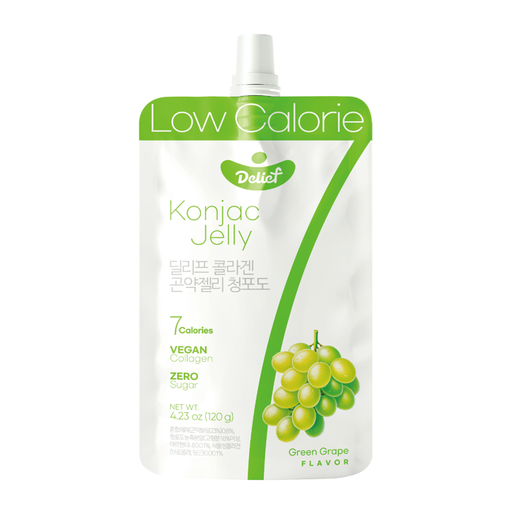
Delief Konjac Jelly Green Grape (Vegan) 120g
Why This Fits Their Persona: Ideal for those who meticulously track their calorie intake. With just 5 kcal per 100 g and 0 g of sugar, it fits perfectly into a strict diet plan.
This product bypasses the "sugar-free" trap by using erythritol and sucralose instead of high-calorie syrups. The nutrition facts are transparent and confirm the extremely low calorie content.
At 5 kcal per 100 g, it's one of the lowest-calorie options available; explicitly labelled as a vegan product.
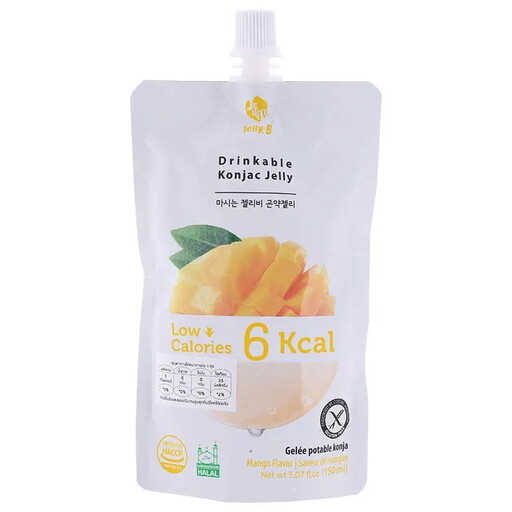
Jelly B Konjac Jelly Mango 150ml
Why This Fits Their Persona: For anyone seeking a low-calorie snack without compromising on natural fruit taste. This Korean snack combines sweetness with a hint of real fruit juice concentrate.
Instead of relying solely on artificial flavourings, the recipe includes natural mango flavour and grape juice concentrate, which avoids a synthetic aftertaste.
Sugar-free with only 6 kcal per 150 ml serving; the blend of different gelling agents ensures a pleasant, firm texture.
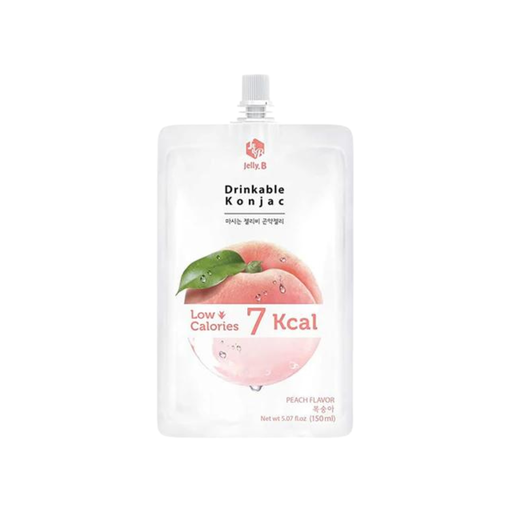
Jelly.B Konjac Jelly Peach 150ml
Why This Fits Their Persona: Perfect for a mobile lifestyle. The squeeze pouch with a resealable cap makes this jelly snack the ideal companion for work, university, or after a workout.
The packaging is specifically designed for direct consumption and prevents messes. The firm texture (0.18% konjac powder) ensures the jelly doesn't flow uncontrollably from the pack.
Only 7 calories per pouch; the resealable cap allows for eating in stages and keeps the snack fresh.
Looking for More Options?
We've compiled a full, up-to-date list of products that meet these strict selection criteria and comply with current regulations.
Frequently Asked Questions (FAQ)
How Do You Eat Konjac Jelly Correctly?
Konjac jelly in squeeze pouches is designed for direct consumption. It is recommended to gently knead the pouch before opening to loosen the jelly. Due to its firm texture, it is important to chew the jelly well and not swallow it whole. Most products taste more refreshing when chilled.
Is Konjac Jelly Suitable for a Vegan Diet?
Yes, in most cases. The main ingredient, konjac flour, is purely plant-based. Unlike traditional jelly, no animal-derived gelatine is used. To be certain, you should check the ingredients list for other non-vegan additives, such as certain colourings. Many products, like the Delief Konjac Jelly, are explicitly labelled as a vegan fruit jelly.
How Many Calories Does Konjac Jelly Typically Have?
The calorie content varies greatly depending on the recipe. True diet versions sweetened with sweeteners like erythritol often contain fewer than 10 kilocalories per 100 grams. In contrast, versions made with sugar or fruit syrup can contain 100 kilocalories or more per 100 grams. A close look at the nutrition facts is therefore crucial.