
Top Kitchen Trolley Picks for More Space and Flexibility
In many kitchens, especially in city apartments, counter space and storage are often at a premium. A mobile kitchen trolley can offer a practical and flexible solution. It not only creates additional prep and work surfaces but also provides valuable storage for dishes, supplies, or kitchen appliances.
This article serves as a buying guide. We'll introduce various models and explain the key criteria to consider when choosing a kitchen rolling cart, helping you make an informed decision that suits your needs.
What to Look for When Buying a Kitchen Trolley?
Choosing the right model depends on your individual requirements and the space you have available. The following points will help guide your decision.
1. Material and Worktop
The material affects the trolley's appearance, functionality, and durability.
- Wood and Wood Composites: Worktops made from solid wood, such as rubberwood or bamboo, are durable and lend a warm atmosphere to the kitchen. Models made from PB (particle board) with a wood-effect or lacquered finish, often in white or other neutral colours, offer a cost-effective and low-maintenance alternative.
- Stainless Steel: A kitchen trolley with a worktop made of stainless steel is particularly hygienic, heat-resistant, and easy to clean. This quality makes it a preferred choice for ambitious home chefs who need an extra surface for food preparation.
2. Size and Storage Concept
Before you decide, carefully measure the intended space in your kitchen. Consider not only the footprint but also the clearance needed when the trolley is in use.
A small kitchen trolley works well as a mobile kitchen side cart, while larger models can function as a fully-fledged kitchen island on wheels. Consider what type of kitchen trolley with storage you need:
- Open Shelves: Ideal for quick access to frequently used items like pots, bowls, or vegetables.
- Drawers: Practical for cutlery, kitchen utensils, or tea towels.
- Closed Cabinets: Protect dishes and supplies from dust and create a tidy, clutter-free look.
3. Mobility and Stability
The castors are the core feature of a kitchen trolley. Look for smooth, 360-degree swivel castors that allow for effortless manoeuvring. For a stable position, at least two lockable castors (locking brakes) are essential. These prevent the trolley from slipping while you're working on it or using it as a serving cart. The manufacturer's specified maximum load capacity should also be noted and not exceeded.
Our Kitchen Trolley Recommendations
Here is a selection of models whose different features and designs make them suitable for various purposes.
SoBuy Kitchen Island on Wheels with Storage, White
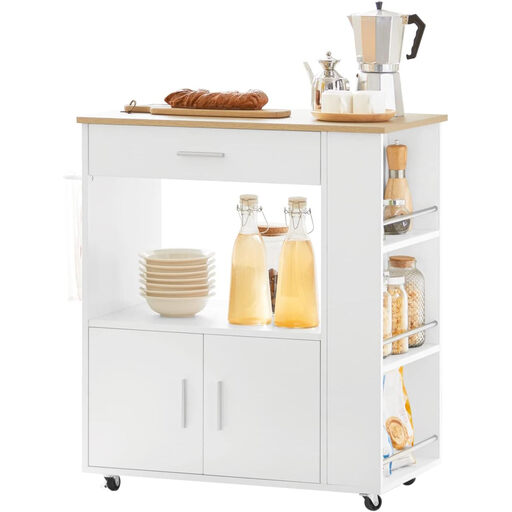
Why it stands out: This model combines the function of a mobile kitchen island with ample closed storage. The white body and wood-effect worktop blend seamlessly into modern kitchen interiors.
Advantages:
- Ample storage space with a drawer, a cabinet, and side shelves.
- Four sturdy castors, two of which have brakes for stability.
- High load capacity of up to 75 kg according to the manufacturer.
- Integrated towel rail that also serves as a push handle.
Who it's for: Ideal for those looking for a flexible alternative to a fixed kitchen island and who value a combination of open and closed storage.
SoBuy Kitchen Rolling Cart with Stainless Steel Worktop
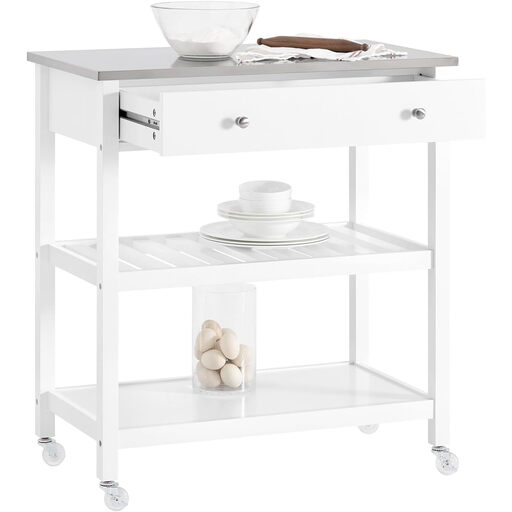
Why it stands out: The durable stainless steel worktop makes this cart a functional workstation for food prep. The combination of solid pine wood and an easy-to-clean surface is designed for longevity and practical use.
Advantages:
- Hygienic and durable stainless steel worktop.
- Sturdy construction with pine wood legs and a load capacity of up to 70 kg.
- One deep drawer and two open shelves for organised storage.
- Smooth 360-degree castors with two locking brakes.
Who it's for: A great choice for home cooks who need an additional, easy-to-clean work surface and prefer open shelves for quick access to ingredients and cookware.
SoBuy Kitchen Trolley with Wine Rack and Wooden Worktop
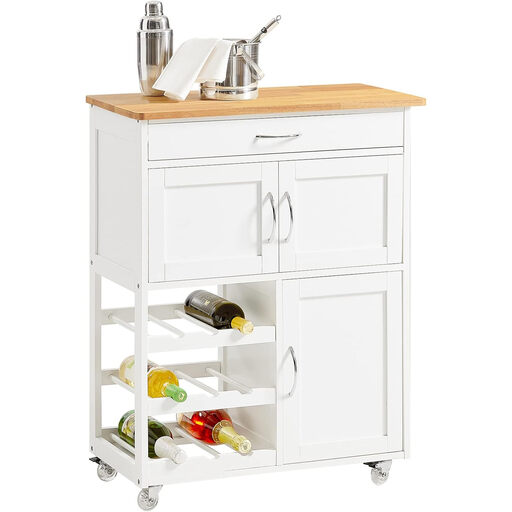
Why it stands out: This compact serving cart is a well-designed solution for households that need functionality in a small space. The integrated wine rack makes it a useful piece of furniture for the kitchen, dining room, or for entertaining guests.
Advantages:
- Worktop made of solid rubberwood, which serves as a natural and durable surface.
- Integrated wine rack for horizontal storage of three bottles.
- Combination of a drawer and a cabinet for organised storage.
- Compact dimensions (67 x 86 x 38 cm), suitable for smaller spaces.
Who it's for: Perfect for wine lovers and those with limited space who are looking for a multifunctional kitchen side cart that can be used for both storage and serving.
Looking for More Options?
Haven't found the right model for your needs yet? There is a wide variety of other designs, sizes, and materials available to meet different requirements.
Discover a wider selection in our Kitchen Carts with Storage Wheels category to find the perfect addition to your home.
Frequently Asked Questions (FAQ)
1. What is the difference between a kitchen trolley and a serving cart? Although the terms are often used interchangeably, the main difference lies in their primary function. A kitchen trolley is typically more robustly built and designed to serve as an additional work and storage surface in the kitchen. A serving cart is often lighter and more delicately designed, primarily used for transporting food and drinks between the kitchen and dining area. Many modern models combine both functions.
2. How much weight can a kitchen trolley hold? The load capacity varies greatly depending on the model, construction, and material. Smaller, lighter carts might have a load capacity of around 30 kg, while more stable models designed as a kitchen island on wheels can hold up to 75 kg or more, according to the manufacturer. It is important to check the manufacturer's specific details and not exceed them to ensure safety and stability.
3. Does a kitchen trolley require a lot of maintenance? The level of maintenance depends on the worktop material. A stainless steel worktop is very low-maintenance and can be cleaned with standard cleaning agents. Wooden worktops should be regularly wiped dry of moisture. Depending on the type of wood, an occasional treatment with a food-safe wood conditioning oil can be beneficial to protect the surface and maintain its appearance. Lacquered or wood composite surfaces can usually be cleaned simply with a damp cloth.