
Buyers Guide: Selecting Kitchen Towels
The primary function of kitchen towels is to absorb liquids and clean surfaces. Their efficiency is determined by objective parameters such as absorbency, material composition, and structural durability. Common materials like cotton, microfibre, and bamboo viscose exhibit specific technical properties that qualify them for different applications within a household. Selecting the right towel is based on balancing these material properties against the intended use case.
Buyer's Guide: A Material Analysis for Kitchen Towels
The decision for a kitchen towel should be based on an objective analysis of the available materials and their physical properties.
Cotton
The quality of cotton cleaning cloths is often indicated in grams per square metre (g/m? or GSM). A higher GSM value generally correlates with a higher fibre density and, consequently, enhanced absorbency. Cotton is a natural fibre known for its robustness and heat resistance, making it suitable for contact with hot cookware. Certifications like the Oeko-Tex Standard 100 can serve as an indicator that the product has been tested for a defined list of harmful substances.
Microfibre
Microfibre cleaning cloths consist of a synthetic blend of polyester and polyamide. The extremely fine filaments, which are spun into a yarn, create a large surface area and a slight electrostatic charge. This property allows the cloth to effectively trap dust and dirt particles, often without the need for additional chemical cleaning agents. Their capillary action also ensures high liquid absorption. A disadvantage is their lower heat resistance compared to cotton.
Bamboo Fibre (Viscose)
Towels made from bamboo are based on viscose fibres, which are derived from bamboo pulp in a chemical process. This material is characterised by a high capillary action, which results in remarkable absorbency. It is often positioned as a sustainable dishcloth, as bamboo is a rapidly renewable resource whose cultivation can require fewer water resources compared to conventional cotton. The resulting cloths are soft and suitable for delicate surfaces.
Other Selection Criteria
- Weave: Different weaves like waffle or terry cloth influence the surface texture and thus the absorption and cleaning properties.
- Size: The dimensions of the towel should match its primary purpose—larger formats work well as absorbent drying towels for dishes, while smaller towels can be more practical for surface cleaning.
- Set Size: Purchasing a dish towel set can be more economical and ensures a uniform set for the household.
Recommended Products For You
The following selection is based on an analysis of product specifications and intended benefits.
1. Cleaning Cloth Bamboofiber Set
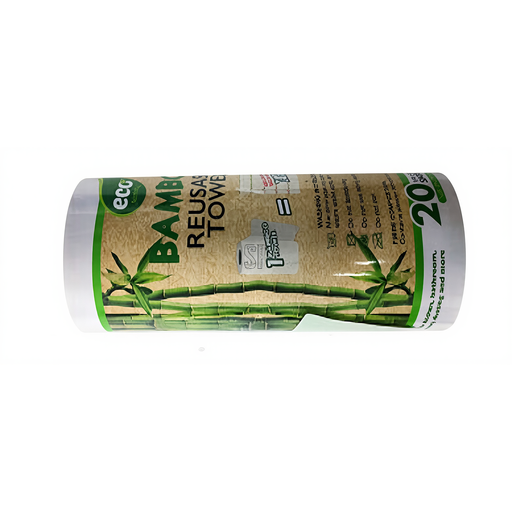
Analysis: This set is made of bamboo fibre, a material known for its high absorbency. The cloths are designed as versatile cleaning tools for the entire household. The soft texture of the material is intended for use on various surfaces, from kitchen counters to glass. As reusable household cloths, they are designed for multiple uses and are machine washable.
- Pros:
- High liquid absorption due to the bamboo fibre's structure.
- Versatile for general cleaning and polishing tasks.
- Material from a rapidly renewable resource.
- Best for: Users looking for a multifunctional cleaning set who value materials derived from renewable resources.
Shop the Cleaning Cloth Bamboofiber Set
2. Jeden Tag Dish Towels 3 Pack
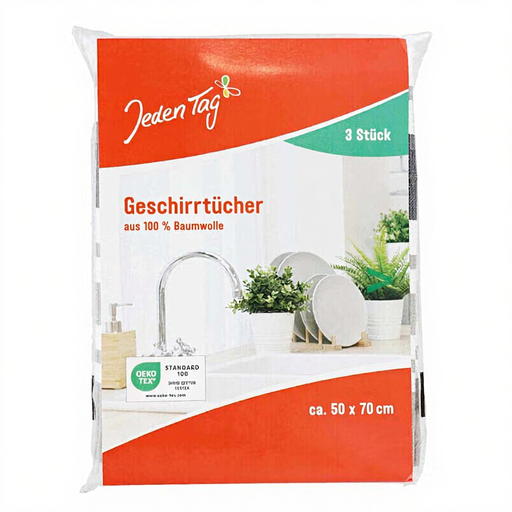
Analysis: According to the manufacturer, this dish towel set is made from 100% cotton and is certified to the Oeko-Tex Standard 100. With a size of 50x70 cm, it corresponds to the classic format for dish towels. The choice of material and robust construction aim for durability and high functionality when drying dishes. It is easy to care for, being suitable for machine washing at 60°C and tumble drying.
- Pros:
- Made from 100% cotton.
- Oeko-Tex Standard 100 certified.
- Easy to care for, machine washable at 60°C.
- Standard size of 50x70 cm, ideal for drying.
- Best for: Households that need a set of durable, tested-for-harmful-substances drying towels for daily kitchen use.
Shop the Jeden Tag Dish Towels 3 Pack
3. JORDAN&JUDY 8-Pack Microfiber Striped Kitchen Towels
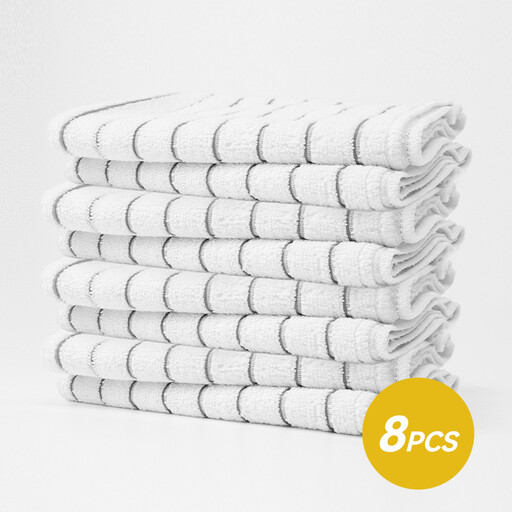
Analysis: This product bundle includes eight microfibre cleaning cloths measuring 40x60 cm. The high quantity is aimed at users with an increased need for cleaning textiles. The material's microstructure is designed to efficiently absorb dirt and liquids, leaving surfaces streak-free. The cloths are known for their quick-drying properties, which promotes hygiene between uses.
- Pros:
- Bulk pack with eight cloths for a comprehensive supply.
- High cleaning efficiency due to the material's microstructure.
- Quick-drying properties.
- Best for: Larger households or users who require a large quantity of cloths for general surface cleaning and appreciate the specific performance of microfibre.
Shop the JORDAN&JUDY 8-Pack Microfiber Towels
More Options and Alternatives
If the products analysed here do not fully meet your specific requirements, or if you wish to compare other materials and designs, our main category offers an expanded selection. Discover more options in the Dish Towels category.
Frequently Asked Questions (FAQ)
1. What is the functional difference between cotton and microfibre towels? The main difference lies in the material and how it works. Cotton is a natural fibre that primarily soaks up liquid through absorption. Microfibre consists of fine synthetic filaments that trap liquid between the fibres through capillary action and mechanically attract dust and dirt particles via their electrostatic charge.
2. How should you wash kitchen towels correctly to maintain their absorbency? To maximise absorbency, kitchen towels should be washed without fabric softener. Fabric softener leaves a film on the fibres that reduces water absorption. A 60°C wash is generally sufficient for cotton towels to eliminate bacteria. Always follow the manufacturer's specific care instructions on the product label.
3. Are towels made from bamboo viscose a sustainable choice? Bamboo is a fast-growing plant that can require less water and pesticides to cultivate than conventional cotton. However, the process of converting bamboo pulp into viscose fibres is energy- and chemical-intensive. Therefore, the sustainability assessment of a product depends on considering the entire production and supply chain.