
The Essential Kitchen Faucet Buyers Guide
Choosing a new kitchen faucet often seems like a simple decision. Yet, behind the shiny surfaces and modern designs, pitfalls are often lurking, only becoming apparent after installation. A wobbly fixture, a surface that scratches easily, or a spray head that splashes more than it cleans—these problems are avoidable. This guide will help you identify the crucial features and make a choice that ensures functionality and durability in your kitchen.
The 3 Most Common Mistakes When Buying a Kitchen Faucet
Before we get to the solutions, it's important to understand the typical frustrations that can arise from a poorly considered choice.
- Inferior Materials Beneath a Shiny Surface: Many budget-friendly faucets use alloys with a chrome or paint layer that peels off after just a few months due to cleaning agents or limescale. The result is not only unsightly but can also lead to corrosion of the underlying material.
- Impractical Ergonomics in Daily Use: A spout that's too low makes filling tall pots difficult. A limited swivel range makes cleaning a double-basin sink cumbersome. These design flaws often only become noticeable during daily use and significantly restrict functionality.
- Ignoring Compatibility and Connection Standards: Not every faucet fits every connection. The distinction between high-pressure and low-pressure systems is fundamental. The wrong model can not only damage the faucet but also the boiler or tankless water heater.
What Really Matters: The Core Parameters for Your Selection
To avoid the problems mentioned above, focus on three verifiable criteria. These form the basis for a solid and satisfying decision.
1. Material and Surface Finish
The material is the foundation of durability. A high-quality stainless steel mixer tap (especially SUS304 stainless steel) or solid brass provides a robust, corrosion-resistant base. Pay attention to the surface treatment:
- Chrome: A classic standard, easy to clean, but prone to fingerprints and limescale spots.
- Brushed Stainless Steel: Less susceptible to fingerprints and water spots, which simplifies cleaning.
- Matte Black Faucet: A modern design statement that requires gentle cleaning without abrasive agents to preserve the coating.
2. Functionality: Swivel Range and Spray Function
Functionality determines how efficiently you can work in your kitchen. Two features are crucial here:
- Swivel Range: A 360-degree swivel faucet offers maximum flexibility, especially for double-basin sinks or kitchen islands. For smaller sinks, a range of 120 to 180 degrees may be sufficient.
- Pull-Out Sprayer: A kitchen faucet with a pull-out sprayer significantly extends your range of motion. It makes rinsing vegetables, filling containers next to the sink, and cleaning the basin itself much easier. Look for a sufficient hose length (at least 50 cm) and smooth hose retraction.
3. Connection Type: High-Pressure or Low-Pressure
This is a technical detail that cannot be ignored.
- High-Pressure Faucets: The standard in most households. They have two connections (cold and hot) and are intended for direct connection to the central water supply or a pressurised tankless water heater. A single-lever kitchen mixer is typically a high-pressure model.
- Low-Pressure Faucets: Required when hot water is generated by a non-pressurised boiler (under-sink unit). These faucets have three connections and are specifically designed to regulate the pressure in the boiler.
Our Product Recommendations
Instead of making a blanket recommendation, we have identified products that meet specific user profiles.
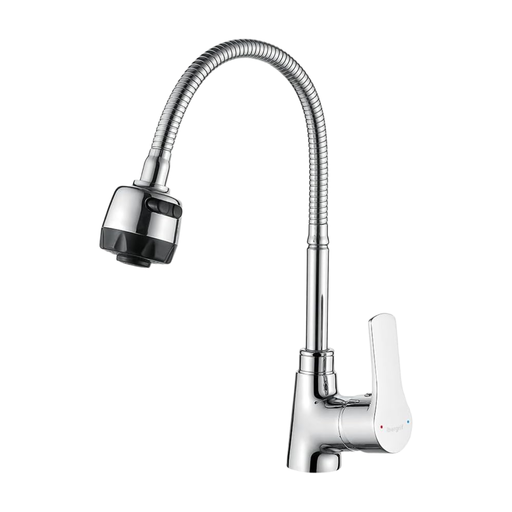
Ibergrif Kitchen Faucet with 360° Swivel Flexible Spout, Silver
Why This Fits Their Persona: Offers a reliable, functional upgrade for any standard kitchen. The 360-degree swivel range and durable brass body meet core requirements without unnecessary frills, ideal for a straightforward modernisation.
The chrome-plated brass is more resistant to scratches and corrosion than low-quality alloys. The standard single-hole installation avoids compatibility issues and additional installation costs.
High, flexible spout for easily filling large pots; cold-start ceramic cartridge for potential energy savings.

Cobbe Spring Kitchen Faucet with Pull-Down Sprayer, 2 Spray Functions
Why This Fits Their Persona: Designed for intensive use. The spring design, 60 cm pull-out hose, and multiple spray modes offer maximum flexibility for cooking, rinsing, and cleaning large kitchen utensils.
The professional spring guide allows for an extremely wide range of motion and prevents the hose from kinking or jamming—a common problem with basic pull-out sprayers.
Dual-function spray head (stream/spray) with high pressure; 360° swivel for full sink coverage.
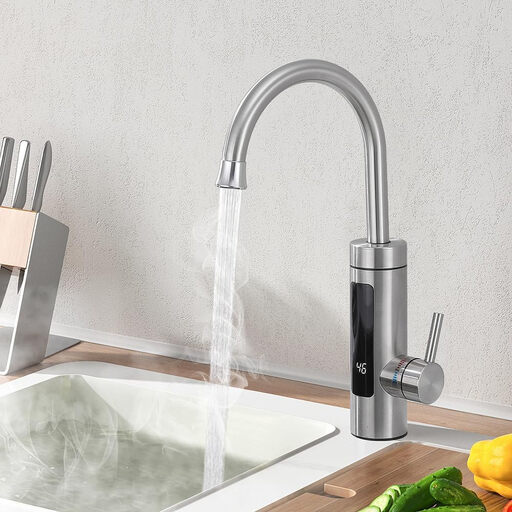
HOMELODY Electric Instant Water Heater Tap 230V, Brushed Stainless Steel
Why This Fits Their Persona: Ideal for kitchens without a central hot water supply or with long pipe runs. It delivers hot water in seconds directly at the tap, thus avoiding energy losses from storage or long pipes.
This is not a standard faucet. It requires a 230V connection, which is clearly communicated, bypassing the trap of hidden requirements. The LED display also provides direct control over the temperature.
Integrated 3000W instant water heater tap for immediate hot water; LED temperature display for precise control.
Looking for more options?
We have compiled a complete, up-to-date list of products that fully meet these strict selection criteria and German safety regulations.
Frequently Asked Questions (FAQ)
1. What is the difference between a high-pressure and a low-pressure faucet? A high-pressure faucet connects to the central water supply with two lines (cold/hot) and withstands the full line pressure. A low-pressure faucet is needed if you use a non-pressurised boiler (under-sink unit) for hot water. It has three hoses: one for the cold water connection at the wall and two that lead to the boiler to equalise the pressure. Using the wrong type can damage the boiler.
2. How do I properly care for a black or brushed kitchen faucet? For matte or brushed surfaces, you should avoid aggressive abrasive cleaners and hard sponges. Use a soft microfiber cloth and mild soapy water. To prevent limescale buildup, wipe the faucet dry after use. For stubborn stains, you can use diluted vinegar or citric acid solutions, but be sure to rinse them off immediately with clear water.
3. Can I install a faucet with a pull-out sprayer myself? Installation is generally feasible for DIY enthusiasts with basic skills. Most models come with standard connection hoses (often 3/8 inch) and an installation manual. It is crucial to shut off the main water valve before starting. Attaching the counterweight for the sprayer hose requires some care to ensure the hose glides smoothly. If you are unsure or have special connections, such as with a tankless water heater tap, it is advisable to hire a professional.