
Jam Sugar Guide: How to Make Perfect Jam Without Unpleasant Surprises
Transforming the harvest from your own garden or local market into delicious jam is a rewarding project. But success hinges entirely on choosing the right helper: jam sugar. The variety on supermarket shelves can quickly lead to the wrong purchase, compromising your results. Before you start making jam, it's important to know the most common pitfalls to avoid disappointment.
- The Ratio Trap: Grabbing the wrong type of jam sugar can result in a jam that is either overly sweet or too runny. The ratio on the package isn't a marketing gimmick; it's a crucial specification for the final outcome.
- The Pectin Gap: Not all fruits gel equally well on their own. If fruits with low pectin content (like strawberries or cherries) are processed with an unsuitable sugar, the consistency often remains disappointingly thin.
- The Granulated Sugar Fallacy: The assumption that regular granulated sugar (preserving sugar) can replace jam sugar inevitably leads to a syrup instead of a set jam. Granulated sugar lacks the necessary gelling agents.
To bypass these problems, a basic understanding of the most important parameters is essential.
What Really Matters When Choosing Jam Sugar
Preparing foolproof jam isn't magic; it's based on the interplay of a few crucial factors. Paying attention to these points ensures you achieve the desired result.
1. The Sugar-to-Fruit Ratio: 1:1, 2:1, or 3:1?
The numbers on the packaging indicate the mixing ratio of fruit to sugar. This choice directly influences the sweetness, fruit intensity, and shelf life of your homemade jam.
- 1:1 Jam Sugar: The classic. Here, one kilogram of fruit is processed with one kilogram of 1:1 jam sugar. The result is a traditionally sweet jam with a very firm consistency and a long shelf life due to the high sugar content.
- 2:1 Jam Sugar: The fruitier option. For every kilogram of fruit, only 500 grams of 2:1 jam sugar are used. The fruit flavour is much more prominent, and the sweetness is reduced. The shelf life is slightly shorter than with the 1:1 method.
- 3:1 Jam Sugar: For the most intense fruit flavour. Here, only about 333 grams of sugar are used per kilogram of fruit. This version is the least sweet but often requires precise preparation and has the shortest shelf life.
2. The Key Ingredients: Pectin and Acid
Jam sugar is more than just sugar. It's a combination product specially developed for making homemade jam. The crucial additives are:
- Pectin: This is the gelling agent, usually derived from apples or citrus fruits. It is responsible for making the liquid fruit mixture set as it cools. Fruits like apples, quinces, and currants are naturally high in pectin, while strawberries, raspberries, and cherries are low in pectin. Jam sugar compensates for this deficiency.
- Acid (e.g., Citric Acid): Acid serves two functions. It assists the pectin in the gelling process and also acts as a natural preservative, which helps maintain the fruit's colour and extends its shelf life.
Some products, like Dr. Oetker jam sugar, are even tailored to specific fruit groups to optimally regulate the interplay of the fruit's own pectin, water content, and acidity.
Picks for Every Use Case
The choice of the right jam sugar depends on your personal preferences and the fruits you are using. Here are some recommendations for different profiles.
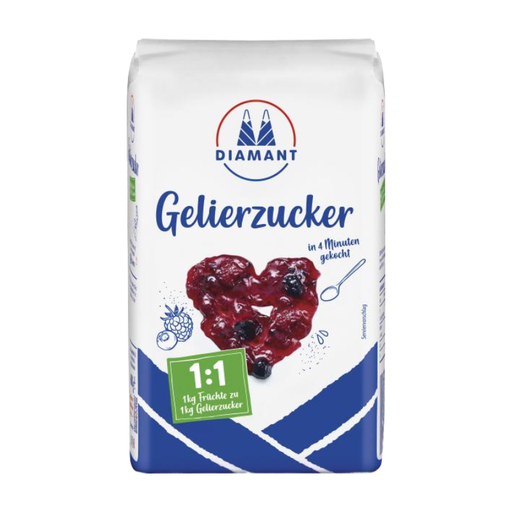
Diamant Jam Sugar 1:1 for Jams 1kg
Why This Fits Their Persona: Ideal for those who appreciate the traditional, sweet taste and firm set of grandma's jam. It's straightforward to use and delivers foolproof results.
The clear 1:1 ratio prevents confusion and delivers a reliably firm set. The high sugar content ensures excellent preservation and bypasses the "Pectin Gap" for most fruits.
Classic formula for strong gelling power and long shelf life. Simple to use: 1 kg of fruit to 1 kg of sugar.
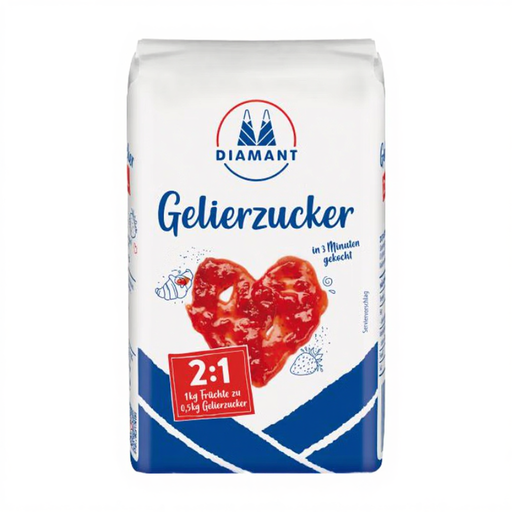
Diamant Jam Sugar 2:1 for Jams 500g
Why This Fits Their Persona: Perfect for health-conscious foodies who prefer the pure, unadulterated taste of fruit and want to consume less sugar.
Directly addresses the "Ratio Trap" of an overly sweet jam. The 2:1 ratio ensures an intense fruit flavour without making the sweetness overpowering.
Reduced sugar content for a fruitier aroma. According to the manufacturer, preparation only requires a few minutes of cooking time.
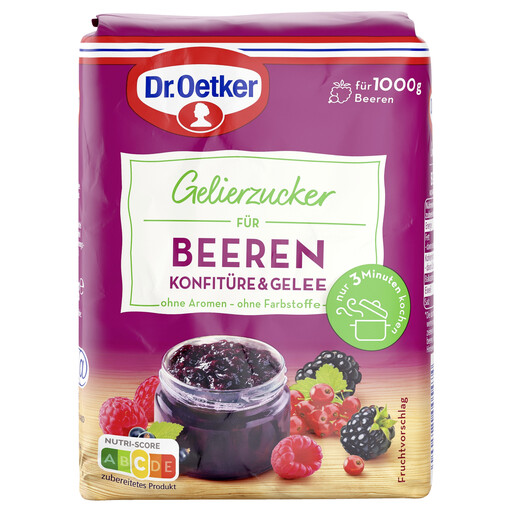
Dr. Oetker Jam Sugar for Berry Jams 500g
Why This Fits Their Persona: For home cooks who specifically want to process raspberries, blackberries, or currants and are looking for a foolproof solution for these often challenging fruits.
Solves the "Pectin Gap" for berry fruits. According to the manufacturer, the formula is specially adapted to the varying acid and water content of berries to ensure an optimal consistency.
Special blend for berry fruits; ensures a balance of sweetness and fruitiness. Suitable for 1 kg of fruit or 750 ml of juice.
Looking for more options?
We've compiled a complete, up-to-date list of products that fully meet these strict selection criteria and UK regulations.
Frequently Asked Questions (FAQ)
1. Can you also make jelly from juice with jam sugar? Yes, that's easily possible. Most jam sugar products are also suitable for making jelly. Instead of puréed fruit, you simply use fruit juice. The exact mixing ratio of juice to sugar is usually indicated on the product packaging. The cooking process is identical to that for jam.
2. How do you ensure the shelf life of homemade jam? The shelf life depends on three factors: cleanliness, sugar content, and storage. Always work with sterilised jars and lids. A higher sugar content, as with 1:1 jam sugar, leads to a longer shelf life. Store the sealed jars in a cool, dark place. Once opened, the jam should be kept in the refrigerator and consumed quickly.
3. What is the difference between jam sugar and preserving sugar? These terms are sometimes used interchangeably by mistake. Jam sugar is a mixture of sugar, pectin, and an acidifier, specifically designed for gelling fruit. Preserving sugar, on the other hand, is typically pure, coarse-grained sugar with no additives. It dissolves slowly and clearly and is used for preserving fruits in alcohol, for syrups, or for compotes where gelling is not desired.