
Induction Frying Pan Buyers Guide
Buying a new frying pan for an induction hob seems straightforward, but the reality is often different. Many consumers quickly find that their new pan warps, distributes heat unevenly, or its advertised non-stick coating rapidly deteriorates. As your Joybuy Product Recommendation Officer, I'll help you identify the crucial features and sidestep common marketing traps, ensuring your next pan is a long-lasting, worthwhile investment for your kitchen.
The 3 Most Common Pitfalls When Buying an Induction Pan
Before we dive into the technical details, it's important to understand the most common issues that can lead to a bad purchase.
- The "Universal Compatibility" Trap: Many pans are sold with the "for all hob types" label. However, this doesn't guarantee they will perform efficiently on an induction hob. An insufficient ferromagnetic layer in the base leads to slow, uneven heating, which increases energy consumption and compromises your cooking results.
- Misleading Non-Stick Promises: A non-stick pan promises cooking without food sticking. But the quality of these coatings varies significantly. Inexpensive models often wear out quickly, are susceptible to scratches, and can potentially release unwanted substances when overheated. A label like PFOA-free is an important, but not the only, indicator of quality.
- Unstable Base Construction: A base that is too thin or poorly constructed is the main reason for warping. Once the base warps, the pan loses full contact with the hob. Heat transfer is interrupted, leading to burnt spots on your food and frustration in the kitchen.
What Really Matters: The Core Parameters of a Good Induction Pan
To avoid these problems, you should check three key aspects before buying. These determine the performance, durability, and safety of your new frying pan.
1. The Pan Base: The Heart of Induction Cooking
For optimal performance on an induction hob, a multi-layered "sandwich" base is essential. This typically consists of an outer layer of ferromagnetic stainless steel, an aluminium core for fast and even heat conduction, and an inner layer of stainless steel or a non-stick coating.
- Thickness and Flatness: A thick base (at least 4-5 mm) retains heat better and remains stable without warping, even at high temperatures.
- Ferromagnetic Properties: You can easily test if a pan is induction-compatible with a magnet. If it sticks firmly to the base, the material is magnetic and suitable for induction. The quality and surface area of this layer determine its efficiency.
2. Material and Coating: From Stainless Steel to Ceramic
The choice of material depends on your cooking habits and priorities.
- Stainless Steel Pan: An uncoated pan made of stainless steel is extremely durable, heat-resistant, and ideal for searing meat. It requires some practice with temperature control to prevent sticking. Coated stainless steel pans combine this robustness with a non-stick surface.
- Ceramic Pan: Pans with a ceramic coating are a popular PFOA-free alternative. They offer good non-stick properties and are stable at high temperatures. Their longevity heavily depends on the quality of the coating and proper care.
- Hybrid Technologies: Newer models combine stainless steel with a non-stick coating set into a honeycomb or etched pattern. This is designed to increase the coating's durability by protecting it from direct contact with cooking utensils.
3. Functional Features for Everyday Use
Beyond the basic functions, certain features can make daily kitchen life much easier.
- Size and Shape: A 28 cm pan is a versatile all-rounder for most households. Specialised shapes are available for specific uses like crêpes or large cuts of meat.
- Oven-Safe: A pan labelled as oven-safe allows you to sear dishes on the hob and then finish them in the oven. Pay attention to the temperature resistance of both the pan body and the handle.
- Lid and Cleaning: A frying pan with a lid is practical for steaming and braising. Being dishwasher-safe offers added convenience, although hand washing often extends the life of non-stick coatings.
Featured Product Recommendations
Based on the criteria above, we have curated a selection of products suitable for different user profiles and their specific requirements.
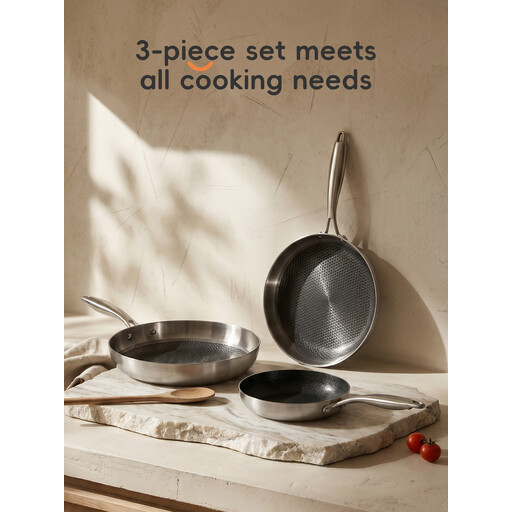
PURECOOK 3-Piece Stainless Steel Frying Pan Set | 20cm | 26cm | 30cm
Why it's a good fit: This pan set provides a solid foundation for daily use. With three different sizes, it offers flexibility for single servings, couples, and family meals. The uncoated stainless steel surface is durable and easy to maintain.
The multi-layer magnetic base ensures fast, even heating on induction hobs, thus avoiding the inefficiency of many "universally compatible" pans with thin bases.
Made from food-grade 304 stainless steel, the set is robust and corrosion-resistant. The finely cut, smooth pouring rim allows for drip-free pouring.
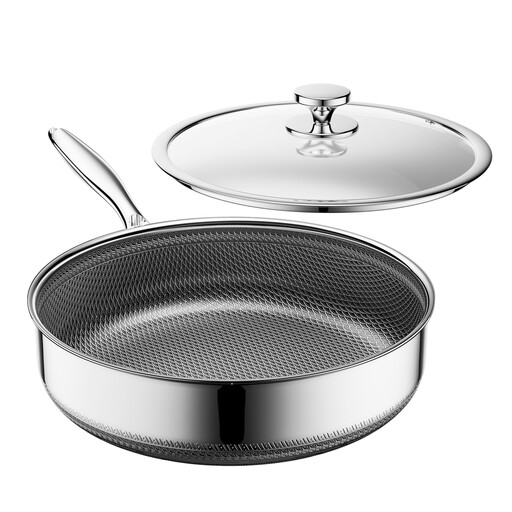
ZEROPAN Hybrid Non-Stick Deep Frying Pan with Lid, PFAS-Free
Why it's a good fit: This pan is aimed at users who value health-safe materials and high functionality. The combination of stainless steel and a ceramic coating offers a durable solution for everyday cooking.
The natural ceramic pan is explicitly certified as free of PFAS, PTFE, and PFOA, directly addressing concerns about harmful substances in non-stick coatings. The hybrid structure protects the coating from wear and tear.
The pan is oven-safe up to 260°C (lid up to 148°C) and dishwasher-safe. The three-layer construction with an aluminium core ensures rapid and even heat distribution.
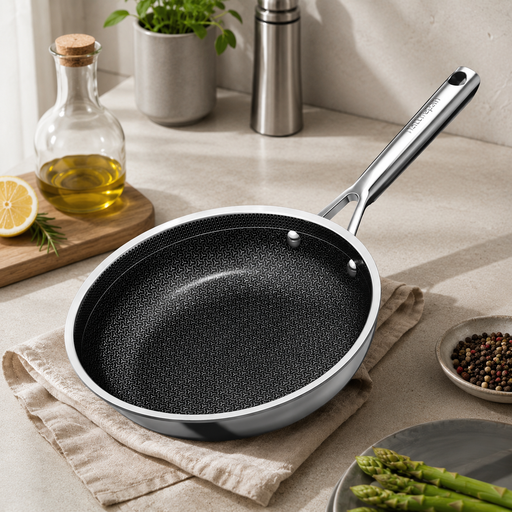
naturepan Hybrid Ceramic Frying Pan 28cm, 5-Ply
Why it's a good fit: For those who cook daily and demand the highest standards of performance and durability. The 28 cm pan offers ample space for family-sized portions, and its advanced hybrid construction is designed for intensive use.
The laser-etched hexagonal surface protects the embedded diamond-titanium ceramic coating from scratches. This solves the problem of rapid wear seen in conventional non-stick pans and ensures a longer lifespan.
The 5-ply construction provides excellent heat distribution. The pan is oven-safe up to 260°C, compatible with all hob types, and dishwasher-safe, offering maximum flexibility and convenience.
Looking for more options?
We have curated a complete, up-to-date list of products that fully meet these strict selection criteria and safety standards.
Frequently Asked Questions (FAQ)
How can I tell if a pan is suitable for induction?
The easiest way is the magnet test: hold a magnet to the outer base of the pan. If the magnet sticks firmly, the pan is ferromagnetic and therefore suitable for induction hobs. Additionally, compatibility is usually indicated by a coil-shaped symbol on the pan's base or packaging.
How do I properly care for a non-stick pan?
To maximise the lifespan of a non-stick coating, you should follow a few basic rules. Avoid using metal utensils; opt for wood, silicone, or plastic instead. Clean the pan by hand with a soft sponge and mild washing-up liquid after it has cooled down. Avoid abrasive cleaners and steel wool. Even though many pans are labelled as dishwasher-safe, hand washing is gentler on the coating in the long run.
Is an uncoated stainless steel pan suitable for beginners?
An uncoated stainless steel pan can be challenging at first, as food can stick at the wrong temperature. The key is to first heat the pan over medium heat and then add the oil. Once the oil begins to shimmer slightly, you've reached the right temperature. Those who master this technique will be rewarded with an extremely durable, robust pan that is perfect for high-heat searing.