
Induction Cookware Sets: How to Avoid Costly Buying Mistakes
Buying a new set of pots and pans for an induction hob seems straightforward at first. In practice, however, overlooked details and marketing promises often lead to disappointment: pots that warp, heat unevenly, or have coatings that peel off after a short time. As your Joybuy Product Recommendation Officer, I'll help you navigate these pitfalls and make an informed decision that suits your cooking habits and your kitchen.
The 3 Most Common Traps When Buying Induction Cookware
Before we get to the recommendations, it's important to understand the typical issues that can lead to a bad purchase.
- The "Induction-Compatible" Trap: Almost any pot with a magnetic base gets this label. However, the crucial factor isn't just if the pot works, but how well. A ferromagnetic base that is too thin or uneven leads to "hot spots"—areas where food burns while the rest is still cooking. Furthermore, a low-quality base can warp under high heat, rendering the pot unusable.
- Material Misconceptions: Not all stainless steel cookware sets are created equal. The "18/10 stainless steel" designation refers to the alloy of the pot's body, signifying durability and rust-resistance. However, cooking performance depends heavily on the base's construction. Without a heat-conductive core, usually made of aluminium, even the most expensive stainless steel pot will heat up slowly and inefficiently.
- Short-Lived Non-Stick Coatings: A non-stick cookware set is practical, especially for delicate foods. However, many budget-friendly coatings are not designed for the high and rapid temperatures of an induction hob. Moreover, a "dishwasher-safe" label doesn't mean the coating won't lose its longevity in the process.
What Really Matters: The Core Features of a Good Induction Cookware Set
To avoid the problems mentioned above, you should focus on three technical features that determine the quality and performance of a cookware set.
1. The Construction of the Pot Base
The base is the heart of any pot for an induction hob. Look for terms like "sandwich base" or "encapsulated base." These designs enclose a core of aluminium or copper, which absorbs heat quickly and distributes it evenly across the entire surface. Well-known brands use their own terms for this, such as TransTherm universal base (WMF) or SIGMA Classic+ base (Zwilling). A thick, perfectly flat base is a clear sign of quality and ensures energy-efficient cooking.
Pro Tip: Hold a magnet to the bottom of the pot. If it sticks firmly across the entire surface, the basic requirement for induction compatibility is met.
2. Material and Workmanship
- Stainless Steel (e.g., Cromargan 18/10): This material is robust, easy to clean, non-reactive, and often dishwasher-safe. It is excellent for searing and braising. Look for riveted handles, as they are considered more stable than welded ones.
- Coated Aluminium: Lighter than stainless steel and often more affordable. The quality lives and dies by its coating. Modern ceramic coatings are often free of PTFE and PFOA and can withstand higher temperatures. They are ideal for eggs, fish, or vegetables.
3. Functional Details
Often, it's the little things that make everyday cooking easier:
- Oven Safety: Check the maximum temperature resistance, especially for the handles and lids. Plastic handles or glass lids often have a lower heat limit.
- Pouring Rim: A wide, flared rim allows for drip-free pouring of liquids.
- Internal Scale: A measuring scale inside the pot eliminates the need for a separate measuring cup.
- Stackability: For kitchens with limited storage space, stackable pots or sets with detachable handles are a smart solution.
Top Picks for Different Needs
Here are some recommendations tailored to different needs and budgets, all of which meet the quality criteria mentioned above.
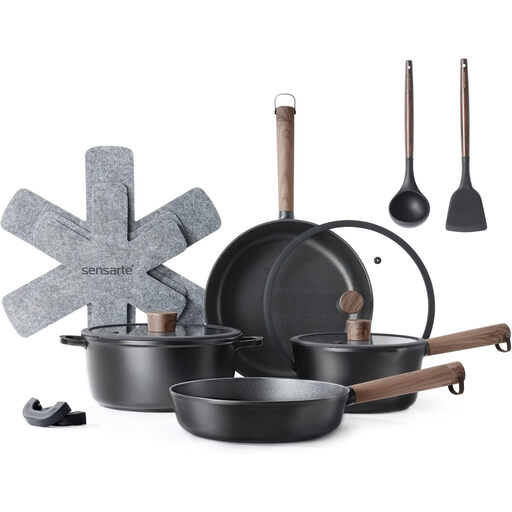
SENSARTE Nonstick Pots and Pans Set, 13-Piece
Why This Fits Their Persona: Ideal for a first kitchen or as a comprehensive upgrade. This set offers a wide selection of pots, pans, and accessories, so you're immediately equipped for most everyday dishes. The non-stick coating makes it easy for beginners to get started with cooking.
The innovative composite base is explicitly designed for fast, even heating on all hobs, including induction. This counteracts the "hot spot" trap. The coating is PFOA/PFOS-free according to the manufacturer.
Comprehensive 13-piece set including accessories. The non-stick surface allows for low-fat cooking. Oven-safe up to 287°C (without handles).
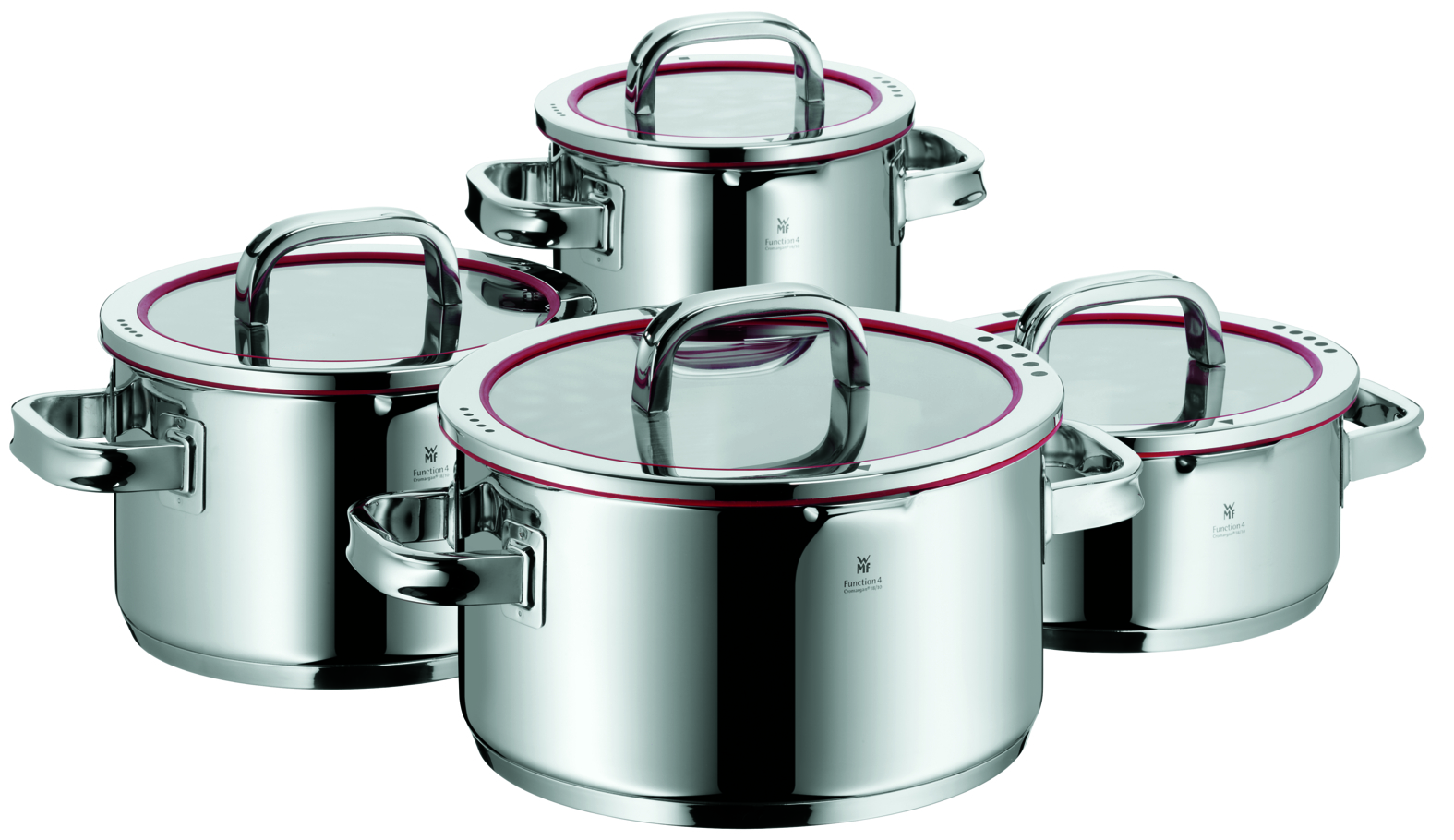
WMF Function 4 Induction Cookware Set, 4-Piece
Why This Fits Their Persona: For cooks who value durability, thoughtful features, and reliable results. This set from an established German brand is an investment in quality that pays off in daily use.
Avoids the material trap by using Cromargan 18/10 stainless steel and the TransTherm universal base. This combination ensures excellent heat distribution and retention, preventing the base from warping.
Unique glass lid with a silicone ring and four marked pouring functions (open, closed, large and small strainer openings). Hollow handles to reduce heat transfer.
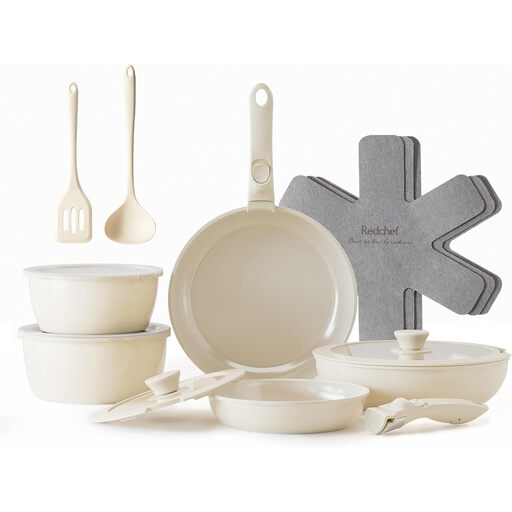
Redchef 16-Piece Ceramic Cookware Set with Detachable Handle
Why This Fits Their Persona: Perfect for small kitchens, RVs, or anyone who values tidy cabinets. The detachable handle allows the pots and pans to be stacked, saving up to 75% of space according to the manufacturer. Its versatility (stovetop, oven, fridge, table) is a major plus.
Addresses the short-lived coating trap with a three-layer ceramic coating that is free of PFAS, PTFE, and PFOA. It's known for its durability and heat resistance, which increases its lifespan compared to basic coatings.
Extremely space-saving thanks to stackability and a detachable handle. Highly versatile: cook, bake (oven-safe up to 450°C), serve, and store with the same cookware.
Looking for more options?
We've compiled a complete, up-to-date list of products that fully meet these strict selection criteria and German safety standards.
Frequently Asked Questions (FAQ)
1. How can I identify good induction cookware? The easiest method is the magnet test: if a magnet sticks firmly to the pot's base, it is fundamentally induction-compatible. Beyond that, look for a thick, perfectly flat base to ensure optimal heat transfer. Quality brands like WMF, Zwilling, or Tefal explicitly state the compatibility and base construction.
2. How do I properly care for my new cookware set? For a stainless steel cookware set: while it is usually dishwasher-safe, hand-drying is recommended to prevent water spots. A splash of vinegar or lemon juice can often help with discolouration. For a non-stick cookware set, hand-washing significantly extends the life of the coating. Use only wooden, silicone, or plastic utensils to avoid scratches.
3. Are coated pots suitable for induction? Yes, as long as the base is ferromagnetic. An induction pan set with a non-stick coating is ideal for foods that tend to stick. It's important not to heat the pan empty on the highest setting, as this can damage the coating. Modern ceramic coatings are often more resilient in this regard than traditional PTFE coatings.