
Induction Cookware Set Buyer's Guide
By Joybuy Product Recommendation Officer, August 30, 2026
Buying a new cookware set for an induction hob should be an exciting experience, but the reality is often different. Many buyers quickly discover that their pots heat unevenly, the advertised non-stick coating gets scratched after just a few weeks, or the set is simply impractical for daily use. Before you make a purchasing decision, it's crucial to see through the typical marketing promises and focus on the features that truly matter.
This guide focuses on the technical facts to help you find an induction cookware set that reliably serves its purpose. We'll highlight the most common pitfalls and explain which parameters are essential for long-term satisfaction.
The 3 Most Common Pitfalls When Buying Induction Cookware
The market is flooded with products featuring enticing descriptions. However, behind many of these claims lie functional weaknesses that complicate everyday cooking.
- The "Induction-Compatible" Trap: Nearly every modern piece of cookware carries this label. However, it only means that the base is magnetic. It says nothing about the efficiency or evenness of heat distribution. A base that is too thin or only partially magnetic leads to slow heating times, high energy consumption, and uneven cooking results.
- The Myth of the Indestructible "Scratch-Resistant Pan": Extreme scratch resistance is often advertised, especially for a non-stick frying pan. In practice, many of these coatings, particularly basic PTFE layers, are very sensitive to metal utensils and improper cleaning. The result is a rapid decline in non-stick performance and a shortened lifespan.
- Hidden Functional Limitations: A set might seem versatile at first glance. However, it often turns out that only certain parts are oven-safe cookware or not all components are declared dishwasher-safe. This significantly limits your flexibility in the kitchen.
What Really Matters: The Decisive Parameters
To avoid these pitfalls, you should concentrate on three core technical aspects. These determine the performance, durability, and safety of your cookware.
1. Base Construction: The Heart of Induction Performance
A ferromagnetic base is essential for efficient heat transfer on an induction hob. However, its quality is revealed in its construction. A multi-layered sandwich base, typically consisting of stainless steel, an aluminium core, and another layer of stainless steel, is the standard for good induction cooking pots.
- Stainless Steel (exterior): Provides the magnetic property and robustness.
- Aluminium (core): Conducts heat quickly and, most importantly, evenly from the base to the rim.
- Stainless Steel (interior): Forms a hygienic and non-reactive cooking surface.
This type of construction prevents "hot spots" (localised points of overheating) and ensures controllable cooking results.
2. Material and Coating: Stainless Steel vs. Non-Stick
The choice of material depends on your cooking habits.
- Stainless Steel Pot Set (uncoated): Cookware made from high-quality 18/10 stainless steel is extremely durable, heat-resistant, and ideal for searing meat or cooking sauces. It contains no chemical coatings and is easy to clean when used correctly (hot pot, cold oil).
- Non-Stick Pan: Ideal for delicate foods like eggs, fish, or pancakes. Modern coatings are often PFOA-free, which is an important health consideration. Look for multi-layered, reinforced coatings or hybrid solutions like a honeycomb structure to increase durability. A 28 cm frying pan with a good coating is a versatile all-rounder in almost any kitchen.
3. Functionality and Craftsmanship
Pay attention to the details that make daily use easier:
- Oven-Safe: Check the maximum temperature resistance of pots and lids. Stainless steel handles are often more heat-resistant than those with plastic or silicone elements.
- Dishwasher-Safe: Although labelled as dishwasher-safe, hand washing is often recommended for non-stick pans to extend the life of the coating. For pure stainless steel, machine cleaning is less of an issue.
- Handles: Riveted handles are considered particularly stable and durable. So-called stay-cool handles reduce heat transfer and increase safety.
Featured Product Recommendations
Based on these objective criteria, we have curated products for different user profiles.
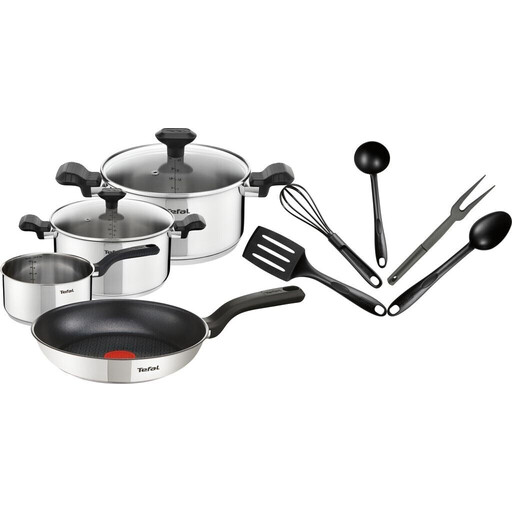
Tefal Comfort Max Starter Set 11-Piece
Why it's a great fit: Ideal for a first kitchen or as a complete replacement. It covers all the basic needs with pots, a frying pan, and kitchen utensils. The brand is known for its solid value for money.
The thick, warp-resistant base ensures good heat distribution on induction hobs, avoiding the trap of inefficient heating. The Thermo-Spot technology in the pan helps prevent the coating from overheating.
An all-in-one solution with pots, a pan, and accessories. Made from 18/10 stainless steel for durability.
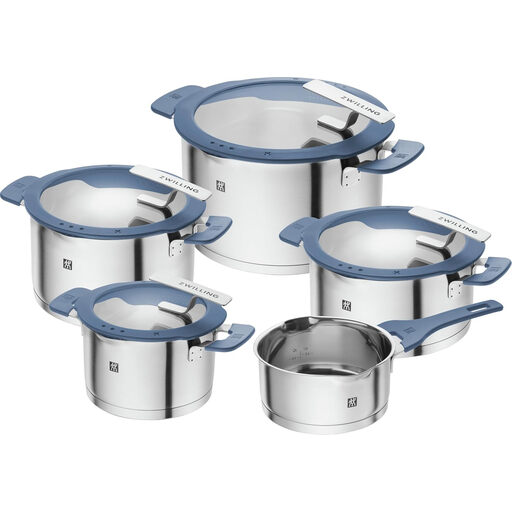
ZWILLING Simplify 5-Piece Pot Set
Why it's a great fit: For home cooks who value thoughtful design, high-quality materials, and durability. This set combines functionality with an appealing aesthetic.
The SIGMA Classic+ sandwich base with an aluminium core ensures optimal heat retention and distribution, maximising efficiency on induction. Clear specifications on oven safety (up to 180°C) prevent unpleasant surprises.
Innovative details like the integrated strainer in the lid, the lid holder, and the silicone-coated stainless steel stay-cool handles offer significant practical benefits for daily use.
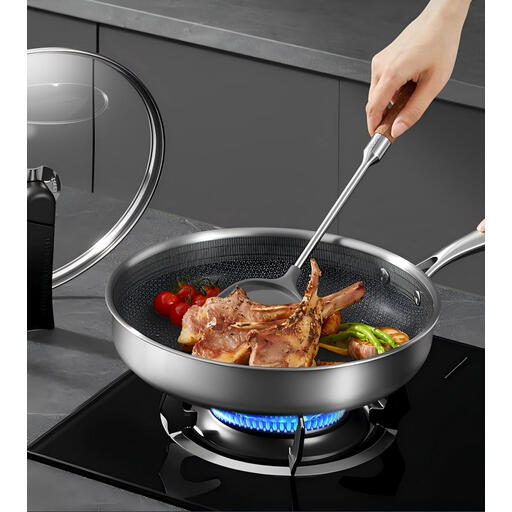
COOKER KING Honeycomb Frying Pan 28 cm
Why this pan is a great fit: Perfect for anyone who wants to cook steaks and other seared foods at high heat without worrying about a delicate coating. A robust alternative to a classic **wok pan**.
This pan bypasses the "scratch-resistant" coating myth with a physical solution: the raised stainless steel honeycomb structure protects the non-stick layer underneath. This makes it more resistant to metal utensils.
Combines the heat resistance and durability of stainless steel with the convenience of a non-stick effect. The 304 stainless steel ensures a safe cooking environment.
Looking for More Options?
We have compiled a complete, up-to-date list of products that fully meet these strict selection criteria and German safety regulations.
Frequently Asked Questions (FAQ)
1. How can I tell if my old cookware is induction-compatible?
The easiest way is the magnet test. Hold a standard magnet to the bottom of the pot or pan. If the magnet sticks firmly, the base is ferromagnetic and therefore suitable for induction hobs.
2. How do I properly care for a non-stick pan to extend its lifespan?
Avoid using metal cooking utensils. Instead, opt for wood, silicone, or heat-resistant plastic. Clean the pan by hand with a soft sponge and mild washing-up liquid after it has cooled down. Avoid extreme heat (preheating while empty) and cleaning it in the dishwasher, even if it is declared dishwasher-safe.
3. Is uncoated stainless steel cookware difficult to clean?
It can be an adjustment at first. The key is proper temperature control. Heat the pan over medium heat and do the water drop test: if a drop of water sizzles and evaporates, it's not hot enough yet. If it beads up and glides like a ball, the temperature is perfect. Only then should you add oil, followed shortly by the food. Burnt-on food can usually be removed by soaking with warm water and washing-up liquid or by briefly boiling water with a spoonful of vinegar in the pan.