
Induction Cookware: A Buyer’s Guide to Making the Right Choice
Buying a new pot for an induction hob seems simple, but the reality is often quite different. Many home cooks and families invest in new cookware, only to find that it distributes heat unevenly, wastes energy, or that its coating becomes useless after just a few months. As your Joybuy Product Recommendation Officer, I'll help you navigate the typical marketing traps and make an informed decision.
The 3 Most Common Traps When Buying Induction Cookware
Before we dive into the key features, let's shed light on the problems that lead to frustration in the kitchen. Understanding these pitfalls is the first step toward making the right choice.
- The "Induction-Compatible" Label Trap: Nearly every modern pot bears this symbol today. However, it only means that the pot will be recognised by the hob. It says nothing about the efficiency or quality of its heat conduction. A thin or only partially magnetic base leads to hot spots, unevenly cooked food, and higher energy consumption.
- Short-Lived Non-Stick Coatings: A
coated panpromises cooking without sticking. However, many budget-friendly coatings wear out quickly, especially at high heat, and lose their effectiveness. Furthermore, their composition is not always transparent. For health-conscious consumers, focusing on coatings declared as PFOA-free is an important indicator. - The Mismatched Base Diameter: A frequently overlooked detail is the ratio between the pot's base diameter and the size of the cooking zone. If the base is too small, the pot may not be recognised. If it's significantly larger than the zone, only the central part will be heated, leading to an inefficient and uneven cooking process.
What Really Matters: The Core Parameters for Your Cookware
To avoid these traps, focus on three verifiable criteria. These determine how well your new induction pot will perform in practice.
1. The Ferromagnetic Base: The Heart of the Pot
A magnetic base is essential for induction. The quality of this base determines its performance.
- The Magnet Test: A simple trick is to hold a magnet to the bottom of the pot. The stronger it sticks, the better its magnetic properties generally are.
- The Sandwich Base (Multi-Ply Base): High-quality
induction cookwareoften features a "sandwich base." This design sandwiches a core of aluminium or copper between two layers of stainless steel. Stainless steel is durable and magnetic, while aluminium conducts heat extremely well and quickly. This construction ensures fast and, most importantly, very even heat distribution across the entire base, preventing the aforementioned hot spots.
2. Material and Construction: Stainless Steel vs. Coated
The choice of material depends on your cooking habits and priorities.
- Stainless Steel Pot: Pots made of stainless steel (often marked as 18/10 or 304) are extremely durable, dishwasher-safe, non-reactive, and resistant to scratches and acids. They are ideal for cooking with liquids, like in a
stockpot, or for high-heat searing when the correct technique is used. - Coated Cookware: An
induction frying panwith a non-stick coating is practical for delicate foods like eggs or fish. Look for clear manufacturer specifications, such as a PFOA-free label, to avoid potentially harmful chemicals. Ceramic or titanium-reinforced coatings often offer greater heat resistance and durability.
3. Pot Type and Accessories: Function Over Form
Consider which dishes you cook most often. A complete induction cookware set is often a good starting point, but sometimes specialised individual pieces make more sense.
- Stockpot: High sides and a large volume are crucial here.
- Frying Pan: A lower rim makes it easier to flip food.
- Induction Wok: Requires a flat bottom to stand stably on the induction hob, and high, curved sides for classic stir-frying.
- Pot with Glass Lid: A glass lid is practical as it allows you to monitor the cooking process without letting heat and moisture escape.
Recommended Picks for Different Needs
Here are some product recommendations tailored to different needs and households, all of which meet the quality criteria mentioned above.
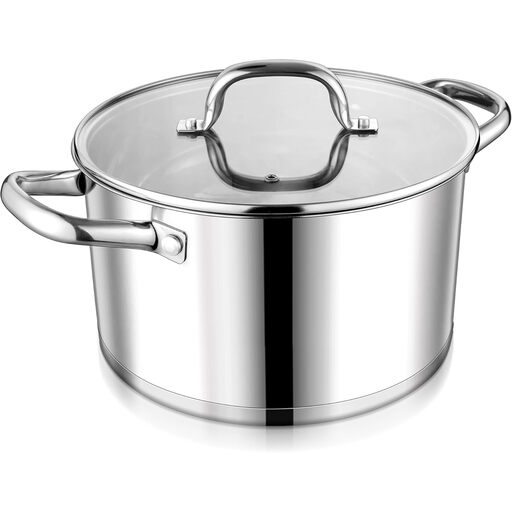
Joyfair Stainless Steel Soup Pot with Glass Lid, 24cm,6qt
Why This Fits Their Persona: A straightforward and robust stainless steel stockpot that provides a solid foundation for daily use. Ideal for families looking for a durable pot for stews, pasta, or soups without paying for unnecessary frills.
This pot relies on the proven durability of stainless steel and a solid, ferromagnetic base. It avoids the trap of short-lived coatings and focuses on reliable core functionality.
Robust stainless steel material for a long lifespan and easy cleaning. The generous volume of approx. 5.7 litres (6 qt) is versatile for a variety of dishes.
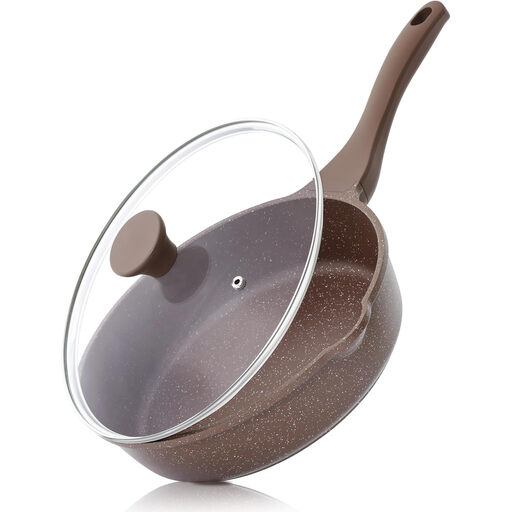
SENSARTE Nonstick Deep Frying Pan Skillet, 12-inch Saute Pan with Lid
Why This Fits Their Persona: This large sauté pan is ideal for family meals. According to the manufacturer, the coating is free of PFOA, PFOS, lead, and cadmium, giving health-conscious consumers peace of mind during food preparation.
The product avoids the trap of vague material specifications by explicitly declaring it is PFOA-free. The aluminium core ensures good heat conduction, which is crucial for coated pans.
Large diameter (approx. 30 cm / 12 inches) and high sides for versatile frying and sautéing. The non-stick coating allows for low-fat cooking and easy cleanup.
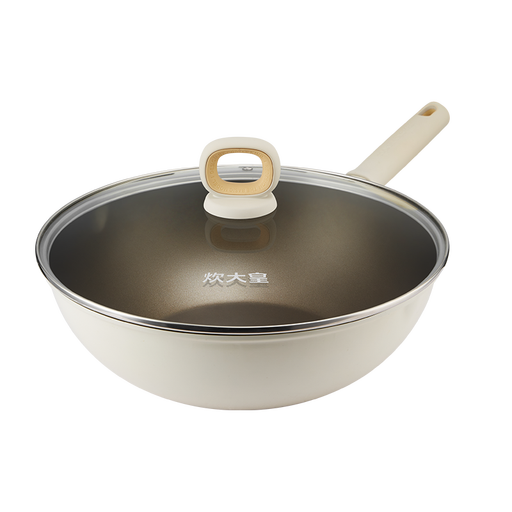
COOKER KING Non-stick Wok 32cm with glass lid
Why This Fits Their Persona: A specialised induction wok that enables fast, high-heat searing. Perfect for anyone who wants to prepare authentic wok dishes with the efficiency of an induction hob.
This product meets a specific cooking need with an optimised shape and an induction-ready base. It's not a compromise, but a specialised tool for a particular cooking method.
Large 32cm diameter for easy tossing of ingredients. Comes with a matching glass lid, which helps control heat when steaming or braising.
Looking for more options?
The right equipment is just the beginning. Discover practical accessories that will complement your kitchen and protect your hob.
Frequently Asked Questions (FAQ)
1. How do I know if my old pot is suitable for induction? The easiest way is the magnet test. Hold a common refrigerator magnet to the bottom of the pot's base. If the magnet sticks firmly, the pot is ferromagnetic and therefore suitable for induction hobs. If it doesn't stick, or only very weakly, the pot will not work on an induction hob.
2. Why does my pot make noise on the induction hob? A quiet humming or buzzing, especially on high power settings, is normal. These sounds are caused by the vibrations that the magnetic field creates in the pot's base. With pots that have a multi-ply base (sandwich base), the noises can be slightly louder because the different metal layers vibrate at slightly different frequencies. However, a loud rattling or whistling sound may indicate an uneven or low-quality pot base.
3. Can I use a pot with a base that is smaller than the cooking zone? Technically, this is possible as long as the pot's base is large enough to be detected by the hob's sensor. However, it is inefficient, as the cooking zone's magnetic field extends beyond the edge of the pot, and energy is wasted. For optimal energy transfer and even heat distribution, the diameter of the pot's base should match the size of the marked cooking zone as closely as possible.