
Guide to Induction-Compatible Pots for Everyday Cooking
Equipping a modern kitchen with the right cookware often hinges on hob compatibility. Induction hobs require flat, ferromagnetic bases that generate heat efficiently without buzzing, warping or causing hot spots. For home cooks in rental apartments or modern houses across Germany, finding cookware that seamlessly transitions between induction and standard gas burners is essential for versatile meal preparation.
Beyond magnetic readiness, the choice of interior surface and pot geometry dictates how easily you can prepare everyday meals. Whether you need a shallow tabletop pan for convivial family dining or a high-capacity sealed vessel for hearty stews, pairing the right base construction with a resilient non-stick or enamel interior transforms daily cooking into an effortless routine.
Key Considerations When Selecting Induction Cookware
Base Construction and Magnetic Induction Coupling
Induction cooktops rely on electromagnetic fields to transfer heat directly into the base of the vessel, requiring a flat layer of magnetic metal.
- Contact Area: A completely flat, wide base ensures full contact with the induction coil, eliminating uneven browning and burner error codes.
- Dual Fuel Flexibility: Cookware built for induction with sturdy cast walls also performs reliably on gas and ceramic rings without thermal warping.
Interior Coatings and Food Release
The choice between ceramic, multi-layer fluoropolymer coatings and tough enamel determines both cooking technique and cleanup effort.
- Coating Type: Multi-coat non-stick systems and ceramic surfaces require minimal oil, whereas titanium enamel provides resilient resistance against acidic sauces.
- Heat Retention: Cast aluminium bodies paired with thick non-stick linings hold consistent low temperatures ideal for gentle simmering and braising.
Vessel Geometry and Handle Ergonomics
Matching the pot's profile to your cooking style prevents spills and makes serving at the table much easier.
- Wall Height: Shallow, wide-profile pots offer quick moisture reduction and easy tabletop scooping, while tall 6-litre walls contain vigorous boiling.
- Dual Handles: Symmetrical twin handles provide balanced, steady weight distribution when carrying a full vessel from hob to dining table.
Our Top Recommendations for Induction Hobs
These featured cookware choices offer reliable induction compatibility alongside durable non-stick interiors and family-friendly capacities.
Shallow Ceramic Serving Pot: SENSARTE 28 cm Ceramic Non-Stick Shallow Pot
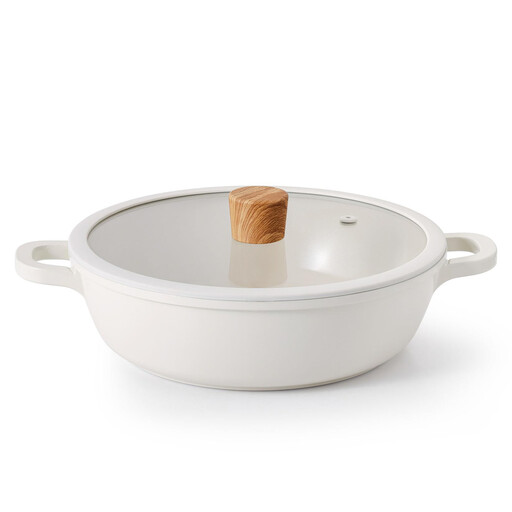
Why It Stands Out: This 28 cm shallow pot pairs a clean glass-white ceramic non-stick interior with robust induction and gas stove readiness. Designed with two sturdy side handles, it functions exceptionally well as a multi-purpose table cooker for sukiyaki, sautéing and light shallow frying. Its wide, open surface allows ingredients to sear evenly while enabling effortless tabletop serving directly from the cooker.
Pros:
- Smooth ceramic non-stick surface facilitates effortless food release
- Wide 28 cm diameter provides generous surface area for shallow frying and searing
- Dual-handle layout offers balanced carrying straight to the dining table
Who is it for? Home cooks who love one-pot family meals, hot-pot-style table dining and bright kitchen aesthetics.
Classic Cast Aluminium Braiser: SENSARTE 28 cm Cast Aluminium Shallow Pot with Glass Lid
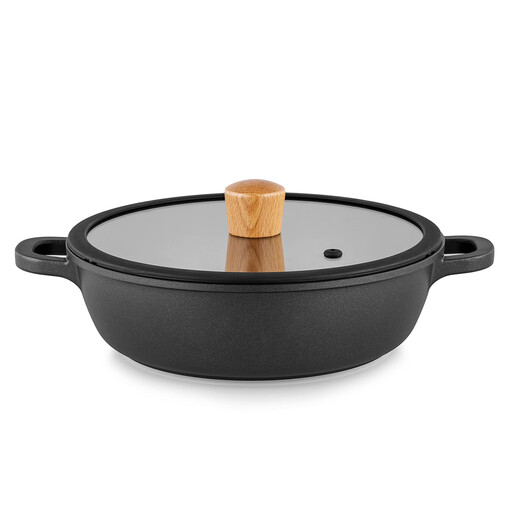
Why It Stands Out: Crafted from die-cast aluminium with a resilient Swiss ILAG non-stick coating, this 28 cm black pan delivers uniform heat distribution across induction, ceramic and gas hobs. The included glass lid allows convenient monitoring while locking in moisture for tender stews, shabu-shabu or simmered braises. Its PFOA-free surface resists sticking, ensuring swift cleanup even after reducing rich sauces.
Pros:
- Swiss ILAG non-stick coating delivers dependable food release without PFOA
- Die-cast aluminium body distributes heat evenly across the 28 cm base
- Supplied transparent glass lid retains heat and moisture during braising
Who is it for? Anyone seeking a durable, low-maintenance braising pan suited to daily simmering, stewing and tabletop hot pot dishes.
High-Capacity Micro-Pressure System: DESLON 6 L Micro-Pressure Cooker with Titanium Enamel
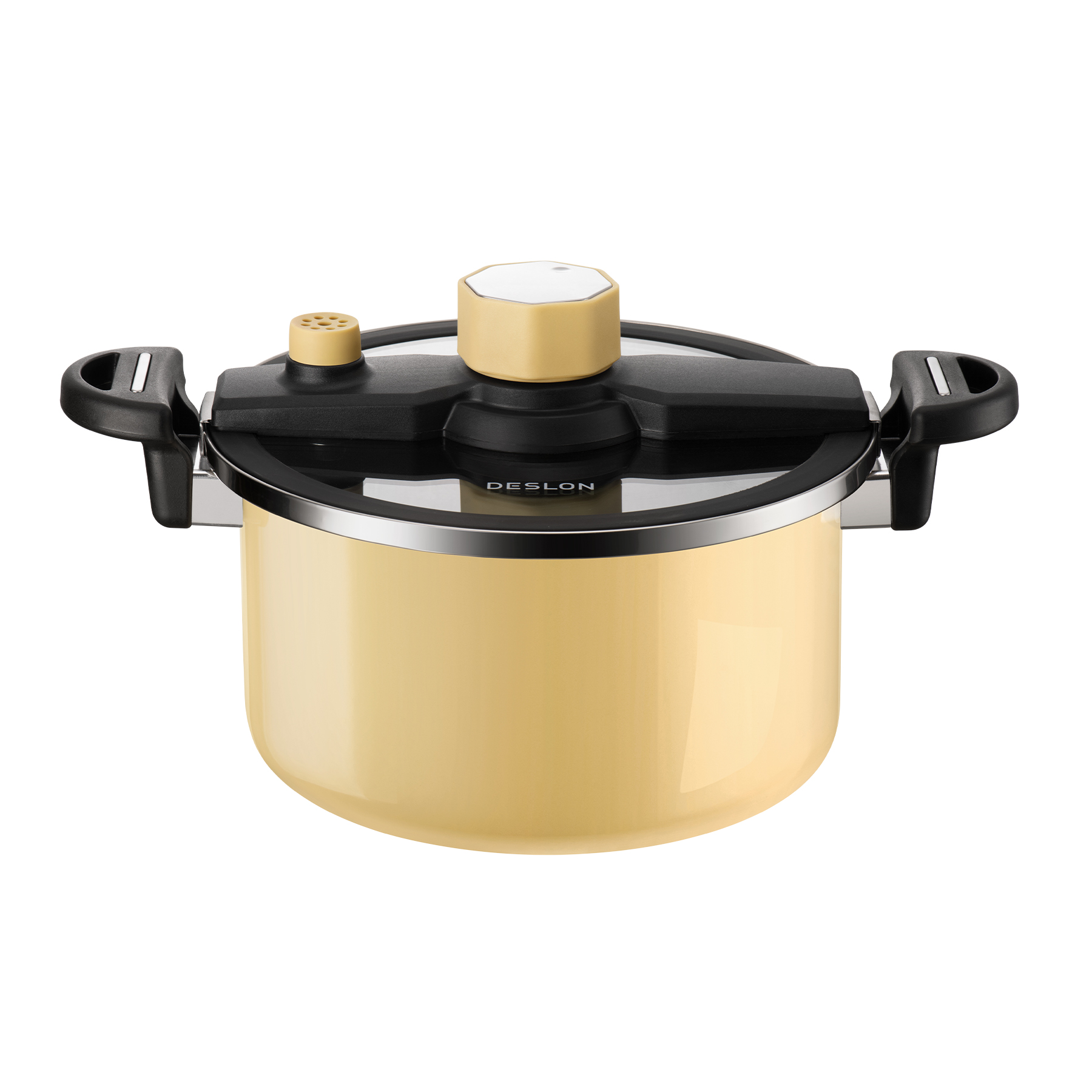
Why It Stands Out: Featuring a generous 6-litre capacity, this eye-catching yellow DESLON micro-pressure pot speeds up cooking times while preserving nutrients in hearty soups and broths. The hardwearing titanium enamel interior resists staining from dark sauces and acidic ingredients, making it versatile across induction, gas, ceramic and electric cooktops. Built-in safety and pressure relief valves integrated into the tempered glass lid provide controlled, reassuring cooking.
Pros:
- Generous 6-litre volume easily accommodates batch cooking and family soups
- Tough titanium enamel lining stands up to acidic recipes and frequent use
- Micro-pressure lid mechanism with safety relief valves accelerates stewing times
Who is it for? Busy households preparing large portions of stews, broths and batch-cooked meals who want faster cooking without standard pressure cooker complexity.
Frequently Asked Questions
How can you tell if a cooking pot is suitable for an induction hob?
The simplest method is the magnet test: hold a standard fridge magnet against the underside of the base. If the magnet clings firmly to the bottom, the pot contains a ferromagnetic layer that will register on an induction cooktop. Additionally, compatible vessels feature a flat base profile to ensure consistent electromagnetic contact with the glass surface.
What practical benefits do shallow serving pots offer over traditional deep stockpots?
Shallow 28 cm pans provide a broader horizontal heating surface, allowing liquids to reduce quickly and giving ingredients plenty of room to sear without overcrowding. Their low sidewalls and twin-handle designs also make them ideal for placing directly in the centre of the dining table for interactive meals like sukiyaki or family-style curries.
How should non-stick and enamel induction cookware be cared for to prolong its lifespan?
To protect non-stick and enamel finishes, allow the pot to cool down before washing to prevent thermal shock from cold tap water. Use soft sponges and mild liquid detergents rather than abrasive scouring pads, and cook with silicone, nylon or wooden utensils to avoid scratching the surface.