
Hybrid Pan Buying Guide: What to Know Before You Buy
As your Joybuy Product Recommendation Officer, I monitor the cookware market to provide you with clear, factual information. Many home cooks face a choice: the high-heat resistance of a stainless steel pan for searing, or the convenience of a non-stick coating for easy cleanup. A hybrid pan promises to combine the best of both worlds. This article explains the technology, guides your purchasing decision, and presents a selection of models.
What to Look for When Choosing a Hybrid Pan
The decision for the right cookware depends on your individual cooking habits and needs. Here are some objective criteria to help you with your selection.
1. Material Construction and Coating Technology
A typical hybrid pan combines a robust body, often made of multi-ply stainless steel, with a structured non-stick surface. This structure, frequently designed as a honeycomb pan or with a hexagonal pattern, consists of raised stainless steel ridges and recessed non-stick areas.
- Stainless steel ridges: These allow for searing meat or vegetables at high temperatures and protect the underlying coating.
- Non-stick areas: They prevent delicate foods like eggs or fish from sticking and make cleanup significantly easier.
Pay attention to the type of coating. Many modern pans use a ceramic coating, which is considered safe for your health as it is generally PFOA-free and PFAS-free. These materials are suspected of releasing harmful fumes when overheated. A high-quality, reinforced coating also contributes to durability and scratch resistance.
2. Versatility and Compatibility
A good pan should integrate seamlessly into your kitchen. Therefore, check the following features:
- Stovetop suitability: Ensure the pan is induction-compatible if you own an induction cooktop. Most hybrid pans are designed for all common stovetop types (gas, electric, ceramic).
- Oven safety: A pan declared as oven-safe significantly expands your cooking options, for example, for finishing dishes or reverse-searing steaks. Note the maximum temperature resistance, which can depend on the handle material.
- Size and shape: A diameter of 28 cm is a versatile standard for most households. Models with high sides are also suitable for braises and sauces.
Top Pan Selections
Here is a selection of pans that represent different approaches in modern cookware technology.
Naturepan Diamond Titanium Ceramic Frying Pan, 28 cm, High-Sided
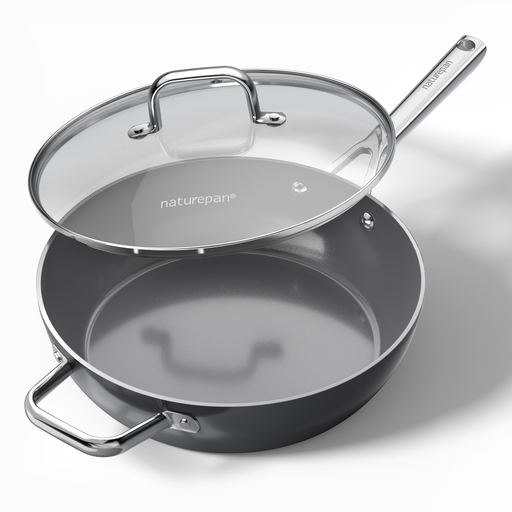
What makes it stand out: This pan features a ceramic coating reinforced with diamond and titanium particles. According to the manufacturer, this ensures an exceptionally durable and robust non-stick surface that is completely PTFE/PFOA/PFAS-free. Thanks to its high sides and included lid, it can be used as flexibly as a Dutch oven for sauces, stews, or steamed vegetables. The optimized base ensures fast and even heat distribution.
Pros:
- Reinforced ceramic coating without PTFE, PFOA, and PFAS
- High sides with a lid for versatile use
- Oven-safe up to 260°C
- Suitable for all stovetops, including induction
- Dishwasher-safe for easy cleaning
Who it's for: Ideal for health-conscious cooks looking for a multifunctional and deep 28 cm pan for a wide range of dishes, from quick searing to slow braising.
PURECOOK Non-Stick Wok, 32 cm
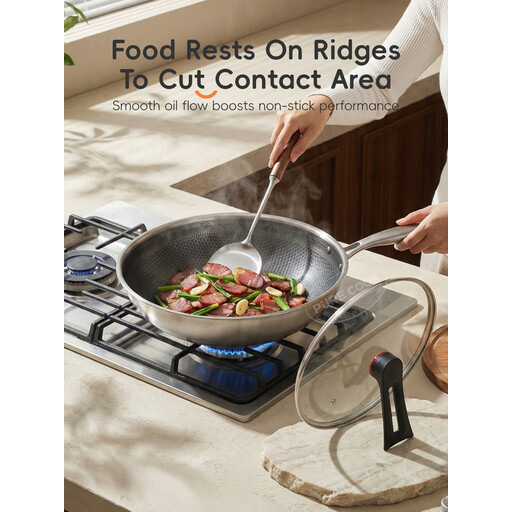
What makes it stand out: This wok represents a physical non-stick approach. It is made of tri-ply stainless steel (Type 304) with an embossed honeycomb structure on the inside. This texture minimises the contact area between the food and the pan, creating a non-stick effect without a chemical coating. The construction makes the pan particularly robust and, according to the manufacturer, suitable for use with metal utensils.
Pros:
- Tri-ply stainless steel construction for fast, even heating
- Physical non-stick effect through honeycomb pan structure
- No chemical coating
- Scratch-resistant pan, suitable for metal utensils
- Compatible with gas, induction, and electric stovetops
Who it's for: Perfect for lovers of Asian cuisine and cooks who want an extremely durable pan for high-heat searing and wish to avoid any form of chemical coating.
naturepan Hybrid Ceramic Frying Pan, 28 cm
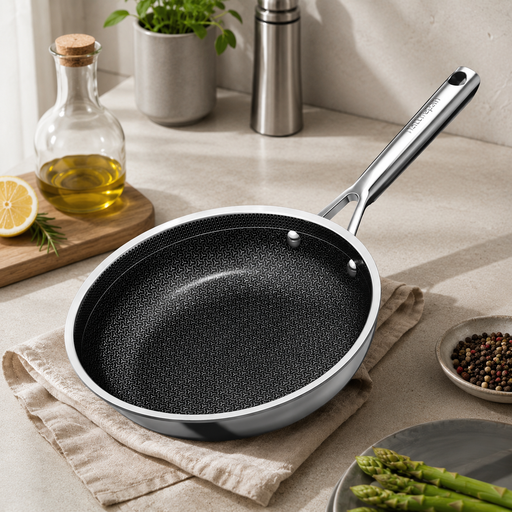
What makes it stand out: This model is a classic example of a modern hybrid pan. It combines a 5-ply construction with a stainless steel core and a laser-etched hexagonal surface. The raised stainless steel hexagons allow for a perfect sear, while the recessed valleys with a diamond-titanium reinforced ceramic coating provide the non-stick effect. This design is engineered to optimally leverage the advantages of both materials.
Pros:
- 5-ply hybrid construction for heat control and searing results
- Laser-etched hexagonal surface protects the non-stick coating
- PFAS-free, PFOA-free, and PTFE-free
- Oven-safe up to 260°C and dishwasher-safe
- Hollow stainless steel handle that stays cool on the stovetop
Who it's for: An excellent choice for ambitious home cooks seeking a technologically advanced all-rounder pan that is equally suited for searing a steak and preparing delicate foods.
Discover More Options
If you are looking for a different size, a special type of pan, or other alternatives, you can find a wider selection of cookware that might meet your needs in our Wok Frying Pan category.
Frequently Asked Questions
What is the advantage of a hybrid pan over a pure stainless steel or Teflon pan?
A hybrid pan aims to combine the best features of both types. It offers the excellent heat retention and searing capability of a coated stainless steel pan, while the integrated non-stick structure reduces food sticking and simplifies cleaning. Compared to many conventional non-stick pans, the surface is better protected from scratches by the stainless steel ridges, potentially extending its lifespan.
Are hybrid pans truly scratch-resistant?
The raised stainless steel structure (e.g., honeycomb or hexagonal pattern) protects the lower-lying non-stick coating from direct contact with cooking utensils. This makes them significantly more resistant to scratches than pans with a continuous, flat coating. Some manufacturers even approve their models for use with metal utensils. However, to maximize the coating's lifespan, using silicone, wood, or plastic utensils is often recommended. Always follow the manufacturer's instructions.
How do I clean a hybrid pan correctly?
Most hybrid pans are very easy to clean with warm water, a mild dish soap, and a soft sponge, thanks to their non-stick properties. Many models are declared dishwasher-safe. However, to ensure the longevity of the coating, gentle hand washing can be beneficial. Avoid using steel wool or abrasive cleaners, as these can damage the stainless steel surface and the coating.