
Buying a Hotplate or Hob: Which Solution Is Right for Your Kitchen, Home and Everyday Life?
Whether you need an extra cooking station in the office, a portable cooking option in student accommodation or a new built-in appliance for a renovation, choosing a hotplate or hob involves more than just wattage. The design, cookware, power connection and safety features all determine whether the appliance really suits your everyday needs.
Common Buying Mistakes with Hotplates and Hobs
1. Maximum power is confused with continuous consumption
A figure such as 1500 W, 3000 W or 7200 W describes the maximum electrical connected load, not necessarily the constant power consumption. An electric hotplate with a thermostat switches the heating on and off depending on the temperature. On a built-in hob, the energy management system may also distribute the power between several zones.
The important questions are therefore: how many cooking zones do you want to use at the same time, and is the existing power connection designed for this?
2. Induction is purchased without checking the cookware
An induction hotplate or induction hob only works with magnetic cookware. A simple magnet test on the base of the pan shows whether it is fundamentally suitable. Aluminium, glass or ceramic cookware without a magnetic base will not heat up.
With a ceramic hob, or a traditional glass-ceramic surface, you have a wider choice of cookware. However, the base of the pan should be flat, clean and suitable for the size of the cooking zone.
3. Installation dimensions and connection are checked too late
A 60 cm built-in hob will not automatically fit every existing cut-out. The key factors are the cut-out dimensions, installation depth, ventilation underneath and electrical connection. Some appliances are supplied without a plug and must be hard-wired. The connection should be carried out in accordance with the instructions and locally applicable electrical installation regulations by a qualified electrician.
The Key Selection Criteria at a Glance
Portable hotplate or built-in hob?
A portable hotplate can be set up, transported and stored away with ease. It is suitable for camping, small kitchens, offices or as an occasional additional cooking station. A single hotplate takes up very little space, while a double hotplate lets you cook with two pans at the same time.
A built-in hob creates a neater look and offers two, three or four cooking zones, depending on the model. For a small household, a 2-zone hob may be sufficient. If you regularly prepare several components at once, a 4-zone hob is likely to be a better choice. Before buying, check the worktop width, cut-out and type of connection.
Heating technology: traditional electric plate, ceramic or induction
- Electric hotplate: Robust, straightforward technology with a continuously adjustable thermostat or several heat settings. The surface and cookware may remain hot after switching off.
- Ceramic hob: Smooth glass-ceramic surface with visible heating zones. It is easy to wipe clean, but needs time to cool down after cooking.
- Induction hob: Generates heat in the suitable magnetic base of the pan. It responds directly to changes in power; automatic pan detection can switch off the zone if the cookware is unsuitable or has been removed.
The term ‘fast’ should not be considered in isolation. The total power, the output of individual zones, the pan size and simultaneous use are all relevant.
Controls and safety features
A hob with touch controls has a flat surface that is easy to clean. The sensor areas should be kept dry and free from grease so that inputs are detected reliably. A hob with a timer can switch off a zone after the set time. Useful safety features include:
- Child lock to prevent accidental changes,
- Residual heat indicator when the surface is still hot,
- Overheating protection,
- automatic switch-off,
- for induction models, pan detection.
These features do not replace supervision while cooking. Oil and fat in particular should not be left unattended at high temperatures.
Our Selection by User Profile
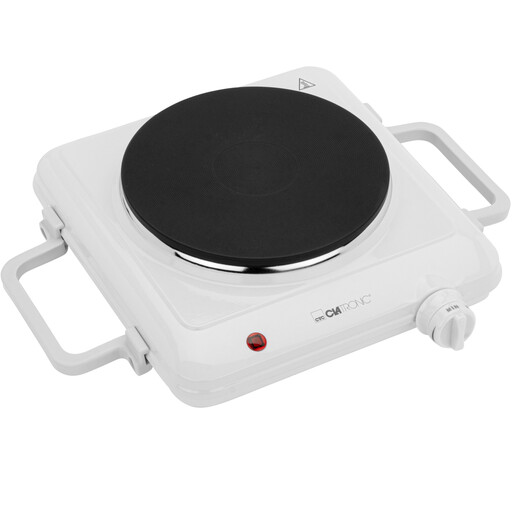
Clatronic EKP 3582 Single Hotplate
Why this product suits this profile: The portable single hotplate requires no installation and is suitable for the kitchen, camping, office or as an additional cooking station.
The specifications state a 180 mm hotplate, 1500 W, continuously adjustable thermostat control and overheating protection, rather than making vague promises about performance.
1500 W, indicator light, excellent stability and two attachable cool-touch handles.
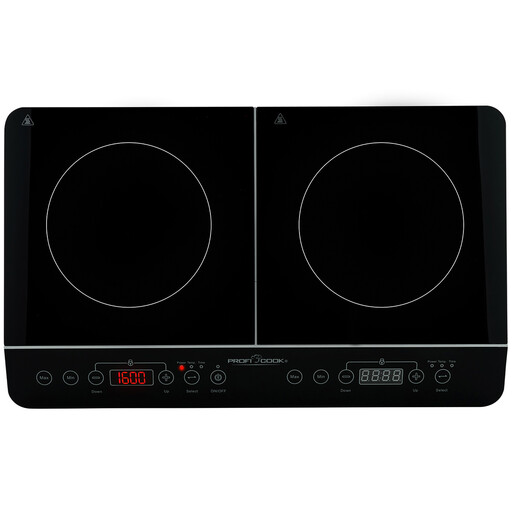
ProfiCook PC DKI 1067 Double Induction Hotplate
Why this product suits this profile: Two portable induction zones, sensor-touch controls and separate settings provide a straightforward solution for regular cooking without installation.
Automatic pan detection checks whether the cookware is suitable; the appliance also switches off automatically if no pan is detected or after a prolonged period without use.
3500 W maximum power, 16 heat settings per zone, timer of up to 180 minutes and temperature selection from 60 to 240 °C.
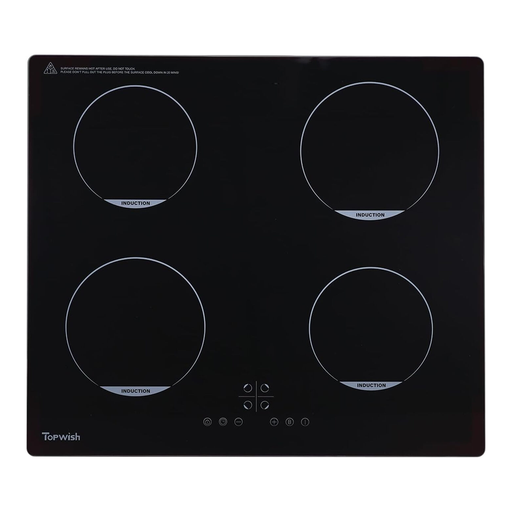
TOPWISH 4-Zone Induction Hob, 60 cm
Why this product suits this profile: This built-in hob is designed for households that use several pans at the same time and need a permanently installed solution.
The product details explicitly state the external dimensions, cut-out dimensions, connection without a plug and the required electrical installation.
Four zones, maximum 7200 W, nine heat settings, boost function, timer of up to 99 minutes and child lock.
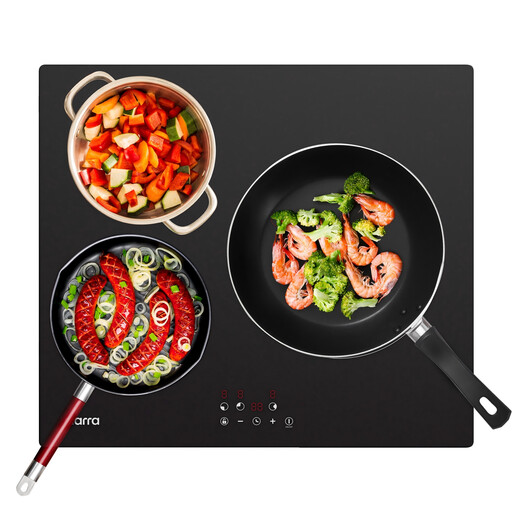
CIARRA 5600W Induction Hob with 3 Cooking Zones
Why this product suits this profile: Three zones combine a compact 60 cm design with room for different-sized pans, including a large zone with a diameter of 280 mm.
The stated external and cut-out dimensions make it possible to check suitability before ordering; the connection and ventilation nevertheless remain installation requirements.
Three zones, 5600 W total power, nine heat settings, timer of up to 99 minutes and residual heat indicator.
People with pacemakers or other electronic implants should follow the safety information provided by the relevant manufacturer and, if necessary, seek medical advice before use. This applies particularly to induction appliances.
Looking for more options?
We have put together a complete, regularly updated list of products that fully meet these strict selection criteria and the safety regulations applicable in the EU.
Frequently Asked Questions about Hotplates and Hobs
What is better for a small flat: a single hotplate or a built-in hob?
A single hotplate makes sense if permanent installation is not possible or you only occasionally need an additional cooking station. A compact 2-zone hob is better suited to a fixed kitchen layout. Before installation, check the cut-out, ventilation and power connection.
How much power should a hotplate have?
For simple applications, a hotplate with 1500 W may be sufficient. With two portable induction zones, the stated power is often considerably higher, around 3500 W, for example. A 3000 W induction hob is suitable for two zones with limited total power, while 4-zone models often require a suitably designed connecting cable.
How long does a hob last?
Its service life depends on usage, cleaning, ventilation and proper connection. Damaged glass surfaces should no longer be used. For a longer service life, use flat-based pans, suitable cleaning products and keep the ventilation areas clear. The specific warranty and service conditions can be found in the relevant product documentation.