
Heavy-Duty Shelving 2026: A Guide to Choosing the Right System
A heavy-duty shelving unit is a functional solution for creating order and maximising storage space in demanding environments. Whether you need cellar shelving for supplies, garage shelving for tools and car accessories, or workshop shelving for heavy materials, choosing the right model depends on specific technical requirements. This guide analyses the key parameters to consider when selecting a high-capacity shelving system.
Buyer's Guide: What to Look for in a Heavy-Duty Shelving Unit
The decision to purchase a storage rack should be based on an objective assessment of its material, construction, and load capacity. The following criteria are essential for making an informed choice.
1. Load Capacity: Total Load and Load per Shelf
The most important metric is the load capacity, specified in kilograms (kg). A distinction is made between two values:
- Load per Shelf: Indicates how much weight a single shelf can support when the load is evenly distributed. Common values range from 150 kg to over 250 kg.
- Total Load Capacity: Defines the maximum weight the entire unit can hold. While this value is the sum of the maximum loads of all shelves, it should never be exceeded to ensure structural integrity.
Storing heavy toolboxes, paint cans, or machine parts requires a metal shelving unit with a high load capacity. For pantry shelving in a cellar, models with a lower load capacity per shelf may be sufficient.
2. Material and Surface Finish
The frame of heavy-duty shelving units is typically made of steel. The surface finish is crucial for durability and the intended location:
- Powder-Coated Steel: Offers solid protection against scratches and corrosion in dry environments like workshops or garages. The coating is available in various colours.
- Galvanised Steel: Galvanisation provides the steel with excellent corrosion resistance. This variant is particularly suitable for use in slightly damp environments like cellars.
The shelves are often made of MDF (Medium-Density Fibreboard). These boards are robust but should be protected from direct and prolonged exposure to moisture to prevent swelling.
3. Assembly System: Boltless vs. Bolted Shelving
The assembly method affects the unit's setup and flexibility:
- Boltless Shelving: The most common type of modern heavy-duty shelving. Components are connected using a smart interlocking system, often without the need for screws. Assembly is typically quick and can be done by one person. A rubber mallet can be helpful to securely lock the connections.
- Bolted Shelving: This traditional design requires bolting the individual components together. Assembly is more time-consuming but offers exceptional stability.
Many boltless units also offer the flexibility to be assembled modularly, for example, as two half-height shelves or workbenches.
4. Dimensions and Adjustability
Measure the available space precisely (height, width, depth) before making a decision. Check whether the height of the individual shelves is adjustable. This flexibility allows you to adapt the shelving to stored items of various sizes—from flat boxes to tall canisters.
Our Top Picks for Heavy-Duty Shelving in 2026
Based on an analysis of technical specifications and functional features, here are some models we recommend.
Ochama x SONGMICS 5-Tier Shelving Unit, Set of 2
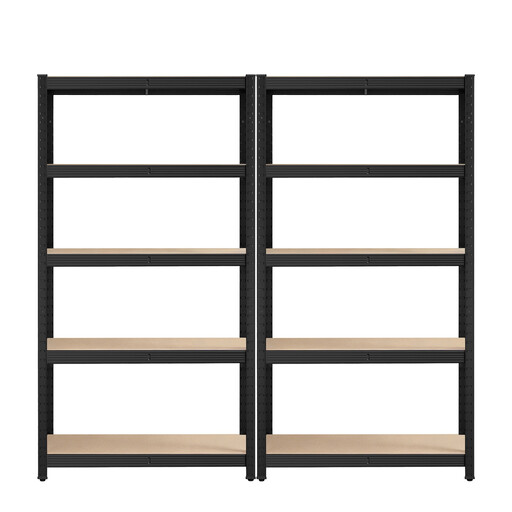
Why we feature this product: This set of two shelving units stands out for its versatility and excellent storage-to-footprint ratio. The ability to convert each rack into two separate, half-height units offers great adaptability for different room layouts and workspaces. The boltless system is designed for straightforward assembly.
-
Pros:
- Comes in a practical set of 2 for large-scale storage solutions.
- Flexible configuration as one tall rack or two workbenches.
- Simple, boltless assembly without screws.
- Includes an anti-tip kit for secure wall mounting.
-
Best for:
- Users looking for a flexible and expandable storage solution for a garage, cellar, or utility room who value a simple assembly system.
-
Specifications:
- Material: Powder-coated steel frame, MDF shelves
- Dimensions (H x W x D): 180 x 90 x 40 cm
- Max. Static Load per Shelf: 175 kg
- Max. Static Total Load Capacity: 875 kg
PROBUILDER Steel Shelving Unit 265 kg with 5 Shelves, Matte Black
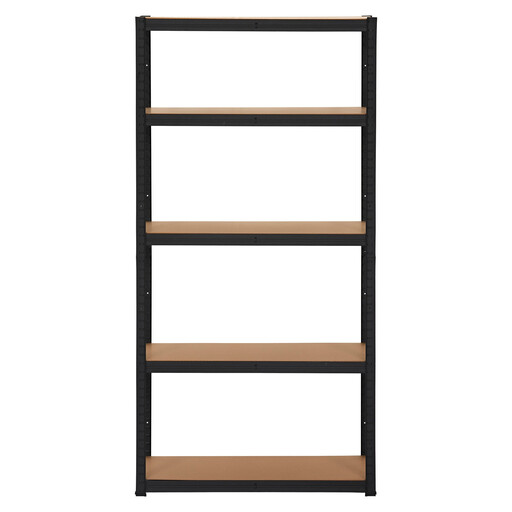
Why we feature this product: This model from PROBUILDER is engineered for maximum load-bearing capacity. With a load capacity of 265 kg per shelf and a total capacity of 1325 kg, it is ideal for storing exceptionally heavy items. The matte powder coating gives the unit an understated aesthetic suitable for workshops and garages.
-
Pros:
- Very high load capacity of 265 kg per shelf for heavy items.
- Robust steel construction with durable MDF shelves.
- A depth of 45 cm offers more shelf space than standard models.
-
Best for:
- Professional users and DIY enthusiasts who need an extremely robust storage solution for heavy machinery, large quantities of materials, or extensive equipment.
-
Specifications:
- Material: Matte powder-coated steel, MDF shelves
- Dimensions (H x W x D): 180 x 90 x 45 cm
- Max. Load per Shelf: 265 kg
- Max. Total Load Capacity: 1325 kg
PROBUILDER Steel Corner Shelving Unit 175 kg with 5 Shelves
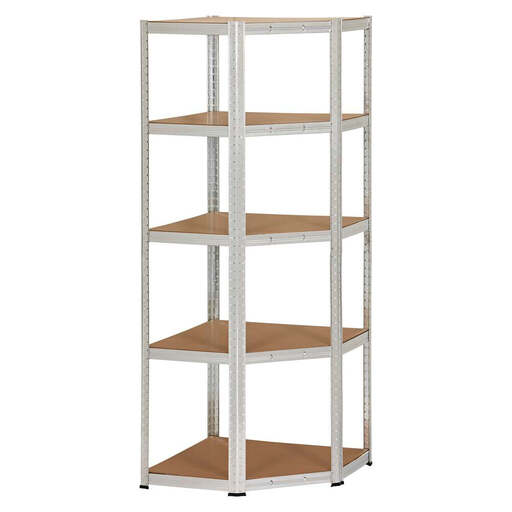
Why we feature this product: The PROBUILDER corner unit is a smart solution for utilising otherwise dead space. Its design is specifically engineered to efficiently convert corners in garages, cellars, or storage rooms into valuable storage space. The galvanised steel frame offers enhanced protection against corrosion.
-
Pros:
- Optimal space utilisation thanks to its special corner design.
- Galvanised steel frame for enhanced corrosion resistance.
- Tool-free assembly via an interlocking system.
- Can be combined with other shelving units from the PROBUILDER series.
-
Best for:
- Users who want to maximise corner storage and are looking for a durable solution for potentially damp environments like cellars.
-
Specifications:
- Material: Galvanised steel frame, MDF shelves
- Dimensions (H x W x D): 180 x 70 x 40 cm
- Max. Load per Shelf: 175 kg
- Max. Total Load Capacity: 875 kg
Discover More Options and Storage Racks
The models featured here represent a selection of what's available. A wide range of solutions exists for different dimensions, load capacity classes, and specific requirements. You can find a larger selection in our main Storage Racks category.
Frequently Asked Questions (FAQ)
1. What is the difference between boltless and bolted shelving? Boltless shelving is assembled by interlocking frame and support elements, making setup quick and tool-free. Bolted shelving requires screwing components together, which takes more time but ensures a rigid connection. For most home and small business applications, a boltless system offers sufficient stability with easier handling.
2. How do you load a heavy-duty shelving unit correctly? For maximum stability, heavy items should always be stored on the lower shelves. The weight should also be distributed as evenly as possible across the entire surface of the shelf, rather than being concentrated in one spot. Avoid loading the unit unevenly.
3. Does a heavy-duty shelving unit need to be fixed to the wall? Yes, wall mounting is strongly recommended, especially for tall units. Many manufacturers include an anti-tip kit. This secures the unit to the wall and prevents it from tipping over if it is loaded unevenly or subjected to impact. Safety should always be the top priority.