
Hair Straighteners with Heat Protection: 2026 Recommendations
Using heat to style hair requires a careful balance between achieving the desired look and maintaining the health of the hair structure. Modern hair straighteners integrate technologies designed to minimise heat damage. A hair straightener with heat protection is therefore not just a marketing term; it refers to specific technical features like intelligent temperature sensors, high-quality plate coatings, and functions such as ion technology. These components work together to enable more effective and gentler straightening.
What to Look for in a Hair Straightener with Heat Protection
The selection of a suitable hair straightener is based on objective technical criteria. The following aspects are crucial for performance and hair protection.
Plate Coating: Material and Function
The contact surfaces of the straightener, the styling plates, are critical for heat distribution. A hair straightener with ceramic plates is common, as ceramic conducts and retains heat very evenly. This helps to avoid localised overheating points (so-called "hot spots") that can damage the hair.
Many models feature enhanced ceramic coatings that are infused with substances like keratin, argan oil, or almond oil. These are intended to be released onto the hair during straightening to improve glide and condition the hair's surface.
Intelligent Heat Regulation and Sensor Technology
A key feature of a gentle hair straightener is its ability to actively control temperature. Conventional devices simply maintain a pre-set temperature. Advanced models use sensors that analyse parameters like the hair's moisture level multiple times per second and dynamically adjust the plate temperature. This approach aims to reduce heat exposure to the necessary minimum and protect the hair from drying out.
Ion Technology for Shine and Less Frizz
Static, flyaway hair is caused by a positive electrical charge on the hair's surface. A hair straightener with ion technology emits negatively charged ions during operation. These neutralise the positive charge, which can cause the hair's outer layer (cuticle) to close. The result is a smoother, shinier hair surface and reduced static.
Temperature Settings and Heat-up Time
The ability to manually adjust the temperature is essential for tailoring the styling to your individual hair type. Fine or already damaged hair (straighteners for damaged hair) requires lower temperatures (approx. 150–180 °C), while thick or coarse hair may require higher settings (up to 230 °C). A short heat-up time of under 30 seconds adds to the convenience of daily use.
Our Top Hair Straightener Picks for 2026
Based on the technical criteria mentioned, here are some models that feature advanced heat protection functions.
Remington Keratin Protect Hair Straightener S8598
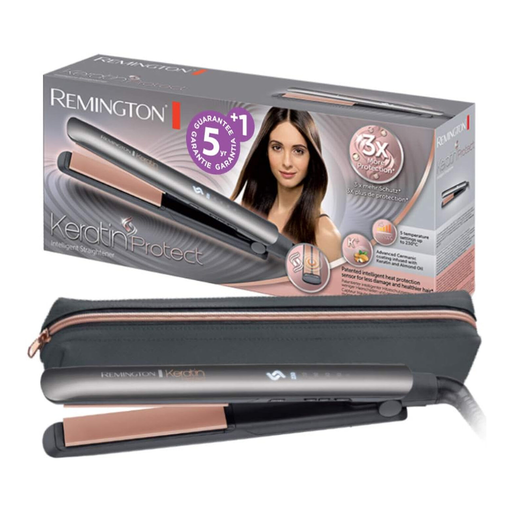
Why we recommend this product This Remington straightener is distinguished by its patented heat protection sensor. According to the manufacturer, it continuously measures the moisture level in the hair and automatically adjusts the temperature to provide 3x more protection against hair damage. The ceramic plates, infused with keratin and almond oil, support a smooth glide.
Pros
- Intelligent heat protection sensor: Actively adjusts the temperature to the hair's moisture level.
- High-quality ceramic plates: Infused with keratin and almond oil for a smooth surface.
- Fast heat-up time: Ready to use in 15 seconds.
- Variable temperature display: Five settings from 160°C to 230°C.
Who it's for This model is designed for users who place a special focus on active, sensor-controlled protection against heat damage and are looking for a quick, straightforward tool for daily use.
Philips 5000 Series Hair Straightener (BHS510/00)
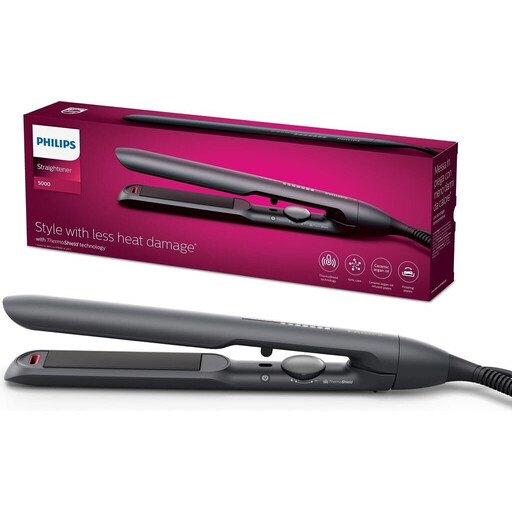
Why we recommend this product The Philips hair straightener uses what it calls ThermoShield technology. A sensor regulates the temperature to ensure even heat exposure from root to tip and reduce heat damage. The combination of argan oil-infused ceramic plates and an ionic care function aims for a smooth and shiny finish.
Pros
- ThermoShield technology: Regulates temperature for consistent styling results.
- Ionic care: Reduces static in the hair.
- Argan oil-infused ceramic plates: Ensure an effortless glide.
- Faster straightening: According to Philips, the plates glide 50% faster through the hair.
Who it's for This device is suitable for users who value a combination of even heat regulation, anti-frizz technology, and exceptionally smooth-gliding plates for efficient styling.
Grundig HS 7030 Hair Straightener
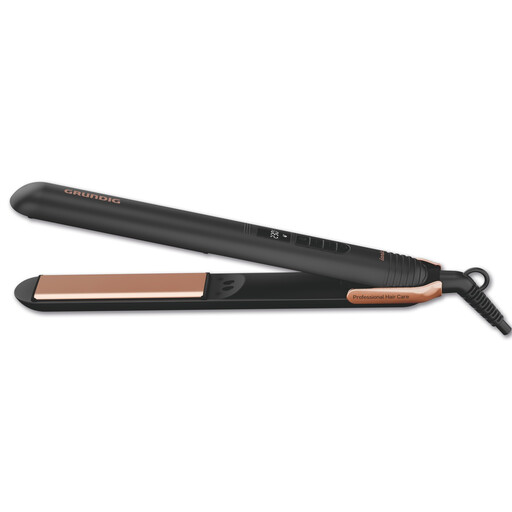
Why we recommend this product The Grundig straightener features a special 'Hair Protection Mode'. According to the manufacturer, an intelligent sensor analyses the hair 30 times per minute and selects the optimal temperature for gentle styling. The ceramic coating is also enhanced with macadamia and coconut oil to nourish the hair and promote shine.
Pros
- Hair Protection Mode: A sensor selects the appropriate temperature for hair protection.
- Ceramic protection with oils: The coating with macadamia and coconut oil helps to condition the hair.
- Flexible temperature settings: Six levels from 130°C to 230°C, suitable for all hair types.
- Long styling plates: The 11 cm plates allow for efficient styling, especially on long hair.
Who it's for Users with different hair textures, from fine to thick, will benefit from the six temperature settings and the intelligent protection mode. The long plates make it a great choice for those with long hair.
Discover More Models and Alternatives
If our recommendations don't include the right model for your specific needs, you can find a wider selection of devices with different specifications in our main category for best hair straightener.
Frequently Asked Questions (FAQ)
1. Are straighteners with ceramic plates really gentler on the hair? Yes, ceramic plates offer a significant advantage because they distribute heat very evenly. This prevents the formation of extremely hot spots that can singe specific areas and lead to hair breakage. Additionally, the smooth surface creates less friction as you pass the strands through.
2. What does ion technology do in a hair straightener? Ion technology releases negatively charged ions that neutralise the positive static charge in your hair. This has two primary effects: first, it reduces 'flyaway hair'. Second, it helps to smooth the hair's outer cuticle, which results in more shine and a sleeker hair surface.
3. What temperature is right for my hair? A general guideline is:
- Fine, coloured, or damaged hair: 130°C – 170°C
- Normal, healthy hair: 170°C – 200°C
- Thick, strong, or coarse hair: 200°C – 230°C It is always recommended to start with the lowest possible temperature and only increase it gradually if necessary to minimise stress on the hair.