
The Right Immersion Blender for Your Kitchen in 2026: A Technical Guide
An immersion blender, also known as a hand blender, is a versatile kitchen tool designed for preparing soups, sauces, smoothies, and baby food. Its primary function is to blend and mix ingredients directly in a pot, beaker, or other bowl. Choosing the right model depends on your specific needs regarding power, materials, and accessories. This guide breaks down the key technical criteria to help you make an informed purchasing decision.
Buying Guide: What to Look for in an Immersion Blender
The functionality of an immersion blender is determined by a combination of motor power, material quality, accessories, and ergonomic design.
1. Motor Power (Watts)
The motor power, measured in watts (W), indicates the appliance's ability to process various textures.
- Up to 400W: Sufficient for liquids and soft ingredients, such as cooked vegetables for soups or soft fruits for smoothies.
- 400W to 800W: Suitable for most everyday tasks, including processing slightly firmer foods.
- Over 800W: A high-performance immersion blender in this range can handle demanding tasks like crushing nuts, frozen fruit, or fibrous vegetables.
2. Blending Shaft Material
The blending shaft is the component that comes into direct contact with food.
- Plastic: Lighter and often more budget-friendly. However, plastic can stain when used with strongly coloured foods (e.g., carrots, beetroot) and is not suitable for use in very hot liquids directly on the stove.
- Stainless Steel: A stainless steel immersion blender is more durable, heat-resistant, and hygienic. It won't absorb odours or stains and can be used safely in hot pots. Cleaning is typically straightforward.
3. Speed Settings and Control
Control over the speed allows for more precise results.
- One or Two Speeds: Basic models often offer just a standard speed and a turbo function. This is sufficient for simple blending tasks.
- Variable Speed Control: Models with stepless or multi-speed controls allow for fine adjustments to suit the ingredients and desired outcome. This helps prevent splashing with liquids and provides better control over the final texture.
4. Range of Accessories (Immersion Blender Set)
An immersion blender with accessories significantly expands its functionality. Common accessories include:
- Beaker: A tall, narrow container that minimises splashing and is ideal for blending smoothies or making mayonnaise.
- Chopper: An attachment with its own container and blade that turns the immersion blender into a mini food processor. Ideal for chopping herbs, onions, nuts, or cheese. An immersion blender with a chopper dramatically increases its versatility.
- Whisk: For whipping cream, egg whites, or light batters.
- Potato Masher: A special attachment for preparing creamy mashed potatoes without a gummy texture.
Our Recommendations for 2026
Based on an analysis of technical specifications and practical utility, we present three models with different strengths.
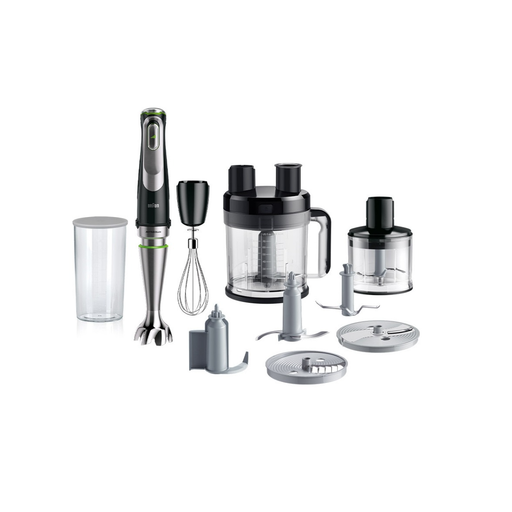
For Demanding Tasks: Braun MultiQuick 9 MQ 9195XLI
-
Why we recommend this product: The Braun immersion blender MultiQuick 9 combines a very powerful 1200-watt motor with an extensive accessory package, including a 2-litre food processor attachment. Its Active PowerDrive Technology allows it to process the toughest ingredients, while the EasyClick Plus system enables quick and easy accessory changes.
-
Pros:
- High Power: 1200-watt motor for demanding applications.
- Comprehensive Accessories: Functions as an immersion blender, chopper, potato masher, whisk, and food processor with various discs.
- Splash Control: SplashControl technology reduces splashing during operation.
- Easy Accessory Change: EasyClick Plus system for quickly swapping attachments.
-
Who it's for: Users looking for a multifunctional appliance that can replace several kitchen gadgets and who regularly process large quantities or tough ingredients.
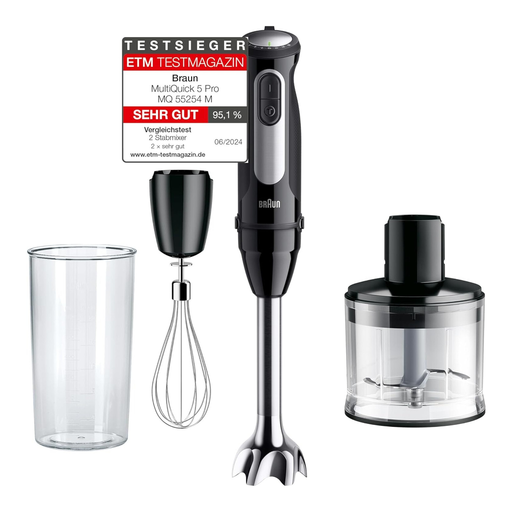
The All-Rounder: BRAUN MultiQuick 5 Pro MQ55236M
-
Why we recommend this product: This model offers a solid 1000 watts of power for most kitchen tasks. Its standout feature is the precise control offered by 25 speed settings, allowing for exact texture customisation. The included immersion blender set covers basic needs like blending, chopping, and whisking.
-
Pros:
- Precise Control: 25 variable speed settings plus a turbo function.
- Efficient Blending: PowerBell Plus technology with an extra milling blade for faster results.
- Practical Accessories: Includes a 500ml chopper, a stainless steel whisk, and a 600ml beaker.
- Good Handling: Ergonomic design and quick accessory changes with EasyClick Plus.
-
Who it's for: Home cooks looking for a reliable and versatile appliance for daily use who value precise control.
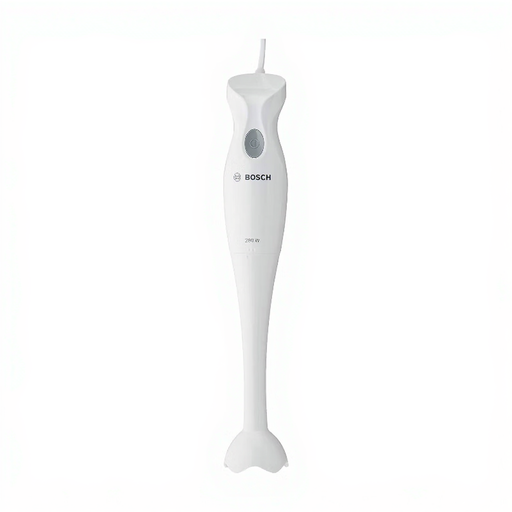
For Basic Applications: Bosch MSM 6B100
-
Why we recommend this product: The Bosch immersion blender MSM 6B100 focuses on the core function of blending. With 280 watts of power, a low weight of just 0.6 kg, and a simple operating concept, it's a straightforward helper for basic tasks. The anti-splash blender foot ensures clean work.
-
Pros:
- Lightweight and Ergonomic: At 0.6 kg, it's very handy and can be used without fatigue.
- Simple Operation: One-button control with an additional turbo button.
- Easy to Clean: The detachable plastic blending shaft is dishwasher-safe.
- Quiet Operation: The motor is low-vibration and quiet.
-
Who it's for: Beginners, small households, or as a secondary device for quick and simple blending jobs like soups or dips.
Discover More Models and Alternatives
The models presented here cover a wide range of needs. If your specific use case or budget requires a different appliance, you can find an expanded selection of models with various performance features and accessory configurations in our main category.
Discover more hand blenders here
Frequently Asked Questions (FAQ)
1. How many watts should a good immersion blender have? The required wattage depends on the intended use. For blending soups and soft fruits, models up to 400 watts are sufficient. For versatile applications, including chopping harder vegetables, 600 to 800 watts is a good choice. If you plan to regularly process frozen ingredients, nuts, or ice cubes, you should consider a model with 1000 watts or more.
2. Can you crush ice with an immersion blender? Crushing ice cubes is a demanding task. Only very powerful immersion blenders (typically over 1000 watts) with robust stainless steel blades and a sturdy construction are designed for this. It is recommended to check the manufacturer's specifications, as improper use can damage the motor or blades. A dedicated chopper attachment is often better suited for this task.
3. What is the difference between an immersion blender and a hand mixer? An immersion blender (or stick blender) is primarily designed for blending, chopping, and emulsifying. It has a rotating blade at its lower end. A hand mixer, on the other hand, is equipped with two rotating beaters or dough hooks and is mainly used for mixing, whipping, and kneading dough, cream, or egg whites. Both appliances are optimised for different tasks in the kitchen.