
Hair Clippers for 2026: A Technical Guide to Choosing the Right Model
Choosing the right hair clipper requires an analysis of technical specifications tailored to your specific needs. Whether for precise contouring, trimming hair, or body grooming, the device's functionality is paramount. This guide highlights the essential criteria to consider when selecting a hair clipper and presents a selection of models with different technical strengths.
Buyer's Guide: Key Technical Specifications to Consider
The performance and versatility of a hair clipper are determined by the interplay of its blades, motor, power supply, and accessories.
1. Blade Material and Cutting System
The cutting head is the heart of every hair clipper. The choice of material directly impacts sharpness, durability, and heat generation.
- Stainless steel blades: The industry standard. They are robust, corrosion-resistant, and deliver reliable cutting performance. Models with self-sharpening blades maintain their cutting ability over a longer period, as the blades rub against each other during operation, keeping them sharp.
- Ceramic blades: This material is harder than stainless steel, which can result in longer-lasting sharpness. A key advantage is lower heat generation during extended use, which increases comfort. However, ceramic is more brittle and can break more easily if dropped.
2. Cutting Length Settings and Attachments
A device's flexibility is evident in its available cutting lengths. There are two basic systems:
- Integrated adjustment: Some models, like the ENCHEN Boost 2, feature a slider that adjusts the cutting length directly on the device. This minimises the number of accessories and simplifies handling.
- Attachment combs: The most common method. A hair clipper set typically includes multiple combs for different lengths. High-quality sets offer fine increments, often in 0.5 mm or 1 mm steps, enabling precise transitions and styling.
3. Power Supply: Cordless vs. Corded
Modern devices are predominantly cordless hair clippers, offering maximum freedom of movement. Relevant metrics include:
- Battery type: Lithium-ion (Li-ion) batteries are now standard. They have no memory effect and offer high energy density.
- Runtime: The operating time on a full charge. Runtimes between 60 and 120 minutes are common and sufficient for multiple uses.
- Charging time: The time required for a full charge. A quick-charge function, which allows for a complete use after just a few minutes of charging, is a practical feature.
- Charging port: USB-C is increasingly becoming the standard, allowing charging via power banks or laptop power adapters and reducing reliance on proprietary chargers.
4. Motor Power and Special Features
Motor power is crucial for a clean cut without pulling or snagging, especially with dense or thick hair. Some manufacturers integrate technologies for power adjustment. For example, according to the manufacturer, Braun's "AutoSense" technology automatically adapts the motor power to hair density. Other devices offer manually selectable speed levels for different hair types.
Our Top Hair Clipper Picks for 2026
The following models have been selected based on their specific technical features and use cases.
Philips All-in-One Multifunction Trimmer Series 5000 MG5941/15
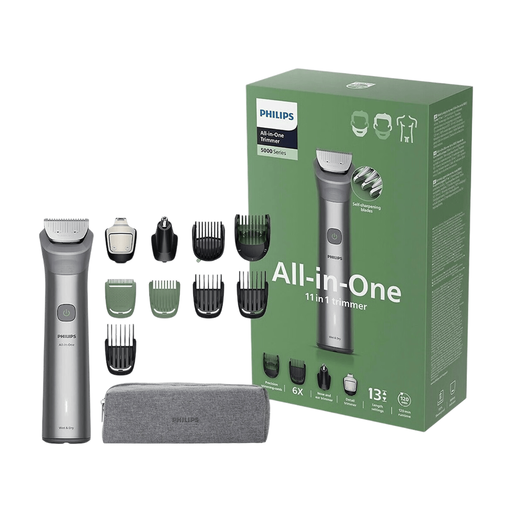
- Why we recommend this product: This model is designed as an all-in-one tool, covering face, head, and body hair grooming with 11 attachments. The integrated BeardSense technology, which Philips states adapts power to beard density, and its 100% waterproof design make it a versatile tool for daily grooming routines.
- Pros:
- Versatility: 11 attachments for beard, hair, body, nose, and ears.
- Precision: Cutting lengths from 0.5 to 16 mm in fine increments.
- Battery Performance: Up to 120 minutes of runtime with a 1-hour charge.
- Use: 100% waterproof for wet and dry use, plus easy cleaning.
- Who it's for: Users who want a single, flexible device for all-over body grooming and value a wide range of styling options. Ideal as a beard trimmer, hair trimmer, and body groomer in one.
BRAUN Hair Clipper Series 7 HC7590
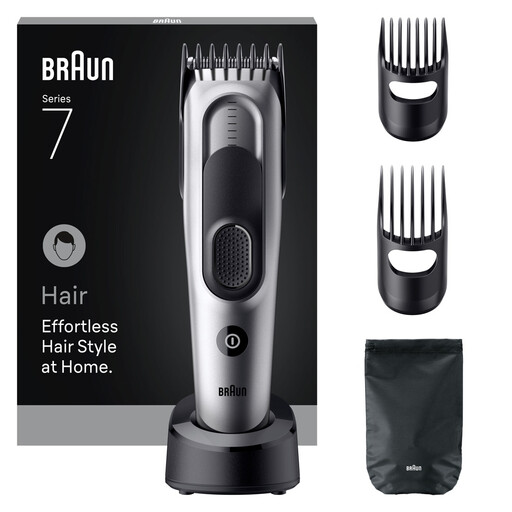
- Why we recommend this product: The Braun HC7590 focuses on cutting head hair and stands out for its motor control. The feature, which the manufacturer calls AutoSense Technology, is designed to ensure consistent cutting performance even in thick hair. The durable, sharp blades are engineered for constant performance.
- Pros:
- Power Adjustment: AutoSense technology adapts motor power to hair density.
- Cutting Lengths: 17 length settings from 3 to 24 mm.
- Memory Function: SafetyLock saves the last used setting.
- Battery Performance: Up to 100 minutes of runtime and a 5-minute quick charge.
- Who it's for: Individuals primarily seeking a powerful hair clipper for their head hair who want an even result without performance drops on different hair sections. A device that brings features of a professional-grade hair clipper to home use.
ENCHEN Black Boost 2 Professional Cordless Electric Hair Clipper
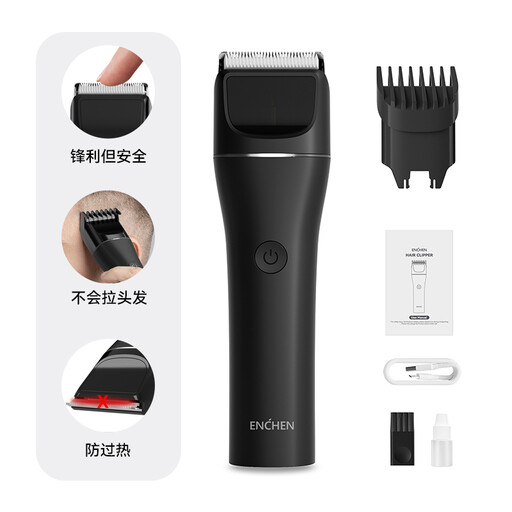
- Why we recommend this product: The ENCHEN Boost 2 takes a minimalist approach. Its main feature is the integrated sliding comb, which allows for lengths from 0.7 to 21 mm without changing attachments. Combined with its ceramic blade and modern Type-C charging port, it offers a functional package focused on ease of use.
- Pros:
- Integrated Comb: Stepless length adjustment from 0.7 to 21 mm without swapping accessories.
- Blade Material: Ceramic blade for low heat generation and long-lasting sharpness.
- Charging Port: Modern and flexible USB Type-C port.
- Two Speeds: Adjustable power for fine or thick hair.
- Who it's for: Users who prefer a straightforward solution for DIY haircuts, want to avoid a multitude of attachments, and appreciate the flexibility of a USB-C port.
Discover More Models and Alternatives
The products featured cover specific requirement profiles. If your needs differ or you wish to compare more technical specifications, our main category offers a broader selection.
Discover more hair clippers here
Frequently Asked Questions (FAQ)
1. How often should you oil the blades of a hair clipper? To maintain cutting performance and reduce friction and wear, it is recommended to clean the blades after every third or fourth use and then apply a drop of the included or a suitable blade oil. For waterproof devices, oiling should be done after they have dried.
2. Can you use a hair clipper on a beard? Yes, many hair clippers are also suitable as a beard trimmer. Models with fine length settings (e.g., in 0.5 mm increments) and narrower contouring attachments are particularly well-suited for this. All-in-one devices like the Philips Series 5000 are explicitly designed for both applications.
3. What is the technical difference between ceramic and stainless steel blades? Stainless steel blades are very durable and the established standard. They are rust-proof and long-lasting. Ceramic blades are harder, which can lead to potentially longer-lasting sharpness, and they generate less frictional heat. However, they are more brittle and can be damaged more easily than stainless steel blades if dropped.
Authored by: Joybuy Product Recommendation Officer