
Hair Clipper Buying Guide: Avoid 3 Common Buying Mistakes
Buying a new hair clipper seems straightforward at first. However, many users quickly discover their device pulls hair instead of cutting it, the battery dies mid-trim, or the promised precision was just a marketing claim. To help you avoid buyer's remorse, we've identified the most common pitfalls and will show you which technical features truly matter.
As a Joybuy Product Recommendation Officer, my job is to filter through market information and provide you with objective, practical advice to help you make an informed decision.
The Most Common Traps When Buying a Hair Clipper
Many clippers on the market lure you in with attractive prices or long feature lists, but they have critical flaws in practice. Pay close attention to these three points:
- The Battery Bluff: A
cordless clipperis advertised with a long runtime, but the reality is often different. Budget models use outdated NiMH batteries that require over eight hours of charging for just 60 minutes of use. Furthermore, their capacity degrades quickly, making thecordless trimmerunreliable. - Subpar Blades and Length Adjustment: Nothing is more frustrating than a blade that pulls and snags hair. This is often due to low-grade steel and imprecise manufacturing. Wobbly attachment combs or inaccurate adjustment dials also lead to uneven results and can ruin a haircut.
- Misleading "Pro" Labels: The term "Pro Hair Clipper" is not a protected designation. Many devices carry this label without possessing the necessary motor power, durability, or blade quality. They are unsuitable for thick hair or frequent use.
What Really Matters: The Key Specifications
To avoid these traps, you should check three core technical aspects before buying. These determine the real-world performance and longevity of your hair clipper.
1. Blade Material: The Heart of the Clipper
The blades are critical for cutting quality. The material affects sharpness, durability, and heat generation.
- Stainless Steel: The standard for many devices. Solid and rust-proof, but it requires regular oiling and can get warm during intensive use.
- Ceramic: Ceramic blades stay sharp significantly longer than steel ones. They generate less friction, which helps them run cooler and reduces the risk of skin irritation. Ideal for sensitive skin.
- Titanium: Titanium-coated blades are extremely robust, corrosion-resistant, and lightweight. They offer superior sharpness and are often a feature of higher-end models designed for longevity.
A high-quality cutting head, often marketed as a precision trimmer, should feature sharply ground blades made from one of these materials to ensure clean cuts.
2. Motor Power: The Difference Between Cutting and Pulling
The motor's power, often specified in revolutions per minute (RPM), is crucial for determining whether the clipper glides effortlessly through hair.
- For fine to normal hair: Motors with around 5,000–6,000 RPM are generally sufficient.
- For thick or dense hair: Higher power is required. Models with 6,500 RPM or more provide the necessary force to cut even challenging hair types without snagging. A powerful motor is a clear hallmark of a good
pro hair clipper.
3. Battery Technology and Charging Options
For a cordless trimmer, battery runtime and charging time are key criteria for practical usability.
- Battery Type: Lithium-ion (Li-ion) batteries are preferable to older NiMH batteries. They charge faster, have a higher energy density, and do not suffer from the memory effect.
- Runtime vs. Charge Time: A good ratio is essential. Models that achieve a runtime of 90 minutes or more from a 1.5 to 3-hour charge offer great flexibility.
- Charging Port: A Type-C port has become a standard for convenience. It allows you to charge the clipper with the same cable used for many other modern devices, making it more travel-friendly.
Picks for Different User Profiles
Based on the criteria above, we have identified several models that are well-suited for different user profiles and their specific needs.
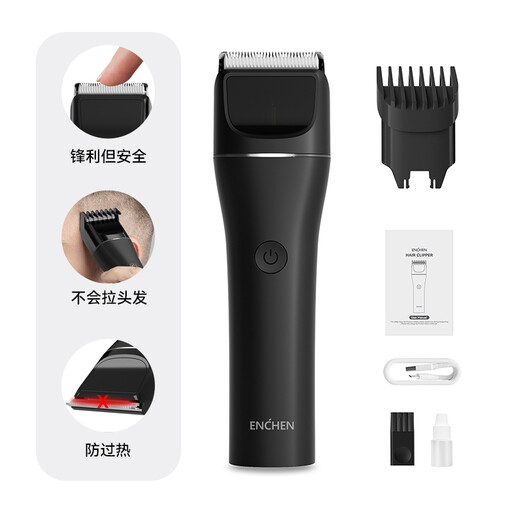
ENCHEN Black Boost 2 Professional Cordless Electric Hair Clipper
Why It's a Match: Ideal for users seeking a straightforward and reliable solution for occasional at-home haircuts. The integrated sliding comb eliminates the need to swap attachments, greatly simplifying operation.
Bypasses the "battery bluff" with fast Type-C charging and avoids the "subpar blade" issue with a ceramic cutting head that stays cool and cuts precisely.
The sliding comb allows for seamless length adjustment from 0.7 to 21 mm with just one attachment. Two speed settings adapt to different hair types.
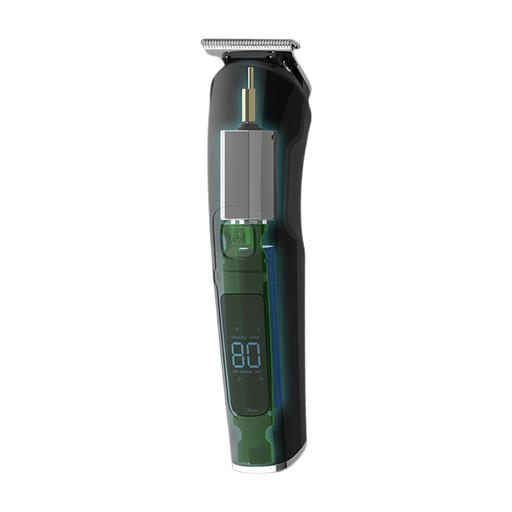
Sparoma Men's Electric Hair Clipper FK-8688
Why It's a Match: This clipper kit is designed for men who want a single device for their entire grooming routine. With attachments for head hair, beard, nose, and body, it's a true all-in-one tool.
Solves the problem of inadequate accessories by providing a complete kit. The LED display shows the battery level, preventing sudden power loss during use.
The IPX6 water resistance allows for easy cleaning under running water. Its 1.5-hour charge time for 90 minutes of runtime is highly practical.
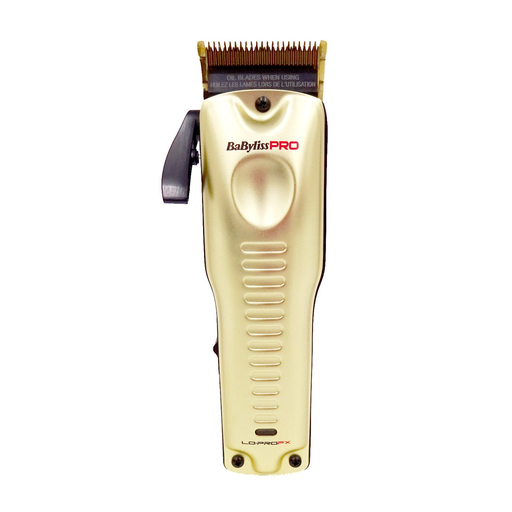
BaByliss PRO FX825GE LOPROFX GOLD Hair Clipper
Why It's a Match: For users who demand professional results and value power, precision, and durability. Ideal for creating clean fades and sharp outlines.
Debunks the "pro" trap with verifiable performance specs: a digital motor with 6,800 RPM and a high-quality 45 mm titanium fade blade deliver true professional-grade quality.
The 5-level metal taper lever (0.5–4.2 mm) allows for precise transitions. The long battery life of up to 140 minutes and corded/cordless operation offer maximum flexibility.
Looking for More Options?
We have compiled a complete, up-to-date list of products that fully meet these strict selection criteria and all relevant safety standards.
Frequently Asked Questions (FAQ)
1. How often should you oil the blades of a hair clipper? For optimal performance and longevity, it is recommended to clean and oil the blades after every two to three uses. First, remove hair clippings with the included brush, then apply one or two drops of blade oil across the teeth of the cutting head. Run the clipper for a few seconds to distribute the oil evenly.
2. Can you use a hair clipper on your beard? Yes, many hair clippers also work well as a beard trimmer. Models with fine length settings and narrower precision blades are particularly well-suited for this. However, for highly detailed beard styling and outlines, a dedicated precision trimmer may be more advantageous.
3. What is the difference between a hair clipper and a beard trimmer? The main difference lies in size and refinement. Hair clippers typically have wider cutting heads to cover larger areas efficiently. Beard trimmers are often narrower, allowing for more precise work on contours and details. However, many modern men's hair clippers come as a clipper kit with various attachments that cover both functions.