
Greenhouse 2026: A Guide to Choosing the Right Model
Choosing a greenhouse involves analysing its material, construction, and intended use. This protective structure allows you to extend the growing season, shield plants from the elements, and create a controlled microclimate for cultivating vegetables, herbs, and ornamental plants. The right model for you will depend on your specific needs for space, stability, and functionality. This guide breaks down the technical criteria essential for making an informed purchasing decision.
Buyer's Guide: Technical Selection Criteria
Before you buy a greenhouse, it's essential to evaluate its core components. A model's durability and functionality are primarily determined by its frame, covering, and structural details.
Material Analysis: Frame and Covering
- Frame Material: The stability of a greenhouse depends on the quality of its frame. Common materials include steel and aluminium. Galvanised or powder-coated steel offers high resistance to corrosion and mechanical stress. The tube diameter, often specified in millimetres (mm), is an indicator of the structure's robustness.
- Covering Material: For a polytunnel greenhouse, the covering is typically made of polyethylene (PE). The material density, specified in grams per square metre (g/m²), is a crucial quality indicator. A higher density (e.g., 130-140 g/m²) suggests greater tear resistance and durability. A UV-resistant coating is fundamental to protect the film from degradation caused by sun exposure and to extend its lifespan.
Types of Construction and Their Applications
- Tunnel Greenhouses: These models offer a large footprint and are suitable for growing plants directly in the ground or in garden beds. Their shape is designed for cultivating a wide variety of plants.
- Tomato Greenhouse: A tomato greenhouse is a specialised design, often narrower and taller, optimised for tall-growing plants like tomatoes or cucumbers. Its height allows plants to grow without restriction.
- Shelf Greenhouse: A propagation greenhouse with integrated shelves is ideal for raising young plants in pots and trays. It makes efficient use of vertical space, making it particularly suitable as a greenhouse for a balcony or patio. The load capacity of the shelves is an important parameter to consider.
Ventilation and Climate Control
Adequate air circulation is essential to prevent heat build-up and fungal growth. Design features like roll-up doors and windows with insect screens allow for controlled ventilation. The mesh size of the screens (<1 mm) is relevant for preventing smaller insects from entering.
Our Selection for 2026
The following models have been selected based on their technical specifications and functional design.
Woltu Garden Greenhouse, 300x300x200 cm
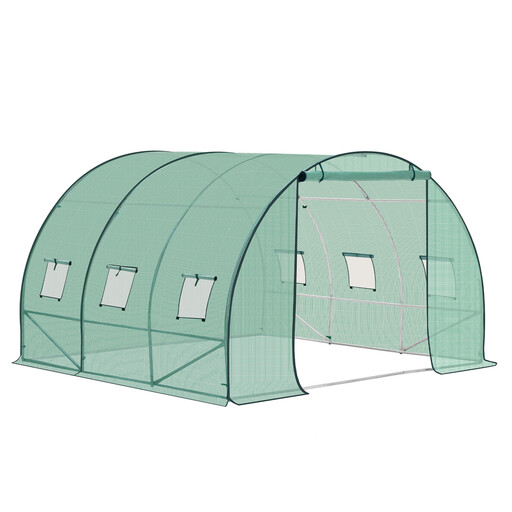
Why we recommend this product This model is suitable for users looking for a large-scale, stable solution for year-round cultivation. The combination of a robust steel frame and a durable PE film offers protection against various weather conditions. Its generous dimensions allow for growing a large number of plants.
Pros
- Frame: Galvanised steel frame with a 19 mm tube diameter for corrosion resistance and stability.
- Covering: Tear-resistant and UV-protected PE film with a density of 140 g/m².
- Ventilation: Six side windows with insect screens and a roll-up door allow for effective regulation of temperature and humidity.
- Accessories: Four ground anchors and four PE straps for additional wind bracing are included.
Who it's for Ideal for hobby gardeners with ample garden space who want to grow a variety of plants or use the greenhouse for overwintering.
Woltu Film Tomato Greenhouse, 100x50x150/136cm
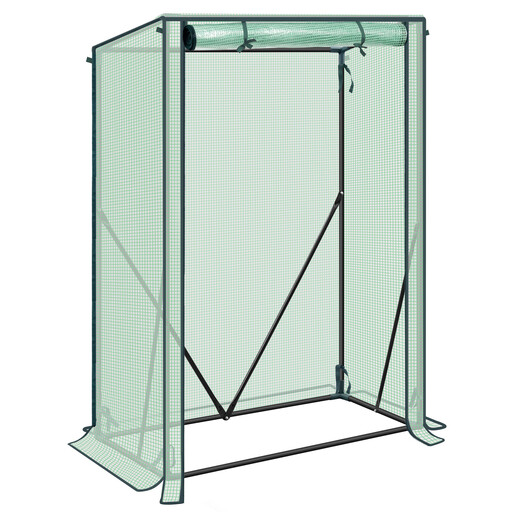
Why we recommend this product This compact tomato greenhouse is designed for the specific cultivation of tall-growing plants in limited spaces. Its design, featuring a sloped roof, prevents water from pooling while providing ample height for plant growth.
Pros
- Space-Saving Design: With a footprint of 100 x 50 cm, this model fits on patios, in backyards, or as a small greenhouse on larger balconies.
- Specialised Shape: The height of up to 150 cm is tailored to the needs of tomato plants and similar crops.
- Material: The covering is made of tear-resistant and waterproof PE material.
- Access: A large, roll-up door provides easy access for maintenance and harvesting.
Who it's for Optimal for gardeners who want to specifically grow tomatoes or other tall vegetable varieties and have limited space.
WOLTU Transparent Garden Greenhouse with 6 Tiers, 143x73x195 cm
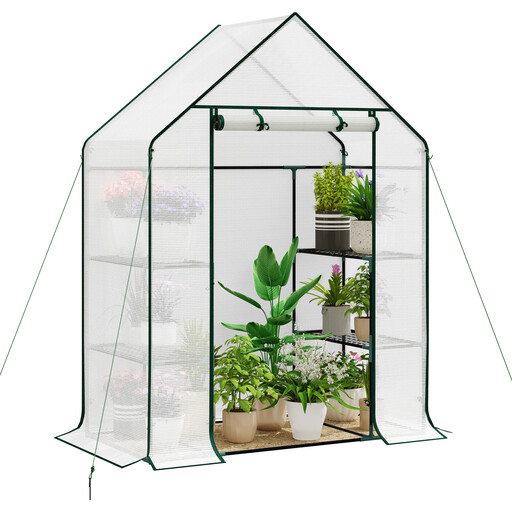
Why we recommend this product This shelf greenhouse maximises the growing area with its vertical structure. It is a functional solution for raising seedlings and cultivating potted plants in a small space. The sturdy construction and thoughtful details support organised plant care.
Pros
- Vertical Space Utilisation: Three shelving tiers, each with two mesh shelves, provide space for a large number of pots and seed trays. According to the manufacturer, each shelf has a load capacity of up to 15 kg.
- Sturdy Construction: The powder-coated steel frame is further stabilised with wooden pegs and guy ropes.
- Controlled Climate: A fully zippable door and modern mesh windows allow for precise ventilation control and protect against insects.
- Material: The 130 g/m² PE film covering is UV-resistant.
Who it's for Perfect as a propagation greenhouse for preparing for the gardening season or as a permanent greenhouse for a balcony or patio for cultivating herbs and smaller ornamental plants.
Other Models and Alternatives
The models presented here cover specific use cases. If your requirements differ—for instance, in terms of size, material, or design—a wider selection of options offers further solutions. Different dimensions or greenhouses made from other materials like glass or polycarbonate may be better suited for certain projects.
Discover more greenhouses in our main category.
Frequently Asked Questions (FAQ)
1. How do you secure a polytunnel greenhouse against wind? Storm-proof anchoring is crucial for the longevity of a polytunnel greenhouse. Use the included ground anchors and guy ropes according to the assembly instructions. Position the greenhouse in a location that is as sheltered from the wind as possible. Additional security can be achieved by weighing down the overlapping edges of the film on the ground with stones or soil. For models without a fixed base frame, the structure can be screwed onto a wooden frame that is anchored in the ground.
2. What is a suitable location for a greenhouse? The ideal location is sunny, sheltered from the wind, and has level ground. A south or southwest-facing orientation ensures maximum sun exposure, which is essential for plant growth. Proximity to a water source makes watering easier. Avoid locations under large trees, as falling branches can damage the structure and leaves can reduce light transmission.