
Glass Food Storage Containers: Recommendations for an Organised Kitchen
As a Joybuy Product Recommendation Officer, I see countless people every day looking for ways to make their kitchens more sustainable and better organised. Plastic containers that stain, retain odours, or warp in the cupboard are a common frustration. A glass food storage container offers a durable and hygienic alternative. This article serves as a guide, introducing various models to help you choose the right glass container for your needs.
What to Look for When Buying a Glass Food Storage Container
The selection of glass containers is vast. To make the right choice, you should consider a few functional features that will significantly impact daily use.
1. Material Quality and Heat Resistance
Not all glass is created equal. Most high-quality food storage containers are made of borosilicate glass. Compared to standard soda-lime glass, this material is significantly more resistant to thermal shock. This means that such a glass container with a lid can often go directly from the refrigerator to the microwave or oven (without the lid). A container labelled as oven-safe offers maximum flexibility, whether for reheating leftovers or baking small casseroles.
2. Lid and Seal
The lid is a crucial factor. For optimal food preservation and leak-proof transport, such as for a glass lunch box, an airtight lid is essential. Look for systems with silicone gaskets and sturdy locking clips. These not only prevent liquids from leaking but also protect the contents from air and moisture, which is especially important when storing dry goods in a glass storage jar.
3. Shape, Size, and Stackability
For efficient use of space in the fridge, freezer, or pantry, shape and stackability are key. Rectangular or square containers can usually be arranged more compactly than round ones. Many manufacturers design the lids so that multiple containers can be stacked securely on top of each other. Consider what you will primarily use the containers for: glass meal prep containers often benefit from dividers, while tall, cylindrical storage jars may be more practical for storing flour or pasta.
Recommended Glass Food Storage Containers
Here is a curated selection of models that stand out for their specific features and applications.
PURECOOK Glass Food Storage Series | Set of 2
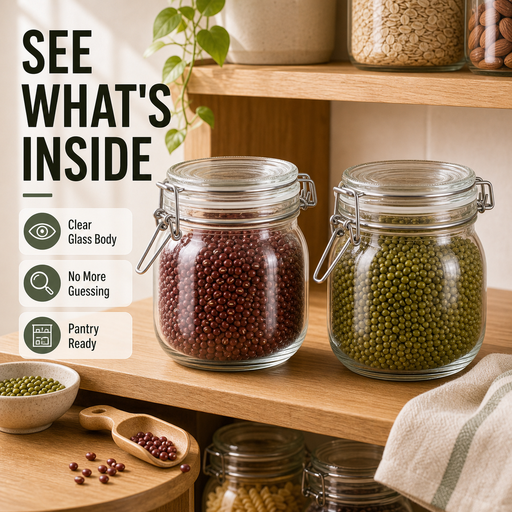
Why It Stands Out: This set combines a classic design with functional materials. The stainless steel side clips provide a firm and durable seal, setting it apart from conventional plastic clips.
Pros:
- Materials: The container is made of borosilicate glass, the sealing ring from food-grade silicone, and the clips from stainless steel.
- Airtight Seal: The silicone ring, combined with the stainless steel clips, ensures a reliable seal against moisture and oxidation, extending the freshness of your food.
- Transparency: The clear glass allows for quick identification of the contents without needing to open the container.
- Easy to Clean: The silicone ring is removable for easy cleaning, and the glass body is dishwasher-safe.
Who Is It For? Ideal for users looking for a robust and durable solution for storing dry goods like grains, nuts, or spices. Its design makes it a great choice for pantry organisation.
5five Rectangular Glass Container with Compartments - 1.1 L
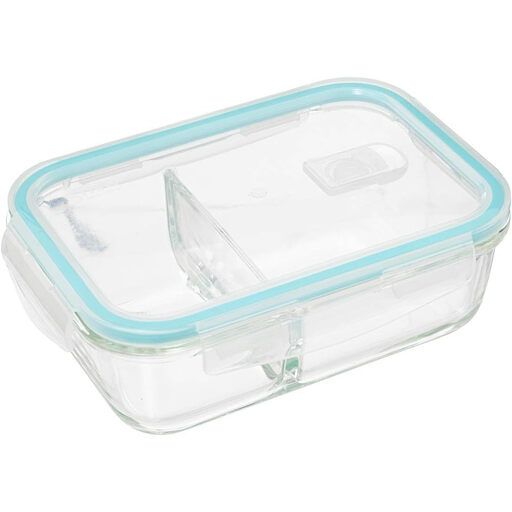
Why It Stands Out: The integrated divider makes this container a specialised solution for preparing and transporting complete meals.
Pros:
- Separate Compartments: Allows you to keep different components of a meal separate, so your salad won't get soggy from the dressing, for example.
- Material: The borosilicate glass body is sturdy and temperature-resistant, while the lid is made of polypropylene with a silicone gasket.
- Practical Size: With a volume of 1.1 litres, the container offers enough space for a full meal.
- Dishwasher-Safe: Both the glass container and the lid are suitable for cleaning in the dishwasher.
Who Is It For? Perfect for professionals and students who practice meal prep. As a glass lunch box, it makes it easy to transport prepared, separated dishes.
Lock&Lock Glass Food Container TOP Class Rectangular 1.0L
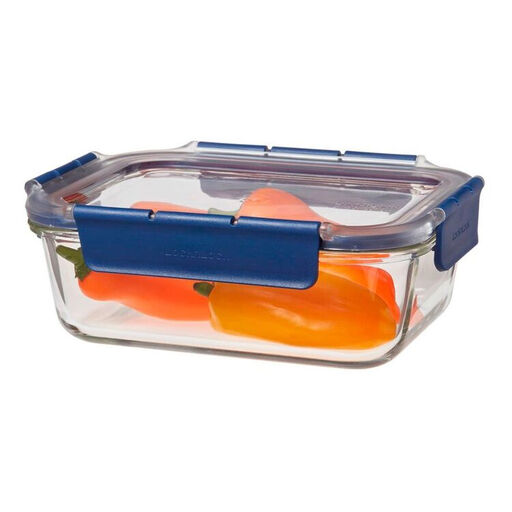
Why It Stands Out: This model from Lock&Lock is distinguished by its high heat resistance and its thoughtfully designed Tritan plastic lid. According to the manufacturer, the glass container is oven-safe up to 400°C.
Pros:
- High Heat Resistance: According to the manufacturer, the borosilicate glass container can be used in the oven without its lid at temperatures up to 400°C.
- Innovative Lid: The Tritan lid is shatter-proof, stain-resistant, and remains transparent. Its raised rim allows for stable stacking of multiple containers.
- Patented Locking System: The 4-sided locking system with a silicone gasket provides a reliable, leak-proof seal that keeps food fresh.
- Versatility: Suitable for use in the refrigerator, freezer (down to -20°C), microwave (without lid), and oven (without lid).
Who Is It For? An all-rounder for demanding households. Ideal for anyone who wants to use a single container for cooking, storing, freezing, reheating, and serving.
Looking for More Options?
The models featured cover a wide range of applications. However, if you are specifically looking for containers for dry goods like biscuits, flour, or coffee, specialty storage jars might be a suitable addition.
? Explore our selection of clear glass cookie jars here.
Frequently Asked Questions (FAQ)
1. Are glass food storage containers microwave-safe? Yes, most borosilicate glass containers are microwave-safe. However, it is important to remove or at least vent the lid before heating, as pressure can build up from the steam. Plastic lids are often not designed for the microwave. Always follow the manufacturer's instructions.
2. Can you freeze food in glass containers? Yes, this is possible. However, do not fill the container to the brim, as liquids expand when they freeze. Leave about 1-2 cm of space to prevent the glass from cracking. Also, avoid sudden temperature changes by allowing the container to thaw slowly before heating.
3. What is the best way to clean the gaskets on glass containers? On most high-quality models, the silicone sealing ring can be removed from the lid. This allows for a thorough cleaning by hand with warm water and mild dish soap to remove any residue or odours. Let the ring dry completely before placing it back into the lid.