
Glass Containers for the Kitchen 2026: Practical Choices for Storage, Preparation and Serving
Glass containers for the kitchen are highly versatile: they store dry foods, simplify meal preparation and are suitable for serving drinks. However, not every visually appealing product delivers a practical solution in everyday use. Capacity, closure, temperature resistance and cleaning requirements are the key considerations.
Common Purchasing Pitfalls with Glass Products
1. Attractive Design Without the Right Functionality
A decorative glass container may look impressive on a kitchen shelf but still be unsuitable for its intended contents. For example, a storage jar with a wooden lid is not automatically designed for liquids or moist foods. Before buying, make sure it is clear whether the product is intended for dry ingredients, cold drinks, hot food or serving.
2. “Airtight” Is Not Always Explained Precisely
With a glass container and lid, the seal’s construction is crucial. Airtight storage requires a suitable sealing ring and a correctly fitted lid. Terms such as “freshness seal” or “sealing” should not automatically be interpreted as a permanently hermetic closure. For coffee, tea, nuts or dry baking ingredients, specific information about the closure is more useful than general marketing claims.
3. Dishwasher and Temperature Information Is Often Overlooked
Glass is not automatically suitable for every temperature. Flasks, beverage dispensers and double-walled glasses can be particularly susceptible to stress caused by sudden temperature changes. Lids, seals and taps often have their own care instructions as well. A product described as dishwasher-safe may still include a lid or plastic attachment that should be cleaned separately by hand.
The Most Important Buying Criteria
Material and Food Contact
For glass food-storage containers, clear information about the material is important. Borosilicate glass is often used for containers that require greater resistance to temperature changes. However, this does not automatically mean that every container made from this material is suitable for the oven, microwave or boiling liquids.
With conventional glass, such as soda-lime glass, pay particular attention to the usage instructions. Also check whether the lid, silicone ring, plastic components and pourer are intended for contact with food.
Capacity and Dimensions
Capacity should match the intended use:
- 100 to 400 ml: Spices, espresso, small desserts or individual drinks
- 500 to 1,000 ml: Coffee, tea, dry ingredients, juice and water
- From 1.5 litres: Larger quantities, family households and drinks for serving
- From 4 litres: Glass beverage dispensers for parties, buffets or catering use
In addition to litres and millilitres, pay attention to the external dimensions. A tall glass container may not fit on a kitchen shelf, while a wide container can take up considerable counter space.
Closure, Cleaning and Everyday Usability
A tightly closing lid is useful for storing dry foods, but it does not automatically prevent moisture from entering. Glass and lid should be completely dry before closing. For a glass oil dispenser, a controlled pourer and easy disassembly for cleaning are practical features.
For regular use, dishwasher-safe glasses are convenient. Decorative finishes, wooden lids or delicate seals may be better suited to hand washing. Inspect glassware regularly for cracks, chips and damaged seals.
Our Selection by User Profile
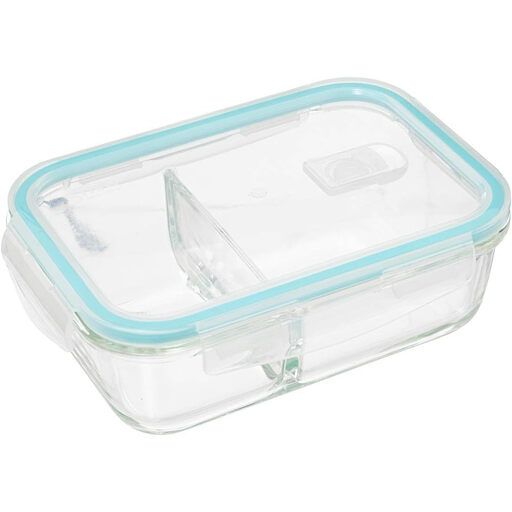
5five Rectangular Compartmentalised Glass Container
Why it is a good fit: With a stated capacity of 1.1 litres and integrated compartments, this rectangular container is suitable for pre-prepared ingredients, side dishes or portioned meals in private households.
The product specifications identify borosilicate glass, silicone and polypropylene components, as well as dishwasher suitability. This makes it easier to assess the material and care requirements before buying.
Rectangular dimensions of 21.5 × 15.3 × 7.5 cm; glass container with compartments; dishwasher-safe according to the product specifications.
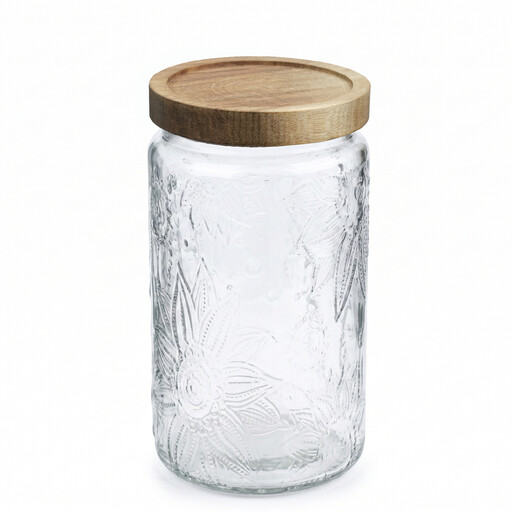
700 ml Begonia Flower Design Glass Storage Jar
Why it is a good fit: For coffee, tea, nuts, sweets or baking ingredients, this 700 ml jar is a compact option for keeping food visibly organised in the kitchen.
The closure is explicitly described as airtight. At the same time, hand washing is recommended, and the lid should be removed if the jar is cleaned in the dishwasher.
700 ml capacity; transparent glass container with decorative pattern; lid with specified airtight seal.
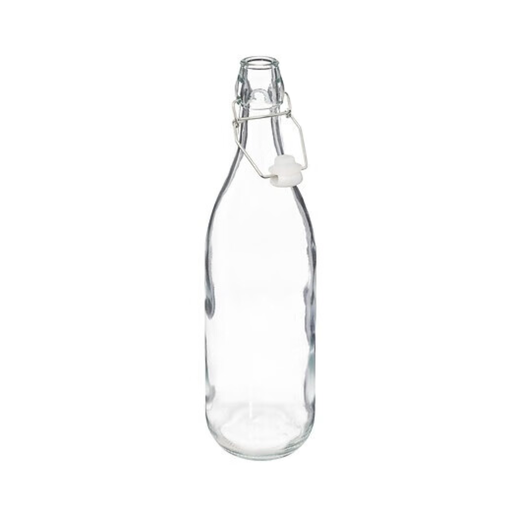
Secret de Gourmet Lemonade Bottle 1.0 L
Why it is a good fit: This 1-litre glass bottle is designed for water, juice, lemonade and iced tea. Its transparent design makes the contents easy to monitor.
The product description limits use to cold drinks and warns against hot liquids and sudden temperature changes.
1-litre capacity; dimensions of 8.7 × 8.7 × 31.7 cm; designed for cold drinks and easy cleaning according to the description.
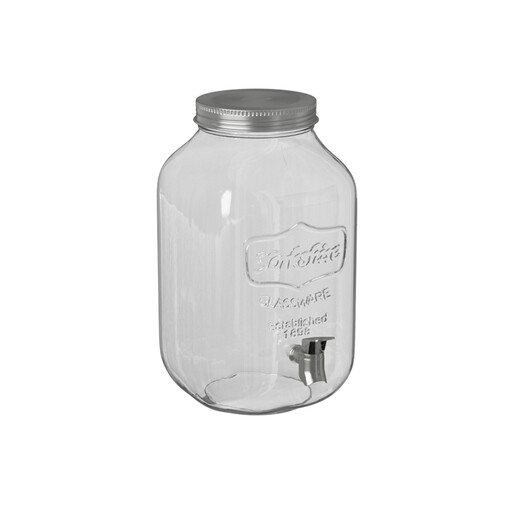
4L Yorkshire Glass Beverage Dispenser
Why it is a good fit: With a 4-litre capacity and tap, this container is suitable for cold or room-temperature drinks at parties, buffets and larger gatherings.
The instructions explicitly specify hand washing, no microwave use and no hot liquids. This helps prevent misuse caused by unclear temperature information.
4-litre capacity; tap for easy serving; suitable for food contact according to the product specifications.
Looking for more options?
We have compiled a complete, up-to-date selection of glass containers for a wide range of storage, preparation and serving needs.
Practical Care Tips for Glass Containers
- Clean with warm water and mild washing-up liquid before first use.
- Only fill with hot contents if the manufacturer explicitly permits it.
- Do not rinse cold glass bottles immediately with boiling water.
- Check and dry seals, lids and taps separately.
- Do not continue using damaged glassware.
- For oil dispensers, remove residue regularly to keep the pourer and brush hygienic.
Double-walled glasses or glass drinking glasses are also suitable for beverages. Double-walled models with capacities of 350 to 450 ml are commonly available for coffee, tea and cold drinks. Here too, check the information on dishwasher use, microwave suitability and resistance to temperature changes before buying.
FAQ About Glass Containers for the Kitchen
Are Glass Containers Suitable for Storing Food?
Many glass containers are intended for food storage, but suitability depends on the product as a whole. Lids, sealing rings and coatings must also be suitable for the intended type of contact. Follow the product description and care instructions.
What Should You Consider with an Airtight Storage Jar?
An airtight closure requires an intact seal and a correctly fitted lid. The glass and lid should be dry before you close the container. A storage jar is suitable for liquids only when the manufacturer explicitly states that it is.
Are Glass Containers Dishwasher-Safe?
Some glass containers and dishwasher-safe glasses can be cleaned in the dishwasher. However, this does not necessarily apply to lids, wooden components, silicone seals or taps. Each component should be treated according to the manufacturer’s instructions.