
Patio Umbrella Buyer's Guide 2026: A Comparison of Models, Materials, and Features
Choosing the right patio umbrella depends on your specific needs, which are defined by its intended location, desired functionality, and material preferences. A patio umbrella for a large lawn has different requirements for size and stability than a compact balcony umbrella. Analysing technical parameters such as the frame material, canopy with UV protection, and operating mechanisms is essential for making an informed decision.
Buying Criteria for Patio Umbrellas: A Technical Overview
Before making a purchase, it's important to evaluate objective criteria to identify the most functional model for your individual needs.
1. Umbrella Type and Design
The umbrella's design significantly determines its potential uses and space requirements.
- Market Umbrella: The classic centre-pole umbrella. The pole is positioned centrally beneath the canopy. This design is stable and widely used, but it requires furniture to be arranged around the pole.
- Cantilever Umbrella: Also known as an offset umbrella. The pole is located to the side, allowing the canopy to hang freely over the area to be shaded. This provides flexible use of the space underneath without a central pole getting in the way. Cantilever umbrellas are often tiltable and can rotate 360 degrees.
- Balcony Umbrella: These are often half-round or rectangular models designed to be placed flush against a wall. They are specifically designed for the compact spaces of balconies or small patios.
The shape of the canopy—whether a round parasol or a square/rectangular parasol—affects the shape of the shadow it casts. Square or rectangular umbrellas can often be placed side-by-side more seamlessly or positioned against walls.
2. Materials: Frame and Canopy
The choice of material directly impacts durability, weather resistance, and maintenance requirements.
-
Frame:
- Aluminium Parasol: Lightweight, corrosion-resistant, and sturdy. Powder-coated aluminium offers extra protection against weathering and scratches. It is low-maintenance and has a modern appearance.
- Wooden Parasol: Offers a classic, natural aesthetic. Hardwoods like birch or eucalyptus are robust but require regular maintenance (e.g., oiling) to preserve their weather resistance.
- Steel: Often found in more affordable models. A high-quality powder coating is crucial here to prevent rust.
-
Canopy:
- Polyester: The most commonly used fabric. It is tear-resistant, lightweight, and dries quickly. A special coating makes it waterproof or water-repellent. The fabric density (g/m²) is an indicator of its durability.
- UV Protection: A crucial quality feature is the Ultraviolet Protection Factor (UPF). A UPF of 50+ means that, according to the standard, the fabric allows less than 1/50th (or 2%) of UV radiation to pass through.
3. Features and Ease of Use
Modern patio umbrellas offer various mechanisms for easy operation.
- Opening Mechanism:
- Push-up System: Simple push-to-open action, similar to a standard rain umbrella.
- Pulley System: Opens the umbrella by pulling on a cord.
- With a Crank Handle: A crank mechanism allows for effortless and convenient opening and closing, especially for large umbrellas.
- Tilt Mechanism: A tiltable joint function in the pole allows you to angle the canopy to adapt to the sun's changing position throughout the day.
- Base: A suitable parasol base is essential for stability and safety. The manufacturer specifies the recommended minimum weight for the base, which depends on the size and design of the umbrella. Common types include paver bases (designed to be weighted with paving slabs), fillable plastic bases, or solid granite stands.
Our Product Selection for 2026
Based on an analysis of technical specifications and practical benefits, we present three distinct models here.
Schneider Umbrella Rhodos Rondo 350/8 Sand
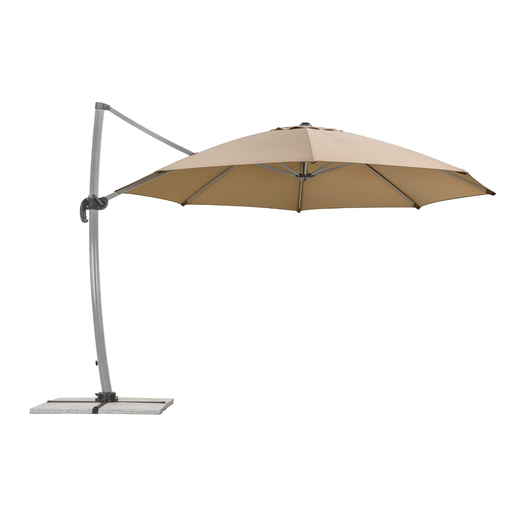
- Why we recommend this product: This cantilever umbrella provides extensive shade with its 350 cm diameter. The side-post design, combined with a 360° rotation function operated by a foot pedal, offers maximum flexibility in positioning without needing to move furniture.
- Advantages:
- Frame: Powder-coated aluminium parasol frame in silver-grey.
- Canopy: 100% polyester, rot-proof and treated with a water-repellent coating.
- Functionality: Rotates 360° via a foot pedal, tiltable.
- What's Included: Comes with a paver base (slabs not included) and a protective cover.
- Who it's for: Users with large patios or garden areas who need flexible, extensive sun protection that can cover a complete seating arrangement.
Schneider Schirme Salerno mezza 150x150cm
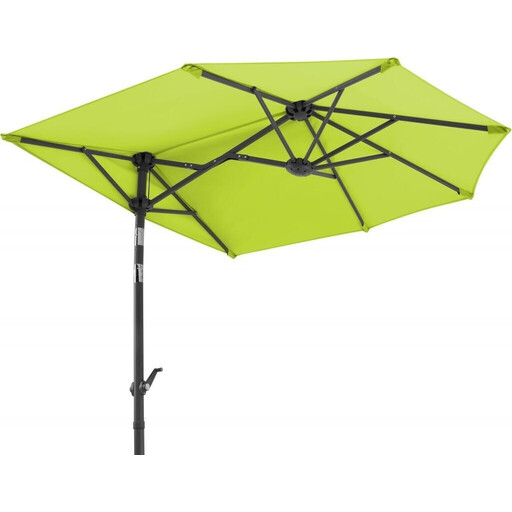
- Why we recommend this product: The Salerno mezza is designed as a half balcony umbrella, solving the space constraints of narrow balconies or patios. Its rectangular shape allows it to be placed flush against a wall.
- Advantages:
- UV Protection: Canopy with a sun protection factor of 50+, certified according to the AS/NZS4399 standard.
- Operation: Integrated crank handle for effortless opening and closing.
- Flexibility: Metal tilt mechanism with two-way adjustment to adapt the umbrella to the sun's position.
- Material: Water-repellent polyester canopy (approx. 180 g/m²) and a powder-coated steel frame.
- Who it's for: Individuals with limited space on a balcony or a small patio who need an efficient, space-saving shade solution.
Beliani Gartenschirm TOSCANA ⌀ 270 cm
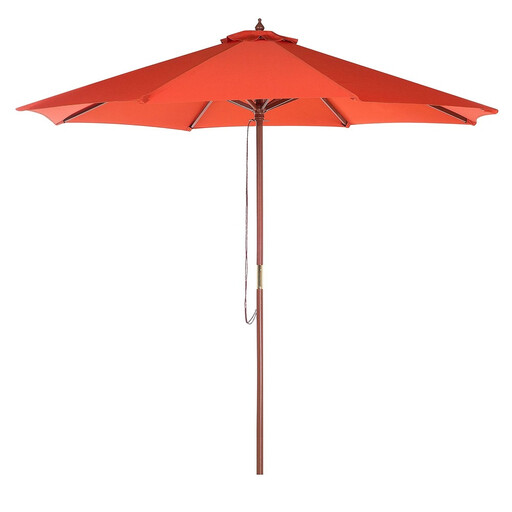
- Why we recommend this product: This model combines the classic look of a market umbrella with a wooden parasol frame (birch). It blends harmoniously into traditional and natural garden designs.
- Advantages:
- Material: Sturdy birch wood frame, polyester canopy.
- UV Protection: Offers a UPF of 50+ according to the manufacturer.
- Operation: Simple opening and closing via a pulley system.
- Design: Timeless design that pairs well with wooden or metal garden furniture.
- Who it's for: Users who value a natural aesthetic and are looking for a functional centre-pole umbrella for their garden or patio.
Other Options for Specific Needs
For use at the beach or on outings, other models with lower weight and greater portability are often more suitable. You can find a selection of portable models in our category for matching beach umbrellas.
Frequently Asked Questions (FAQ)
1. How much wind can a patio umbrella withstand? The wind stability of a patio umbrella depends on its size, design, the weight of its base, and how it is anchored. Manufacturers often provide recommendations. As a general guideline, umbrellas should be closed and secured during strong winds or gusts (approx. from wind force 4, 20-28 km/h) to prevent damage to the frame or canopy.
2. What does UPF 50+ mean for a patio umbrella? UPF stands for 'Ultraviolet Protection Factor' and is a measure of UV protection in textiles. A UPF of 50+ means the fabric allows less than 2% of harmful UVA and UVB rays to penetrate, offering a high level of skin protection. Testing is often conducted according to established standards like the Australian/New Zealand standard AS/NZS 4399.
3. How do I clean and maintain my patio umbrella? The canopy can typically be cleaned with a soft brush and a mild soap solution. Rinse with clean water afterwards and allow it to dry completely while open to prevent mildew stains. Wooden components should be treated regularly with a suitable care oil, as per the manufacturer's instructions. When not in use or during winter, it is recommended to store the umbrella in a dry, protective cover.