
4K 144Hz Gaming TV: Technical Analysis and Buyer's Guide 2026
The demands on modern gaming displays are constantly increasing. A 4K resolution (3840 x 2160 pixels) is now well-established, but high refresh rates are crucial for smooth and responsive visuals. A 4K 144Hz gaming TV combines this high resolution with a frame rate once found primarily in the PC monitor segment. This article analyses the technical parameters relevant for an optimised gaming experience and presents a selection of top models.
By a Joybuy Product Recommendation Officer
Buyer's Guide: What to Look for in a Gaming TV
Selecting a TV for gaming is based on objective technical specifications. The following criteria are central to a device's performance and future-proofing.
Refresh Rate and Synchronisation Technology
The refresh rate, measured in Hertz (Hz), indicates how many frames per second a display can render. While 60Hz was the long-standing standard, 120Hz or 144Hz TVs enable significantly smoother motion. This reduces motion blur and improves response time in fast-paced games.
Closely related is VRR (Variable Refresh Rate). This technology dynamically syncs the TV's refresh rate with the frame rate output by the console or PC. The result is the elimination of screen tearing without the input lag associated with traditional V-Sync.
Panel Technology and Resolution
A 4K TV's resolution ensures a sharp and detailed image. However, the underlying panel technology is what primarily determines colour accuracy, contrast, and brightness.
- QLED TV: These displays use a layer of "Quantum Dots" to filter the light from the LED backlight. This allows for wider colour gamut coverage and higher peak brightness compared to conventional LED TVs.
- Mini-LED: This is an evolution of LED backlighting. Thousands of tiny LEDs are grouped into hundreds or thousands of zones that can be dimmed independently (Full Array Local Dimming). This results in more precise contrast, deeper black levels, and minimised "blooming" (halos around bright objects).
Connectivity and Gaming Features
A modern gaming TV absolutely requires HDMI 2.1 ports. Only this standard offers the necessary bandwidth to transmit 4K signals at 120Hz or 144Hz. Furthermore, HDMI 2.1 enables other crucial features:
- ALLM (Auto Low Latency Mode): The TV automatically switches to its lowest latency setting (Game Mode) as soon as a console launches a game.
- VRR: As described above, this is a core feature of HDMI 2.1.
HDR and Audio Formats
High Dynamic Range (HDR) expands the contrast range and colour space. Key formats include HDR10, HLG, HDR10+, and Dolby Vision. The latter dynamically adjusts brightness and colour on a scene-by-scene basis, which often results in a more precise image.
In audio, Dolby Atmos provides three-dimensional surround sound, making the audio appear to envelop the listener. This can significantly enhance immersion in games and movies.
Our Product Selection for 2026
Based on the technical criteria above, we have compiled a selection of models whose specifications make them ideal for high-end gaming.
1. TCL 75T8C 75-Inch QLED 4K UHD TV
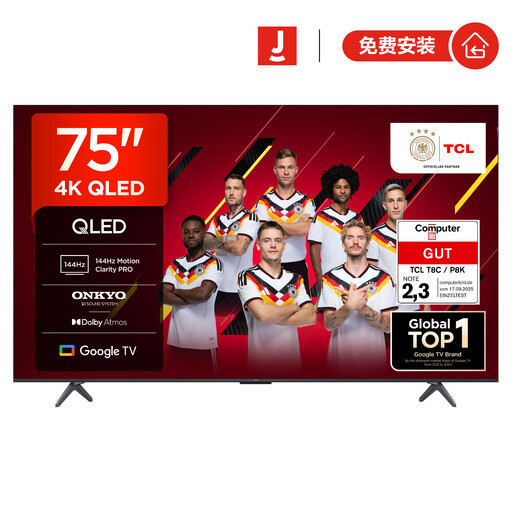
Why We Recommend This Product The TCL 75T8C combines a large 75-inch QLED display with a native 144Hz refresh rate. Its "Motion Clarity Pro" technology ensures sharp motion rendering. With four HDMI 2.1 ports, ALLM, VRR, and AMD FreeSync certification, the device is fully equipped for current-gen consoles and PCs. The integrated Onkyo 2.1 sound system with a subwoofer delivers solid audio performance without requiring additional hardware.
Pros
- Native 144Hz QLED panel for fluid motion and vibrant colours (97% DCI-P3 colour gamut coverage, according to the manufacturer)
- Comprehensive gaming features: HDMI 2.1, VRR, ALLM, FreeSync, and Game Master Mode
- Support for Dolby Vision and Dolby Atmos
- Integrated Onkyo 2.1 sound system
- Smart TV functionality with Google TV and Chromecast built-in
Who It's For This model is ideal for users seeking an all-in-one solution for a large living room. It serves the needs of both gamers and home cinema users who value a large screen size and a straightforward, integrated audio solution.
View Product: TCL 75T8C 75-Inch
2. Hisense 85E8S 85-Inch 4K Mini-LED Smart TV
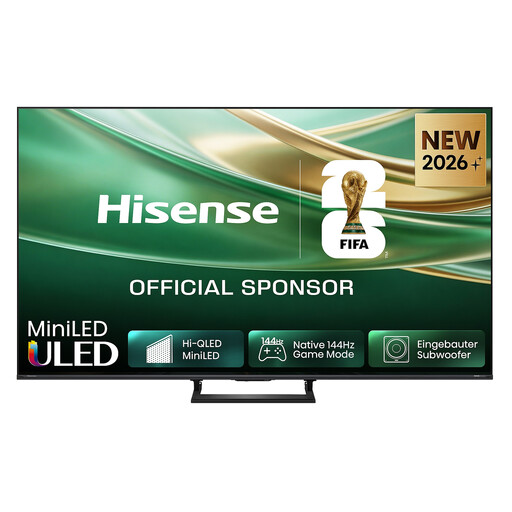
Why We Recommend This Product The Hisense 85E8S utilises an advanced Mini-LED backlight on an impressive 85-inch (215 cm) diagonal. This technology enables high contrast with deep black levels and high peak brightness. The 144Hz refresh rate ensures fluid visuals. With Dolby Vision IQ, the TV intelligently adapts the HDR presentation to the ambient light in your room.
Pros
- 85-inch display with Mini-LED technology for excellent contrast
- 144Hz refresh rate for smooth gaming and sports broadcasts
- Support for Dolby Vision IQ and Dolby Atmos
- VIDAA Smart TV platform with access to popular streaming services
- AI 4K Upscaler for optimising lower-resolution content
Who It's For This device is aimed at home cinema enthusiasts and gamers who prioritise maximum screen size and superior contrast performance. The Mini-LED technology makes it especially compelling for viewing HDR content in darkened rooms.
View Product: Hisense 85E8S 85-Inch
3. Hisense 43E77Q Pro 43-Inch QLED TV
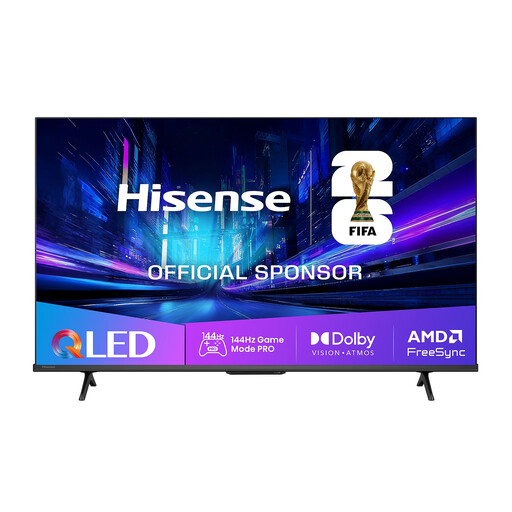
Why We Recommend This Product The Hisense 43E77Q Pro proves that high-end gaming performance isn't tied to a large screen size. This 43-inch model features a 144Hz QLED panel and supports all major HDR formats, including Dolby Vision IQ. With HDMI 2.1 ports, it is fully equipped for current-gen consoles and PCs. Its compact size makes it a versatile choice.
Pros
- Compact 43-inch form factor with a 144Hz QLED panel
- Comprehensive HDR support (Dolby Vision IQ, HDR10+, HLG)
- HDMI 2.1 for 4K gaming at high frame rates
- Low latency and fast response times
- VIDAA Smart TV with voice control
Who It's For This model is an excellent choice for PC and console gamers looking for a dedicated gaming display that also offers TV functionality. It fits perfectly in smaller rooms, studies, or as a high-quality secondary TV, without compromising on gaming-centric specifications.
View Product: Hisense 43E77Q Pro 43-Inch
Other Options and Alternatives
If the models presented here don't perfectly match your size or budget requirements, the market offers a wide range of alternatives. You can find an overview of other high-resolution models in our Ultra HD 4K LED TVs category.
Frequently Asked Questions (FAQ)
1. What is the advantage of 144Hz on a gaming TV? A 144Hz refresh rate enables a visibly smoother depiction of motion compared to 60Hz or 120Hz. This results in less motion blur, which can improve target tracking and responsiveness, especially in fast-paced genres like first-person shooters or racing games.
2. Why is HDMI 2.1 essential for a gaming TV? HDMI 2.1 is the only widespread connection standard that provides the necessary bandwidth to transmit 4K video signals at 120Hz or 144Hz. It also supports crucial gaming features like VRR (Variable Refresh Rate) and ALLM (Auto Low Latency Mode), which are essential for a responsive, tear-free gaming experience with consoles like the PlayStation 5 and Xbox Series X, as well as modern graphics cards.