
Smart TV Buyer's Guide: Avoiding Common Mistakes
The search for a new television can quickly become overwhelming. Especially in the Full HD Smart TV segment, manufacturers advertise numerous features, but not all of them live up to their promises. A low price alone is no guarantee of a satisfying device. Often, these tempting offers hide technical flaws or limitations that severely impact everyday usability. This guide will help you separate the wheat from the chaff and find a model that truly meets your needs.
Common Pitfalls When Buying a Full HD Smart TV
Before you make a decision, you should be aware of three common marketing traps that often lead to disappointment:
- Sluggish "Smart" Features: The term "Smart TV" is not a protected standard. Some budget-friendly models use slow processors or outdated operating systems. The result is long loading times, crashing apps, and a lack of updates, which could render key streaming services unavailable after a short time.
- Insufficient Connectivity: A single HDMI port or the lack of 5 GHz Wi-Fi is outdated by today's standards. If you use a soundbar, a gaming console, and a streaming stick simultaneously, too few ports become a constant source of frustration. A missing HDMI eARC port also prevents the convenient control of external audio devices' volume with a single remote.
- Misleading Picture Quality Claims: Not every TV advertised as "HD" actually offers Full HD (1920 x 1080 pixels). Especially with devices under 40 inches, only the lower HD-Ready resolution (1366 x 768 pixels) is often provided. The result is a visibly blurrier picture, particularly when playing high-resolution content.
Key Criteria for Your Selection
To avoid these pitfalls, you should focus on three core technical features. These define the performance and future-readiness of your new television.
Resolution and Screen Technology
For screen sizes between 32 and 43 inches, Full HD resolution (1920 x 1080 pixels) is a sensible standard. It provides a sharp picture without driving up the cost and data consumption of 4K UHD, whose benefits are barely noticeable on smaller screens anyway. A 32-inch Full HD TV is therefore a solid choice for the bedroom or kitchen. For those with a bit more space, a 40-inch Smart TV or a 43-inch Android TV is a suitable option.
Also, pay attention to the panel technology. While standard LED displays are sufficient for most purposes, a QLED Full HD TV delivers visibly better colour reproduction and higher brightness through the use of Quantum Dots.
Operating System and App Availability
The operating system is the heart of any Smart TV. It determines the speed, user-friendliness, and the selection of available apps. Common systems include:
- Android TV / Google TV: Offers the largest app store and high flexibility. Regular updates and the integration of Google Cast (Chromecast) are clear advantages.
- webOS (LG) / Tizen (Samsung): Known for their fast and intuitive operation. They also provide access to all major streaming services.
- VIDAA (Hisense) / Titan OS (Philips): Lean and fast systems that focus on core streaming functions and are often found in budget-conscious models.
A small TV with Wi-Fi should ideally use an established operating system to ensure long-term update support.
Connectivity and Tuners
A modern television should be prepared for any scenario. The following are essential:
- Triple Tuner: A TV with a triple tuner (DVB-T2/-C/-S2) allows you to receive digital television via antenna, cable, and satellite without an external receiver.
- HDMI Ports: At least two, preferably three, HDMI ports are recommended. One of them should support eARC (enhanced Audio Return Channel) to transmit audio signals losslessly to a soundbar.
- Wi-Fi and Bluetooth: Dual-band Wi-Fi (2.4 and 5 GHz) ensures a stable internet connection. Bluetooth is practical for wirelessly connecting headphones or external speakers.
Select Options For You
Here are some models that represent a well-considered choice for specific user profiles, based on objective technical features.
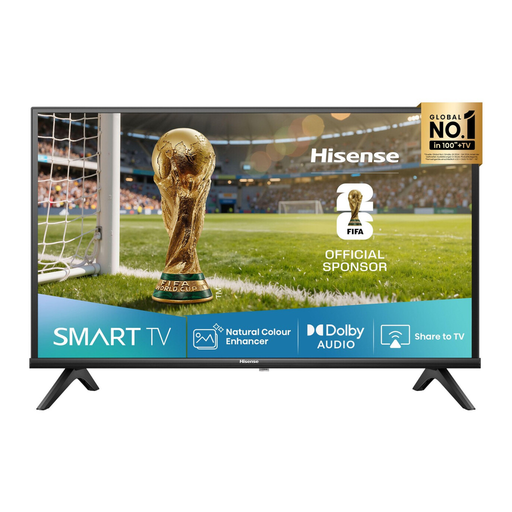
Hisense 32E4QT 32-inch DLED Smart TV
Why This Fits Their Persona: Ideal as an affordable Smart TV for a bedroom, kitchen, or kid's room. It combines a compact size with all the necessary smart features for daily streaming.
It offers true Full HD resolution instead of just HD-Ready and includes a Game Mode, which is not a given in this price range. This avoids the trap of a blurry picture and poor gaming performance.
Clear audio thanks to Dolby Audio and DTS Virtual:X. The dedicated Game Mode reduces input lag, which is a benefit for casual gamers.
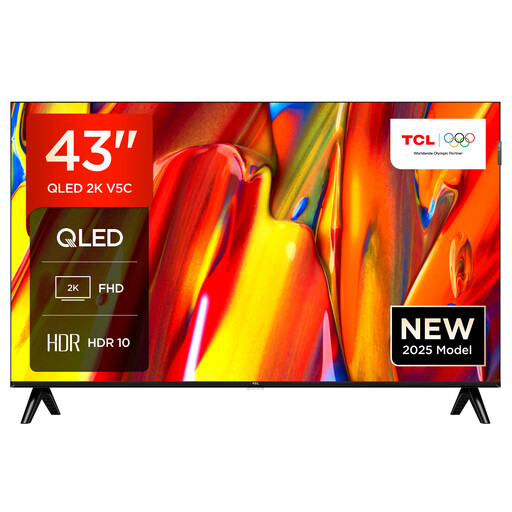
TCL 43V5C 43-inch Full HD Smart QLED Direct LED TV
Why This Fits Their Persona: For anyone who doesn't want to compromise on high picture quality, even for a TV in the bedroom or guest room. The 43-inch size is a great balance between a compact form factor and an immersive viewing experience.
The QLED Full HD technology delivers more vibrant colours than standard LEDs. The Android TV operating system ensures long-term access to apps and updates, sidestepping the trap of an obsolete smart system.
Excellent picture quality thanks to Quantum Dot technology and HDR10 support. Integrated Google Cast (Chromecast) for easy streaming from your smartphone.
LG 27LB70006LA 27" FHD Smart Monitor TV
Why This Fits Their Persona: This hybrid device is perfect for dorms or home offices where one device needs to serve as both a PC monitor and a small TV with Wi-Fi.
As a dedicated monitor-TV, it offers a pixel density optimized for close-up viewing. The proven webOS operating system ensures a fluid Smart TV experience, unlike many no-name devices.
Extremely compact and slim design. Functions as a smart home hub (Matter-certified) and provides access to all relevant streaming apps with webOS.
Looking for more options?
We've compiled a complete, up-to-date list of products that fully meet these strict selection criteria and rigorous safety standards.
Frequently Asked Questions (FAQ)
1. Does a Full HD Smart TV always need an internet connection? No. For smart features like streaming apps (Netflix, YouTube, etc.) and the web browser, an internet connection via Wi-Fi or a LAN cable is required. However, thanks to the integrated triple tuner, you can also watch traditional broadcast television via cable, satellite, or DVB-T2 HD without the internet.
2. What's the difference between LED and QLED on Full HD TVs? Both technologies use an LED backlight. However, with QLED (Quantum Dot Light Emitting Diode) TVs, an additional layer of nanoparticles (Quantum Dots) is placed in front of the LEDs. This layer converts the blue LED light into purer red and green. The result is a wider colour gamut and higher peak brightness compared to conventional LED TVs.
3. What is the expected lifespan of a budget-friendly Smart TV? The lifespan of the panel itself is many thousands of operating hours for most modern TVs, which often translates to more than 7-10 years of normal use. However, the "perceived" lifespan of a Smart TV is more frequently limited by its software. If the manufacturer stops providing updates for the operating system, key apps can become outdated and cease to function. Choosing a device with an established OS like Android TV, Tizen, or webOS can mitigate this risk.