
Full-Face Helmet Technical Buyer's Guide
Selecting a full-face helmet is a decision that should be based on technical specifications and certified safety. Whether for a motorcycle or a mountain bike, a helmet's primary function is to protect your head. This guide focuses on the objective criteria relevant for choosing a suitable model for 2026, with a special focus on the current ECE 22.06 standard.
Buyer's Guide: Key Selection Criteria
The decision for a full-face helmet depends on several technical factors. A systematic analysis of these parameters ensures the helmet meets your individual needs for safety, comfort, and functionality.
1. Safety Certification: The ECE 22.06 Standard
The European testing standard ECE 22.06 is the current benchmark for motorcycle helmets in Germany and the EU. It replaces the older 22.05 standard and imposes significantly higher demands on protective performance. Key updates include:
- Expanded Impact Tests: Tests are conducted at various speeds (high and low) to cover a broader range of accident scenarios.
- Rotational Impact Tests: The helmet's ability to absorb rotational forces, which can act on the head during an oblique impact, is now tested.
- Testing of Accessories: Visors, sun shields, and communication systems are also tested for their safety and stability.
An ECE 22.06 helmet therefore offers a demonstrably higher level of protection. For a downhill MTB helmet, other standards such as ASTM F1952 often apply, which are specifically designed for the demands of gravity sports.
2. Shell Material and Weight
The outer shell material is a key determinant of the helmet's weight, durability, and price.
- Polycarbonate/Thermoplastic (e.g., ABS): These materials are cost-effective to produce and offer robust protection. Helmets made from these materials tend to be slightly heavier.
- Composite Materials (Fibreglass, Carbon, Aramid): These materials allow for a lighter yet extremely rigid shell. A lightweight bicycle helmet or motorcycle helmet made of carbon reduces strain on the neck muscles, which is particularly advantageous on long rides.
3. Fit and Ventilation
A helmet can only perform its protective function fully if it fits correctly. It must sit snugly on the head without creating pressure points. Measure your head circumference at its widest point above the eyebrows to determine the right size.
A sophisticated ventilation system with intake and exhaust ports is crucial for comfort. It dissipates heat and moisture and prevents the visor from fogging, which helps the rider maintain concentration.
4. Functional Features
Modern helmets offer a range of additional features that enhance their practical utility:
- Helmet with Visor: A clear, scratch-resistant visor is standard. Preparation for a Pinlock inner lens effectively prevents fogging.
- Helmet with Sun Visor: An integrated, retractable sun visor allows for quick adaptation to changing light conditions without needing to swap the main visor.
- Fastening System: The Double-D ring closure is considered very secure and is mandatory in racing. Ratchet (micrometric) closures are more convenient to operate.
Featured Full-Face Helmets
The following models have been selected based on their technical specifications and their defined areas of application.
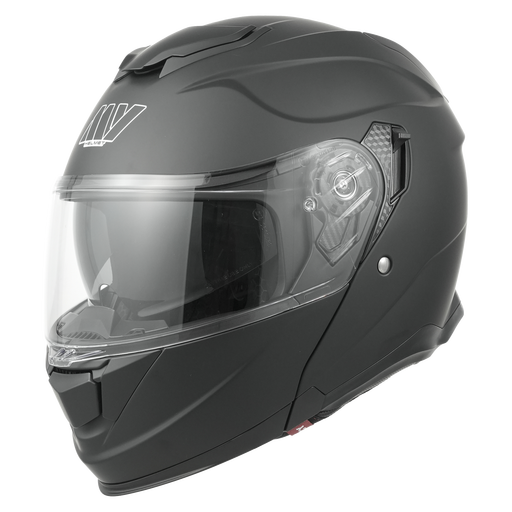
1. MY Modular Riding Helmet (935 Series)
-
Product Feature Analysis: This model is a modular helmet with a chin bar that flips up. It meets the ECE 22.06 standard and features an outer shell made of high-strength ABS plastic. Shock absorption is provided by a high-density EPS inner shell. The dual visor system, consisting of a clear main visor and an integrated sun visor, offers flexibility in varying light conditions. According to the manufacturer, a space is reserved under the cheek pads for installing a Bluetooth headset.
-
Advantages:
- Flexibility due to the flip-up mechanism
- Certified according to ECE R 22.06
- Integrated sun visor
- Prepared for a communication system
-
Who it's for: This model is aimed at commuters and touring riders who appreciate the comfort and versatility of a modular helmet without compromising on the latest safety certification.
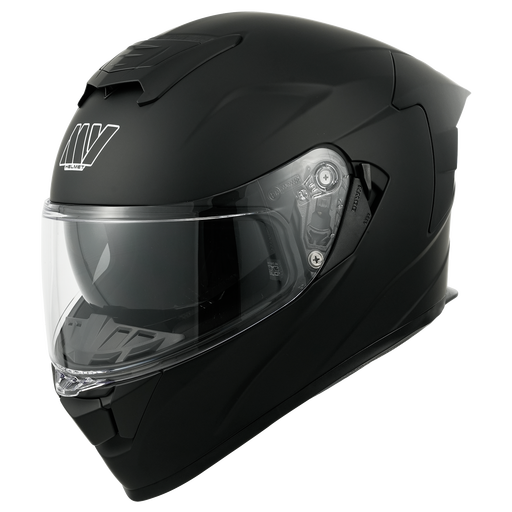
2. MY Protective Riding Helmet (936 Series)
-
Product Feature Analysis: As a classic full-face helmet, this model offers a fixed, one-piece chin bar for high structural integrity. It is also certified according to ECE R 22.06. The manufacturer states that the inner lining is removable and washable, which facilitates hygiene. An integrated sun visor improves visibility in bright sunlight. Damping is handled by a high-density EPS inner shell.
-
Advantages:
- High structural stability due to the full-face design
- Certified according to ECE R 22.06
- Integrated sun visor
- Removable and washable liner
-
Who it's for: This protective motorcycle helmet is an option for road riders looking for a straightforward, secure helmet for daily use or for weekend rides, who value the integrity of a fixed chin bar.
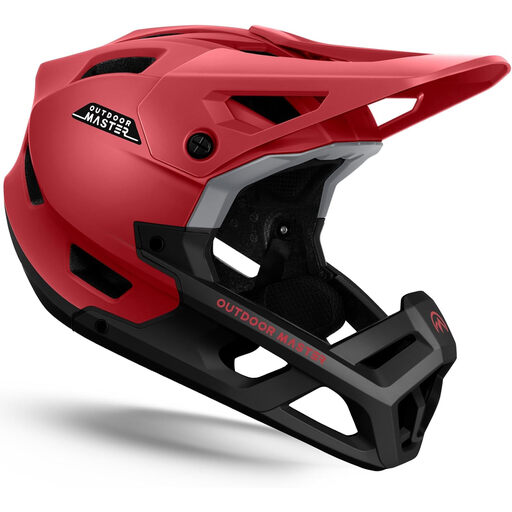
3. OutdoorMaster Full Face Mountain Bike Helmet
-
Product Feature Analysis: This full-face bicycle helmet is specifically designed for gravity use. The construction consists of an ABS outer shell and an EPP (Expanded Polypropylene) inner shell, which is known for its ability to absorb multiple impacts. Weighing under 750g, it is comparatively lightweight. A standout feature is its 27 ventilation ports, which ensure high airflow during strenuous descents. The design also includes an adjustable visor and a channel to securely guide a goggle strap.
-
Advantages:
- Low weight (under 750 g)
- High number of ventilation ports (27)
- EPP inner shell for multi-impact protection
- Specific features for MTB/BMX (goggle strap channel, adjustable visor)
-
Who it's for: This model is designed for downhill and BMX mountain bikers, as well as aggressive trail riders, for whom maximum protection combined with low weight and high breathability are the priority.
Other Options and Accessories
Besides the helmet itself, the quality of the visor is also critical for safety and comfort. A damaged or heavily scratched visor should be replaced immediately. You can find a selection of replacement and specialty visors, such as tinted or mirrored versions, in our Visor category.
Frequently Asked Questions (FAQ)
1. What is the difference between a full-face helmet and a modular helmet? A full-face helmet consists of a single, fixed shell including the chin bar, providing high structural integrity. A modular helmet has a chin bar that can be flipped up, making it easier to put on and take off and offering more comfort during short stops. In terms of safety, both helmet types must pass the same stringent tests if they are certified to ECE 22.06.
2. How do I determine the correct helmet size? Measure your head circumference with a tape measure at its widest point, about one centimetre above your eyebrows and ears. Compare the measured value (in cm) with the respective manufacturer's size chart. The helmet should fit snugly without causing pressure. It should not move noticeably when you shake your head.
3. When should a full-face helmet be replaced? A helmet should be replaced after any crash or significant impact, even if no external damage is visible. The inner damping layer (EPS/EPP) can be compressed, compromising its protective capabilities. Regardless of impacts, most manufacturers recommend replacement every 5 to 7 years, as materials like plastics and adhesives can degrade over time due to UV radiation and environmental factors.