
Buying Frozen Seafood: Selection, Quality Features and Suitable Products
Frozen seafood is practical, versatile and easy to store for long periods. Whether you are looking for frozen fish for the barbecue, frozen prawns for pasta or a seafood mix for a quick pan-fried meal, there is plenty of choice. At the same time, product images and general terms such as “premium” can conceal important differences.
As a Joybuy Product Recommendation Officer, I therefore focus on clear information such as net quantity, ingredients, allergens, processing state and storage conditions. These details help households, home cooks and fans of Mediterranean or Asian cuisine avoid unsuitable purchases.
Common pitfalls when buying frozen seafood
1. Drained weight and actual quantity are confused
Seafood may contain water as an ingredient or protective glaze. A pack with a total weight of 1 kg therefore does not necessarily contain 1 kg of fish or shellfish meat. For blanched products, the packaging may specifically indicate a different drained net weight.
You should therefore check:
- Net quantity and drained weight
- The proportion of actual seafood listed in the ingredients
- Additional ingredients such as water, salt or acidity regulators
2. “Kitchen-ready” does not always mean “ready to eat”
A product may be cleaned, blanched or fully cooked and still need to be heated before consumption. Raw squid meat, frozen octopus or whole squid require different preparation from cooked seafood mixes.
Read the terms carefully:
- raw: cook thoroughly
- blanched: usually only needs brief heating
- cooked: depending on the labelling, it may be ready to use or require brief reheating
- whole and cleaned: prepared, but not automatically cooked
3. Storage and defrosting are often underestimated
Frozen seafood should generally be stored at -18 °C or colder. Once defrosted, it should be kept in the fridge and used within the time stated on the packaging. The products listed here are not intended to be refrozen.
For the best quality, slow defrosting in the fridge is usually preferable to leaving seafood at room temperature for an extended period. If the packaging is damaged, there is a heavy build-up of ice crystals or the cold chain is unclear, it is worth checking the best-before date and product information carefully.
The most important selection criteria
Ingredients and allergens
Seafood belongs to several different allergen categories. Crustaceans, molluscs and fish must be included in the ingredients and allergen information. Asian seafood products may also contain wheat, soya, sesame or egg.
For example, a seafood mix may combine prawns, squid, mussels and surimi. If you specifically want to buy frozen mussel meat, prawns or squid, check that the product contains only the species you are looking for.
Processing state and preparation time
Blanched or cooked products are ideal for quick meals. According to the product information, a blanched mix often only needs around 2 to 3 minutes in pasta, soup or wok dishes. Raw products require thorough cooking and may need more preparation.
Squid and octopus can become tough if cooked for the wrong length of time. Brief, high-heat frying or a specifically recommended longer cooking time is usually better than an uncontrolled middle ground.
Fishing area, origin and pack size
Origin should not be confused with a blanket statement about quality. However, it does provide useful information for assessing a product. Also check the stated species, fishing area, production facility and pack size.
For occasional meals, smaller packs of 360 to 450 g are easy to handle. Frequent users may prefer to plan with 800-g or 1-kg packs, but should make sure they have enough freezer space and a realistic consumption plan.
Product selection by user profile
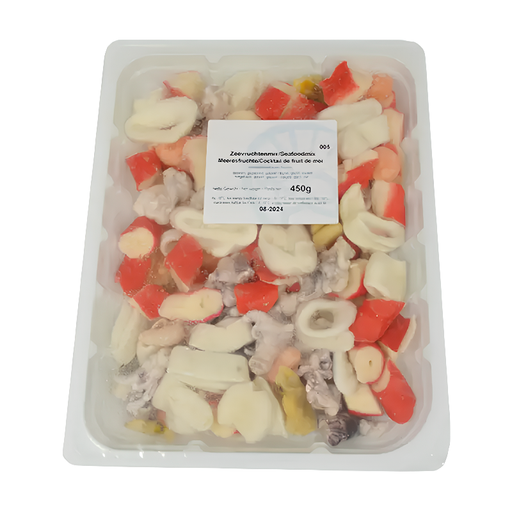
Mooijer-Volendam Seafood Mix Cooked 450 g
Why this product suits this profile: The cooked mix combines squid, prawns, molluscs and surimi in a 450-g pack. It is suitable for smaller households and quick dishes such as salads, pasta or pan-fried meals.
The processing state is listed as cooked. This makes it easier to plan preparation than with a raw mix whose labelling is unclear.
450 g pack size; cooked mix with 14 g of protein and 1 g of fat per 100 g, according to the product information.
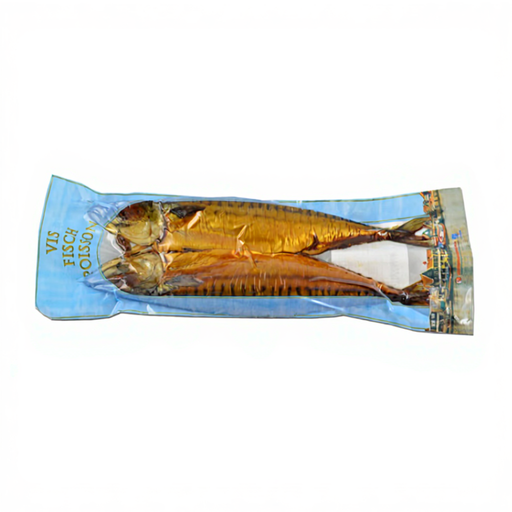
Mooijer Mackerel 300/400 G (2 ST IVP)
Why this product suits this profile: Two individually vacuum-packed mackerel, each weighing around 300 to 400 g, will appeal to buyers planning to cook whole fish on the barbecue, in a pan or in a smoker.
The individual vacuum packaging separates the two fish into portions. The ingredients list names mackerel as the only ingredient, while fish is listed as an allergen.
Two portioned whole fish; according to the product information, 18.6 g of protein and 13.9 g of fat per 100 g.
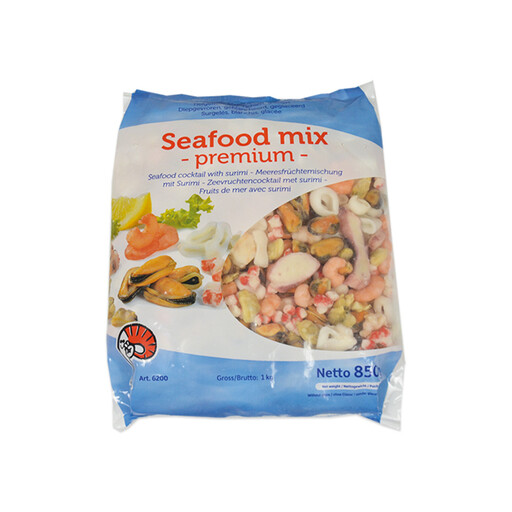
Mooijer Seafood Mix Premium Blanched 1kg
Why this product suits this profile: The 1-kg mix of prawns, squid rings and mussels is designed for regular dishes such as paella, frutti di mare, soups or wok meals.
The blanched state and recommended brief heating time of around 2 to 3 minutes reduce the risk of overcooking.
1 kg pack size; 15 g of protein and 1.4 g of fat per 100 g, according to the product information.
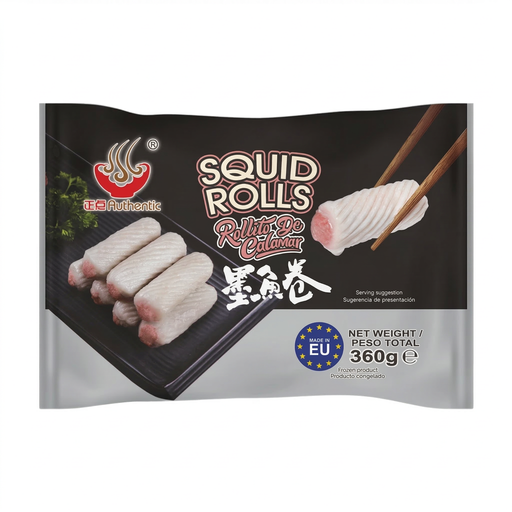
AUTHENTIC Cuttlefish Rolls 360g
Why this product suits this profile: According to the product information, the pre-cooked squid rolls can be prepared straight from frozen in a pan, wok, soup or hotpot.
The labelling specifies a brief heating time of 3 to 4 minutes from frozen. Ingredients and allergens such as wheat, soya and sesame are clearly listed.
360 g pack; pre-cooked product with 12.5 g of protein per 100 g, according to the packaging information.
Frequently asked questions about frozen seafood
How long does frozen seafood keep?
The best-before date and the storage information provided by the manufacturer are decisive. When kept constantly at -18 °C or colder, the products remain suitable for storage until the stated date. Once defrosted, they should be kept refrigerated and used within the time specified on the packaging.
Should frozen prawns or squid be defrosted before preparation?
This depends on the product. Raw products can often be defrosted in the fridge so that excess liquid can be removed. For explicitly pre-cooked products, such as certain squid rolls, preparation directly from frozen may be recommended. The specific instructions for use are decisive.
How can you identify a suitable seafood mix?
Check the ingredients, the proportion of seafood, the processing state and the allergens. For Mediterranean dishes, mixes containing prawns, mussels and squid are suitable. For Asian recipes, squid rolls, cuttlefish balls or other kitchen-ready seafood may be a good choice. You should also choose the pack size according to your actual consumption.