
Buying freezer bags: what really matters when it comes to size, sealing and material
Freezer bags are a basic essential in many UK households. They portion soups, protect berries from freezer burn and bring order to overcrowded drawers. Yet supposedly cheap offers often lead to unnecessary extra costs: the bag tears while being filled, the seal does not reliably keep liquids in or the chosen size does not suit the actual portion.
Three common pitfalls when buying freezer bags
1. Quantity over suitable quality
A pack containing lots of bags may seem good value at first glance. What matters, however, is whether the material thickness, seal and format are suitable for how you intend to use them. Thin bags can be damaged more quickly by foods with sharp edges or frozen liquids. For regular use, it is therefore worth comparing the price per usable bag, rather than simply the pack price.
2. “Leak-proof” without a suitable seal
Not every food storage bag is suitable for liquids. A simple folded closure or knot offers less security than a double seal or a sturdy sliding closure. When storing soups, marinades and puréed foods, the bag should also be able to stand upright and should not be filled to the brim.
3. Temperature specifications are overlooked
Freezer bags must be designed for low temperatures. This does not automatically mean that they are suitable for the microwave, oven or boiling water. A food storage bag should only be used in accordance with the manufacturer’s instructions. With reusable products in particular, it is important to distinguish between freezer suitability and heat resistance.
Buying factors you should check
Size and capacity
For many households, a 1-litre freezer bag is a practical standard size. According to the product specifications, dimensions of around 16 × 25 cm are suitable for portioned vegetables, fruit, meat and leftovers, for example. For family-sized portions or larger cuts of meat, formats measuring 20 × 30 cm or 30 × 40 cm are more practical.
Leave a little space when freezing liquids. Foods containing water expand. An overfilled bag may split as a result or put pressure on the seal. For meal prep, it is a good idea to divide food into meal-sized portions and label the contents directly with the date and description.
Type of seal and leak protection
Zip bags with a press seal can be closed again after opening. Models with a double zip have two sealing lines and are generally more suitable for liquid contents than bags with a single seal. A stand-up base makes filling easier and stops the bag from tipping over while you are putting it away.
Before freezing, make sure that the seal is fully closed. For liquids, it is advisable to carry out a quick leak check over the sink. Even a sturdy seal cannot compensate for incorrect handling: sharp bones, pointed handles or hard edges can damage almost any film material.
Material, reusability and labelling
Several of the products on offer are described as being made from BPA-free materials. This describes a property of the material, but is not a general promise that the product is suitable for every possible use. With reusable silicone bags, thorough cleaning, complete drying and compliance with the temperature limits specified by the manufacturer are particularly important.
A freezer bag with a labelling area makes it easier to manage your food stocks. At the very least, note the contents and freezing date. This allows older portions to be used first and helps prevent unnecessary purchases caused by forgotten food. An aluminium composite can block out light, but that does not automatically make it suitable for the microwave, oven or direct heat.
Our selection for different uses
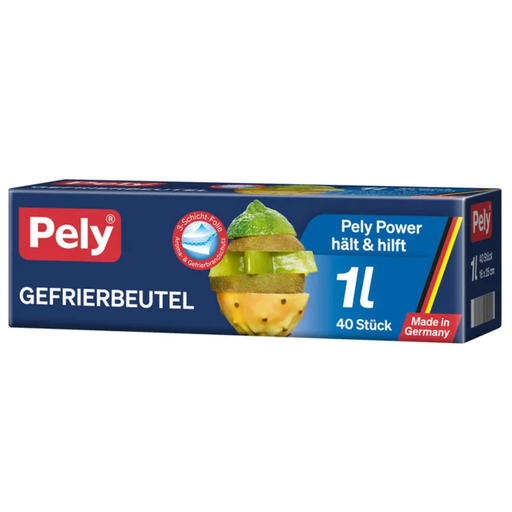
Pely Freezer Bags 1L 40 pcs
Why this product suits this profile: The 1-litre format and pack of 40 bags are ideal for regular everyday portions, such as fruit, vegetables and leftovers.
An integrated labelling area helps prevent mix-ups; the stated three layers and flexibility down to -40 °C are clearly shown before purchase.
1-litre capacity, 16 × 25 cm, BPA-free three-layer film and 40 bags per pack according to the product description.
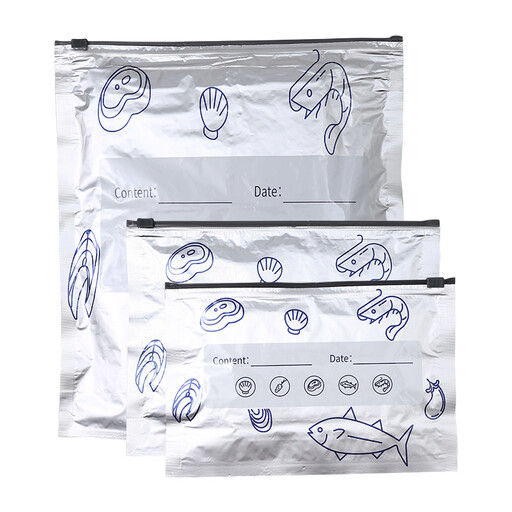
Maxcook 30 Pack Aluminum Foil Slider Food Storage Bags
Why this product suits this profile: Three formats, a sliding closure and a stand-up design support organised storage for different types of food.
The material and temperature specifications are clear: PET, aluminium and PE, with a range of -20 °C to 100 °C. The manufacturer explicitly excludes use in the microwave, oven and near naked flames.
30 bags in three sizes, a writable area, washable design and light-blocking aluminium composite according to the product specifications.
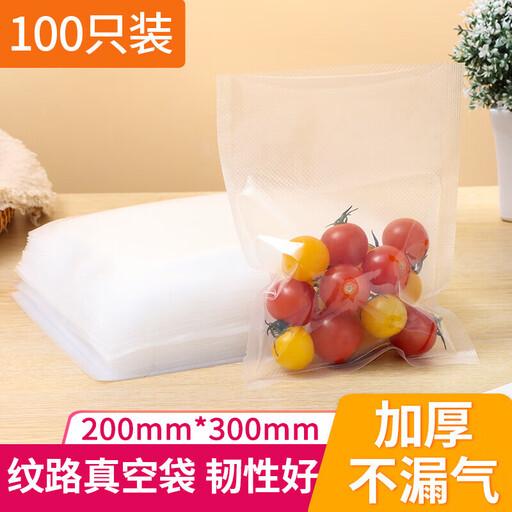
BJ Vacuum packaging bags, 100 pieces, 20 × 30 cm
Why this product suits this profile: The format is designed for use with a vacuum sealer, making it suitable for keen cooks, larger households and meal-prep users. It is available in a pack of 100.
Check compatibility with a standard household vacuum sealer before buying. This is not an ordinary zip bag and requires the appropriate sealing technology.
100 bags measuring 20 × 30 cm for vacuum sealing, marinating, freezing and storing meat, vegetables or leftovers.
Looking for more options?
We have put together a complete, regularly updated list of products that fully meet these strict selection criteria and the safety regulations applicable in the EU.
How to use freezer bags correctly
- Only fill bags containing liquids to around two-thirds of their available height.
- Remove excess air without squeezing the bag too firmly.
- Label the contents and date before freezing.
- Initially lay liquids flat or place them in a bowl until they are frozen.
- Do not reuse damaged bags for food.
- Clean reusable silicone bags thoroughly after every use and dry them completely.
- Keep all plastic bags away from babies and young children, as they pose a suffocation risk.
Frequently asked questions about freezer bags
Can freezer bags be used in the microwave?
Not as a general rule. A freezer bag is primarily designed for storage at low temperatures. The product may only be used in the microwave if the manufacturer expressly permits it. The aluminium composite bags described above are not suitable for microwave use.
How long does food keep in freezer bags?
Shelf life depends on the food, temperature, packaging quality and amount of air trapped inside. A tightly sealed bag can help reduce freezer burn, but it does not replace an appropriate storage period. Labelling the contents and freezing date makes it easier to keep track.
Are reusable bags cheaper than single-use bags?
This depends on the purchase price, actual service life and cleaning effort. With regular use, reusable silicone bags can reduce the number of individual single-use bags required. For travelling, raw foods or situations where quick disposal is preferred, single-use freezer bags may be more practical. The decisive factors are the manufacturer’s specific instructions on cleaning, sealing and temperature.