
Complete Floor Lamp Buyer’s Guide
A new floor lamp can completely transform the atmosphere of a room. However, the selection is vast, and not every model lives up to its promises. Certain flaws often only become apparent after the purchase: a wobbly construction, inadequate light for reading, or features that overpromise and underdeliver. This guide will help you identify the crucial features and make an informed decision.
Common Pitfalls When Buying a Floor Lamp
Before we dive into the technical details, let's look at three common problems that can lead to disappointment:
- Lack of Stability: An often-underestimated issue is a base that is too light or poorly designed. This can lead to a tipping hazard, especially with tall or wide-reaching models like an arc lamp, and particularly in households with children or pets. A lamp that sways at the slightest touch is not only a safety risk but also feels low-quality.
- Inappropriate Light Quality: Many buyers focus solely on design and neglect the light output. The result is often a lamp that looks good but creates glare, casts harsh shadows, or is simply too dim for its intended purpose. A floor lamp in the living room meant for reading requires different light properties than a model designed purely for soft, ambient light.
- Rigid and Inflexible Functionality: A lamp without a dimming function or with a fixed lamp head severely limits its usability. Lighting needs change throughout the day—from bright task lighting to subdued evening ambiance. A non-dimmable floor lamp cannot meet these changing demands.
Crucial Parameters for the Right Choice
To avoid the problems mentioned above, you should check a few key technical parameters before buying. These largely determine the functionality and longevity of your new floor lamp.
Luminous Flux (Lumen) and Colour Temperature (Kelvin)
These two values are critical for the effect of the light.
- Lumen (lm): Indicates the brightness of the light source. For general room illumination or ambient light, 800 to 1,500 lumens are often sufficient. However, if you need the lamp as a primary light source for reading or working, values from 1,500 lumens upwards are recommended. An LED floor lamp is often an efficient choice here, as it offers high lumen values with low energy consumption.
- Kelvin (K): Describes the colour temperature of the light. Values around 2,700 K to 3,000 K produce a warm white, cosy light, ideal for living rooms and bedrooms. Neutral white light (4,000 K) promotes concentration and is well-suited for workspaces. Daylight white (from 5,300 K) has a very stimulating effect and is often used in offices or workshops.
Material, Design, and Stability
The construction is the foundation for safety and durability.
- Materials: Models made of metal, such as a black floor lamp, or solid wood generally offer greater stability than all-plastic constructions. Pay attention to the weight of the base—a heavy base made of marble, concrete, or solid metal ensures a secure footing.
- Designs: A classic arc lamp requires an especially heavy base to counterbalance the weight of its extending arm. An uplighter, on the other hand, directs light upwards, providing indirect, glare-free illumination for the room. Many modern uplighters also feature an additional, flexible reading light.
Functionality and Control
Modern floor lamps offer more than just an on/off switch.
- Dimmability: A dimmable floor lamp allows for the seamless adjustment of brightness to suit any situation. This is one of the most important features for flexible lighting design.
- Smart Home Integration: A modern floor lamp can often be controlled via an app, voice assistant, or remote control. This allows not only for dimming but also for changing the colour temperature or even the light colour (RGB).
- Adjustability: Swivelling or tilting lamp heads allow you to direct the light exactly where it's needed—a crucial advantage for reading or work areas.
Honored Selections for Various Requirements
Here are some models tailored to specific use cases that successfully avoid the common pitfalls.
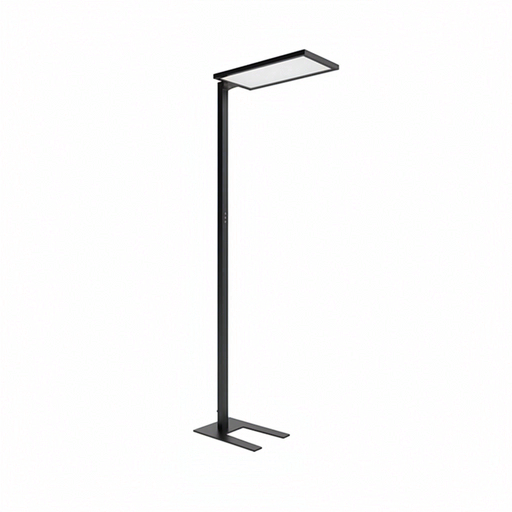
LEDVANCE COMACT Floor Lamp, Black, 12,600 lm, 4000 K
Why it's a great fit: Designed for professional work environments, this lamp delivers very high brightness (12,600 lm) and glare-free light (UGR < 19), which is essential for focused work. The neutral white colour temperature of 4,000 K supports productivity.
Solves the problem of inappropriate light quality with professional, glare-free illumination. The robust aluminium construction and stable base prevent any instability.
A daylight and motion sensor automatically adjusts the lighting and saves energy. Direct and indirect light components can be controlled separately.
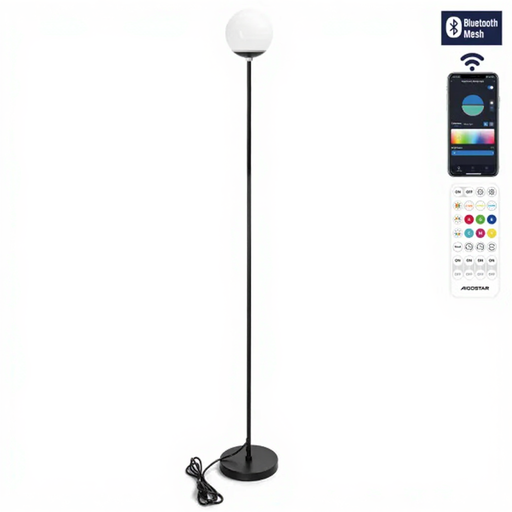
Aigostar FL08 - Cloud Floor Lamp - BLE MESH
Why it's a great fit: With Bluetooth Mesh technology, RGB colour options, and app control, this lamp integrates seamlessly into a smart home system. It's perfect for users who want to create light scenes and fully personalise their lighting.
Tackles the problem of rigid functionality by offering complete control over brightness, colour temperature, and colour via a smartphone. The weighted base provides the necessary stability.
The dual-light design (upward and downward-facing) creates multi-layered, atmospheric lighting. Bluetooth Mesh technology allows for the networking of over 200 devices.
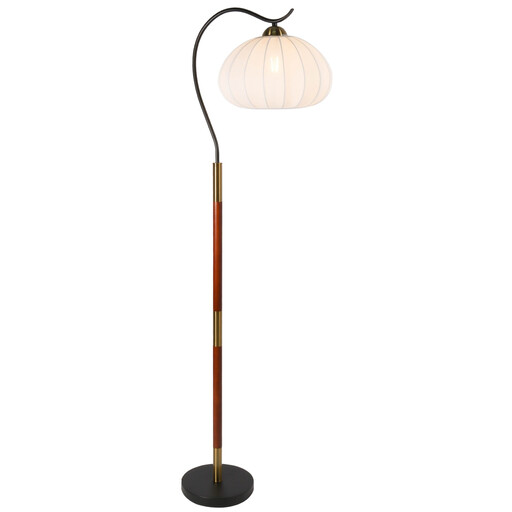
Lameke Curved Arm Floor Lamp with Dome Shade
Why it's a great fit: The combination of rubberwood, metal, and a fabric shade creates a warm, homely atmosphere. Its curved design is a stylish focal point in any modern living room.
The solid mix of materials ensures good stability. Since you can choose your own E27 bulb, the light quality (brightness, colour temperature) can be tailored exactly to your needs.
A harmonious blend of natural and modern elements for a sophisticated aesthetic that fits well with various interior design styles.
Looking for more options?
We have compiled a complete, up-to-date list of products that fully meet these strict selection criteria and German safety regulations.
Frequently Asked Questions
1. How many lumens does a floor lamp need for the living room? It depends on the purpose. For cosy background lighting, 800 to 1,200 lumens are often sufficient. However, if the lamp is to be used as the main light source next to a reading chair, 1,500 lumens or more are recommended. A dimmable lamp offers the greatest flexibility here.
2. What does UGR < 19 mean for an office lamp? UGR stands for "Unified Glare Rating" and is a measure of the psychological glare from a light source. A value of UGR < 19 is the standard for VDU-compliant workplace lighting in offices. It ensures that the light is perceived as comfortable and does not cause distracting reflections on monitors, which promotes concentration and visual comfort.
3. Can I use an LED bulb in any floor lamp? In most modern floor lamps with standard sockets (e.g., E27 or E14), you can easily use LED bulbs. Pay attention to the maximum wattage specified by the manufacturer on the lamp. Since LEDs require significantly less wattage for the same brightness, this is rarely a problem. However, for lamps with permanently integrated LEDs, replacing the light source is not intended.