
Essential Guide to Choosing the Right Fast Charger
The search for the right fast charger can quickly become overwhelming. The market is filled with technical jargon, performance claims, and a vast array of models. But not every charger that promises high speeds is a good choice for your devices. Making the wrong decision not only leads to slow charging times but, in the worst-case scenario, can also damage the batteries of your valuable electronics.
As your Joybuy Product Recommendation Officer, I'm here to help you identify the common pitfalls and make an informed decision. We'll focus on the facts that truly matter.
The 3 Most Common Pitfalls When Buying a Fast Charger:
- The "Total Output" Trap: Many manufacturers advertise a high wattage, such as 100W. However, this is often the combined total output of all ports. If you charge multiple devices simultaneously, this power is split, and each port only receives a fraction of the advertised power. A single device then charges unexpectedly slowly.
- Missing Safety Certifications: An extremely cheap charger without CE marking can pose a significant risk. These products often do not meet the safety standards required in the EU, which can lead to overheating, short circuits, or even a fire hazard.
- The Protocol Mess: A powerful charger is useless if it doesn't support your device's specific fast-charging protocol. For example, an iPhone requires Power Delivery (PD), while other Android smartphones rely on standards like Quick Charge (QC). Without the right technology, your device will only charge at standard speed.
What Really Matters: The Key Criteria
To avoid these pitfalls, you should check three key aspects before buying. These will determine if a charger is right for your needs.
Power (Watts) and the Power Delivery (PD) Standard
Wattage alone is only half the story. It's crucial that the charger supports the Power Delivery (PD) standard via a USB-C port. This open standard has been adopted by most modern devices, from smartphones (including as an iPhone charger) to tablets and laptops.
- For smartphones: A Power Delivery adapter with 20W to 30W is generally sufficient to significantly charge modern devices in a short amount of time.
- For tablets and small laptops: A range of 45W to 65W is a good guideline.
- For high-performance laptops: Models with 100W or more are required to charge them efficiently while under load.
GaN Technology: More Compact, Cooler, More Efficient
A GaN charger uses gallium nitride instead of traditional silicon. This semiconductor material allows for significantly higher efficiency in energy conversion. The practical advantages are:
- More compact design: For the same power output, GaN chargers are often up to 30% smaller than conventional models.
- Less heat generation: Higher efficiency means less energy is converted into heat, which increases safety and longevity.
- Higher power output: The technology makes it possible to pack more power into a smaller space, ideal for a high-performance multi-port charger.
Ports and the Right Charging Cable
Consider how many and what types of devices you want to charge simultaneously. A multi-port charger with a combination of modern USB-C and legacy USB-A ports offers the greatest flexibility.
Also, pay attention to the charging cable. A high-performance charger is useless if the cable can't transfer the power. For charging speeds above 60W, a certified cable that supports 100W or more is essential.
Products for Particular People
Based on these objective criteria, we have identified a few models that are particularly well-suited for specific use cases.
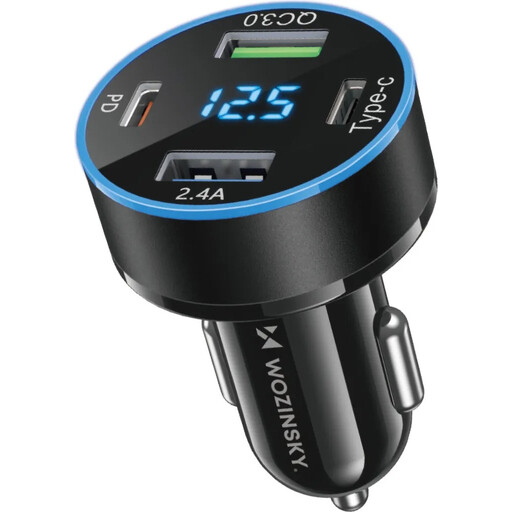
Wozinsky WDCCB Black 50W Car Charger with Display (2x USB-C / 2x USB-A)
Why This Fits Their Persona: Ideal for people who spend a lot of time in the car and need to power multiple devices like a smartphone, tablet, or navigation system at the same time. This USB-C car charger offers great flexibility.
The power specs for each of the four ports are clearly specified, avoiding the "total output" trap. The integrated display also shows the vehicle's voltage, offering additional control.
Four ports (2x USB-C, 2x USB-A) for maximum compatibility. The total output of 50W is sufficient to reliably charge multiple devices at once.
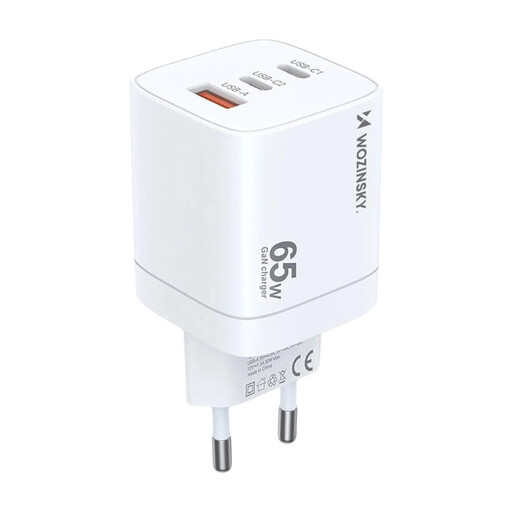
Wozinsky CGWCW 65W USB-A / 2 x USB-C GaN Wall Charger – White
Why This Fits Their Persona: Perfect for users who want to charge a laptop, smartphone, and other devices at their desk with just one power adapter. It replaces multiple individual chargers and reduces clutter.
This GaN charger uses modern technology to prevent overheating even under high load. It supports Power Delivery, solving the protocol problem for most modern devices.
65W of power is enough to charge most USB-C laptops. The two USB-C ports and one USB-A port provide a future-proof and flexible charging solution.
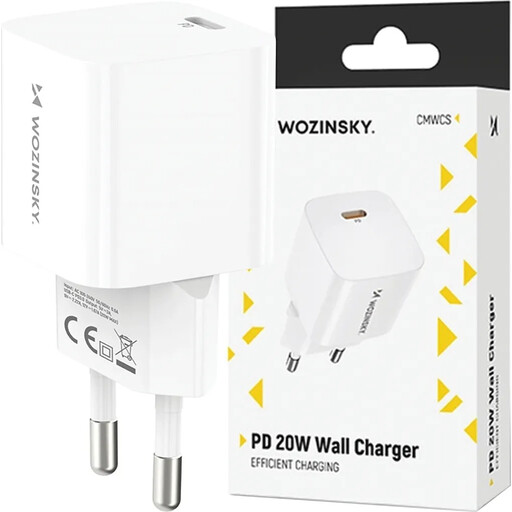
Wozinsky CMWCS 20W USB-C PD Wall Charger - White
Why This Fits Their Persona: For users looking for a simple, reliable, and affordable solution to fast-charge their modern smartphone without paying for extra features or ports they don't need.
This charger focuses on a single task: delivering 20W via Power Delivery. There's no confusing power splitting. Its support for the PD protocol ensures compatibility with iPhones and many Android devices.
Compact and minimalist design. The 20W output via the USB-C charger port is the standard for fast charging most current smartphones.
Looking for More Options?
We have compiled a complete, up-to-date list of products that fully meet these strict selection criteria and safety regulations.
Frequently Asked Questions (FAQ)
Does every fast charger work with every smartphone?
No. For fast charging to work, both the charger and the smartphone must support the same fast-charging protocol. The most important standard is Power Delivery (PD), used by Apple, Google, and many other manufacturers. Before buying, check your smartphone's specifications and match them with the protocols supported by the charger. Modern chargers often support multiple standards, which increases compatibility.
What does GaN mean on a charger?
GaN stands for gallium nitride, a modern semiconductor material that is increasingly replacing silicon in chargers. It conducts electricity more efficiently while generating less heat. The result is chargers that are significantly smaller and lighter for the same or even higher power output. A GaN charger is therefore an excellent choice for travel or for a tidy desk.
Can a fast charger that is too powerful damage my battery?
No, a modern, certified charger will not damage your device's battery. The charging technology works through communication between the charger and the device (e.g., your smartphone). The smartphone only "requests" as much power as it can safely handle. Therefore, the charger never delivers more power than the device needs. This intelligent process protects the battery from being overloaded.